The Picts: The Mysterious People Who Shaped Early Scotland
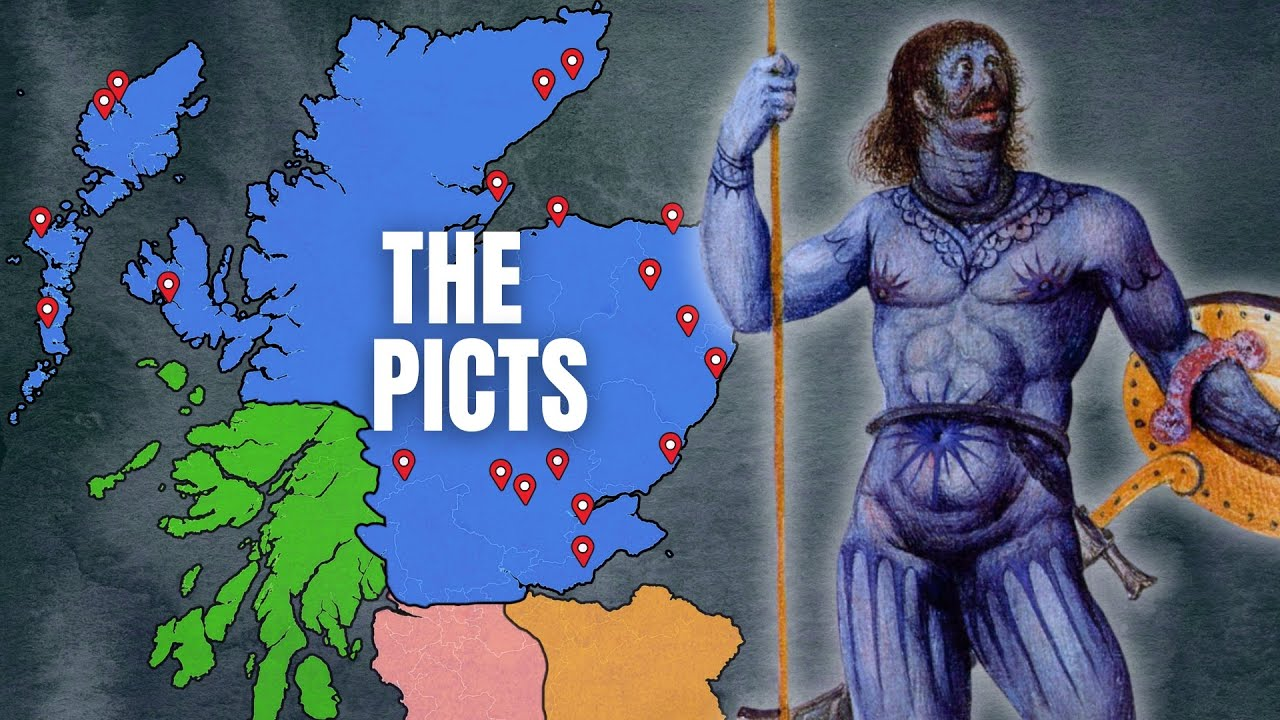
The Picts were a mysterious people who lived in what is now Scotland, north of the Firth of Forth, during the early medieval period.
They first appear in Roman records in the 3rd century AD — described as fierce northern tribes beyond the empire’s frontier. To the Romans, they were outsiders. To later chroniclers, they were enigmatic. To modern historians, they remain one of the most fascinating and debated cultures of early Britain.
And yet, despite their reputation for mystery, the Picts left behind far more than legend.
They carved striking symbol stones.
They built powerful fortified settlements.
They shaped the political foundations of early Scotland.
Much about them remains uncertain — but their influence is undeniable.
More Than Roman Enemies
The Picts were not a single tribe, but likely a confederation of groups who shared cultural and political ties. Roman sources describe them as raiders and warriors, but archaeology reveals something far more complex.
Sites like Dunnicaer and Tap O' Noth show evidence of significant settlement and defensive organization. These weren’t scattered huts in the mist — they were strategic, structured communities.
At Burghead Fort, archaeologists uncovered elaborate fortifications and carved bull imagery, suggesting symbolic power and regional dominance.
Symbols Without a Key
One of the greatest puzzles surrounding the Picts is their language.
Unlike the Anglo-Saxons or later Gaelic kingdoms, the Picts left no surviving written texts that can be clearly understood today. What we do have are intricately carved stones bearing unique symbols — crescents, animals, mirrors, combs, abstract shapes — found across northeastern Scotland.
Were they clan markers? Memorial inscriptions? Political statements?
We don’t yet know.
But these stones remain some of the most distinctive artworks of early medieval Europe.
Kings, Supremacy, and Transformation
Over time, Pictish kingdoms rose and fell. The period sometimes referred to as the “Verturian Supremacy” hints at shifting centers of power within their territories.
Religious transformation followed. With the spread of Christianity, sites such as Portmahomack became important ecclesiastical centers, blending older traditions with the new faith.
But the Pictish world would not remain unchanged.
By the 9th century, Viking incursions destabilized northern Britain. Norse pressure, combined with increasing interaction and eventual merging with Gaelic-speaking kingdoms, led to what historians often describe as “Gaelicisation.”
The distinct identity of the Picts gradually faded.
Their political structures evolved.
Their name disappeared from records.
But their legacy endured — embedded in the formation of the medieval Kingdom of Alba, the precursor to Scotland itself.
The Picts may remain partly mysterious.
But they were not myth.
They were builders, rulers, artists, and key players in the making of early Scotland.
🎬 Timestamps
0:00 - Introduction
4:54 - The Legend of Cruithne
10:18 - Settlements
10:56 - Dunnicaer
17:25 - Tap O Noth
19:56 - Language
25:54 - Burghead
30:03 - The Verturian Supremacy
33:08 - Art & Culture
38:43 - Religion
40:43 - Portmahomack
44:22 - Vikings & Gaelicisation
🎥 Watch the video below to explore the mystery of the Picts — their settlements, symbols, kings, and the transformation that shaped early Scotland: