Perched upon a jagged, sun-scorched volcanic hill overlooking the eastern arm of the Valley of Oaxaca, the archaeological site of Yagul stands as a formidable monument to urban defense and post-imperial survival. Developed primarily during the Early Postclassic period between 900 and 1200 CE following the abandonment of the ancient capital of Monte Albán, Yagul—meaning "Old Tree" or "Old Stick" in Zapotec—grew into a tightly fortified city-state. The site’s dramatic architecture is divided into two distinct zones: a sprawling, elegant civic-religious palace complex situated on the lower terraced slopes, and an impregnable, sheer cliffside citadel (El Fuerte) that crowns the mountain peak, showcasing a society that balanced high artistic refinement with the constant threat of military siege.
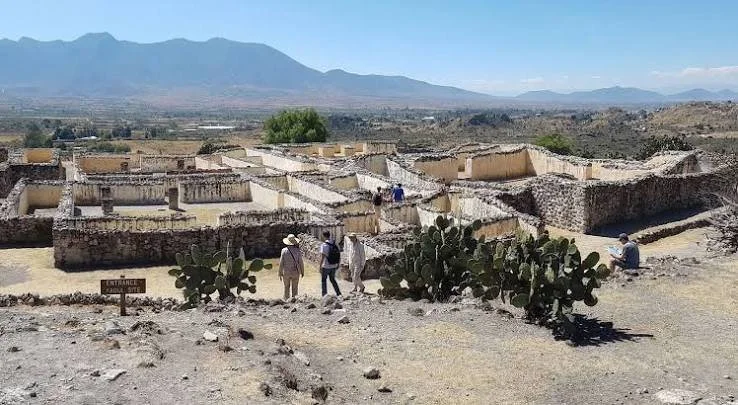
The lower ceremonial core of Yagul is characterized by an exceptionally clean, geometric architectural layout that relies heavily on dry-stone masonry and large quantities of smooth white stucco. The defining structure of this zone is the Palace of the Six Patios (Palacio de los Seis Patios), a massive labyrinthine elite residential complex that closely mirrors the architectural style of nearby Mitla. This palace features a complex network of interconnected rooms arranged around six private, enclosed courtyards. The layout was deliberately designed for maximum security and privacy, creating a spatial barrier that isolated the ruling lords of Yagul from the public eye while providing a cool, breezy oasis protected from the intense heat of the valley.
Directly adjacent to this palace lies Yagul’s architectural masterpiece: its magnificent Ball Court. This structure is the largest ball court in the entire Valley of Oaxaca and the second largest in all of Mesoamerica, surpassed only by the monumental court at Chichen Itza. The playing field is a long, perfectly symmetric, I-shaped alley framed by massive sloping lateral walls constructed from precisely cut stone blocks. In the center of the court, the stone rings common in Aztec courts are absent; instead, the Zapotec game here relied on the ball hitting specific markers on the walls. The sheer scale of this ball court indicates that Yagul served as a major regional center for inter-city athletic competitions and political treaties, where territorial disputes between rival Mixtec and Zapotec city-states were negotiated through the high-stakes ritual of the ball game.
Rising directly behind the palace and ball court is the terrifying volcanic outcrop of El Fuerte (The Fortress). This natural citadel is bounded by sheer, vertical cliffs on three sides, making it virtually unclimable. The ancient military engineers of Yagul reinforced this natural defense by constructing thick stone ramparts and watchtowers along the vulnerable western approach. Inside the fortress walls, excavations revealed strategic water cisterns, food storage chambers, and temporary residential areas, proving that during times of war, the entire population of the valley could retreat up the mountain into this secure sky-citadel, successfully resisting prolonged military campaigns.
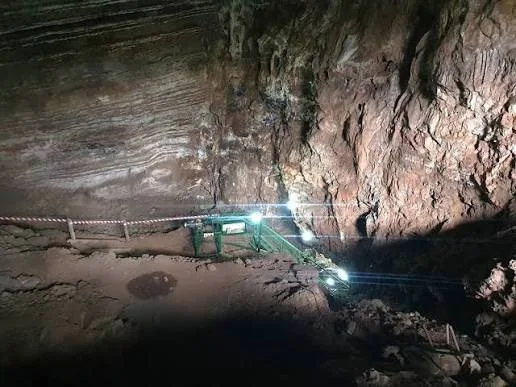
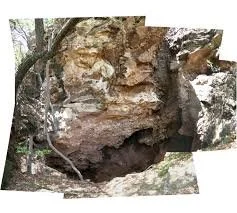
Yagul also possesses a profound deep-historical dimension that extends far beyond its Postclassic stone ruins. The volcanic cliffs and rock shelters surrounding the site contain ancient pictographs painted in red iron oxide, and have yielded some of the oldest archaeological evidence of plant domestication in the Americas. Inside nearby caves like Guilá Naquitz, scientists discovered ten-thousand-year-old preserved maize cobs, squash seeds, and bean fragments, marking the literal birth of agriculture in Mesoamerica.
Yagul stands today as a multilayered monument to human endurance. From its ancient hunter-gatherer caves to its massive stone ball court and defensive mountaintop fortress, the site chronicles the evolution of human society in Oaxaca. It remains a powerful testament to a resilient civilization that knew how to cultivate the land, celebrate its gods through monumental sport, and build an unassailable fortress to protect its cultural heritage from the chaotic storms of war.