Introduction
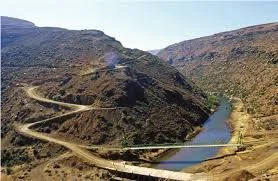
Perched on the narrow, arid eastern shore of Lake Albert below the Western Rift Valley escarpment, the Kibiro Salt Works represents one of the longest-running, specialized chemical industries in East Africa. Operating continuously for over 800 years—from the 12th century CE to the modern era—this site presents a unique archaeological landscape dominated by centuries of intensive, recycled soil processing. For decades, conventional histories focused on agrarian and pastoral developments in Uganda, frequently overlooking the critical role of specialized industrial nodes. The systematic investigation of Kibiro completely corrected this bias, revealing a highly organized commodity-producing center that bound the entire Lake Albert basin into an interdependent economic network.
Pyrotechnology and the Capillary Leaching Method
The industrial footprint of Kibiro is defined by deep ash, charcoal, and ceramic stratigraphy measuring several meters high, consisting almost entirely of fragmented, coarse roulette-decorated boiling vessels. Because the local environment lacks naturally occurring rock salt deposits, the ancient inhabitants developed an ingenious, highly specialized technique to extract pure sodium chloride utilizing hyper-saline geothermal hot springs.
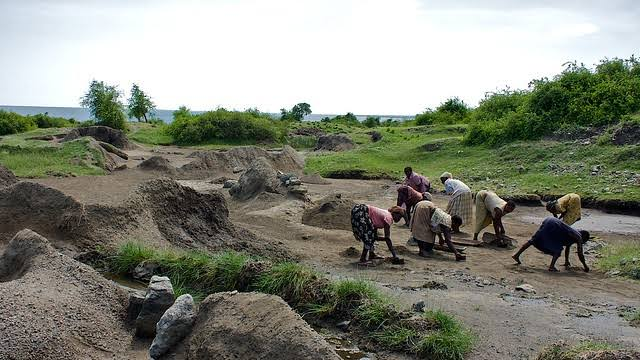
The production methodology relied on a sophisticated leaching process: brackish soil from the hot springs was spread over carefully flattened "salt gardens," where it was left to absorb highly concentrated saline moisture via capillary action. Workers then scraped up this enriched topsoil, placed it into large, conical clay funnels, and filtered freshwater through the mixture to produce a clear, hyper-concentrated brine. This brine was then poured into specialized earthenware vessels and boiled down over regulated wood fires until the water completely evaporated, leaving behind pure salt cakes. The massive volume of discarded pottery and ash found during excavations proves that this industrial cycle was practiced on a near-industrial scale, requiring an immense influx of firewood and raw clay from the surrounding highlands to sustain production.
Conclusion
The technological unmasking of Kibiro fundamentally alters our understanding of early African economic structures. It proves that the precolonial Great Lakes region was not comprised entirely of self-sufficient, isolated farming villages, but was linked by vital commodity-driven specialization. Because the hyper-arid lake shore made agriculture impossible, the inhabitants of Kibiro traded their processed salt for food, iron tools, and pottery from neighboring agrarian communities, establishing a highly resilient web of regional trade. Today, the deep industrial layers of Kibiro stand as a powerful testament to indigenous chemical engineering and economic initiative.