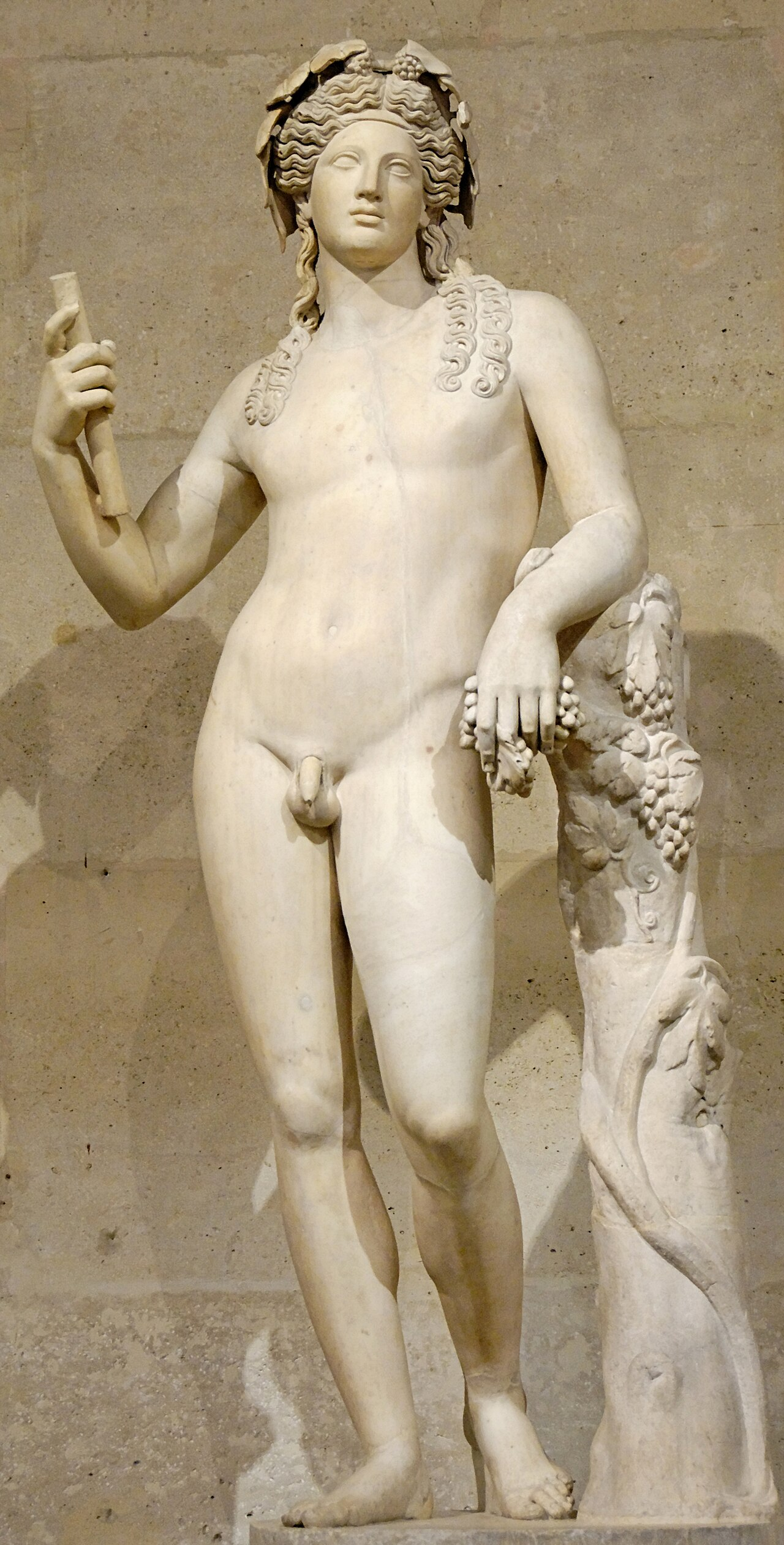
Armed with superhuman physicality and powerful magic, the monkey king known as Sun Wukong goes on to create a whirlwind of mayhem, earning him a tumultuous relationship with the gods. Hear the magical tale of a monkey born from stone, who rose up to become a king, would go on to learn the ways of immortality, and battle the hardiest of the immortal world!
Rurikid Dynasty Family Tree | Rurik the Viking to Ivan the Terrible
In the video below we will analyze the Rurikid Dynasty family tree, from Rurik the Viking to Ivan the Terrible. Enjoy!
How Did India Fall to the Europeans? | East vs. West
European colonial history in Asia -- from the British in India to the Dutch in Indonesia -- is often misunderstood. We're (incorrectly) taught that the East India Companies dominated Asia early, giving rise to more direct European control over their newfound colonies.
The truth is much more interesting. In this video, we will focus on India to tell the story of the West vs. the East in the "Age of Discovery."
European dominance of imperial Asia really only began in the mid-1700s, and that too is a poorly explained phenomenon. In reality, the factors giving rise to European dominance were mostly luck-based, and were the inevitable result of late medieval military-social change in Europe: the Military Revolution.

© Cotswold Archaeology
Amazing Discovery: A sizable cemetery of Bronze Age burial mounds was discovered near Stonehenge
BY THE ARCHAEOLOGIST EDITOR GROUP
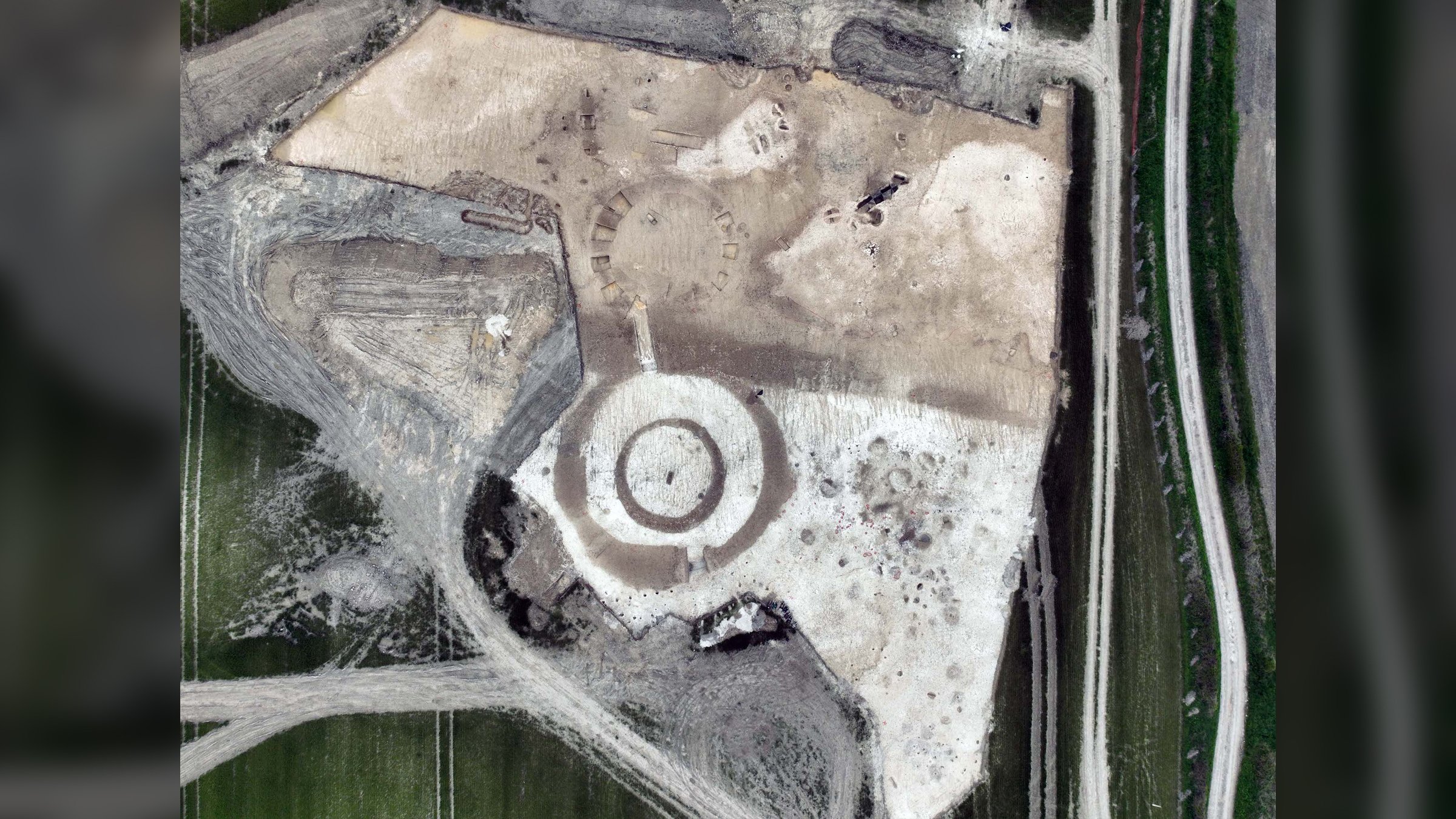
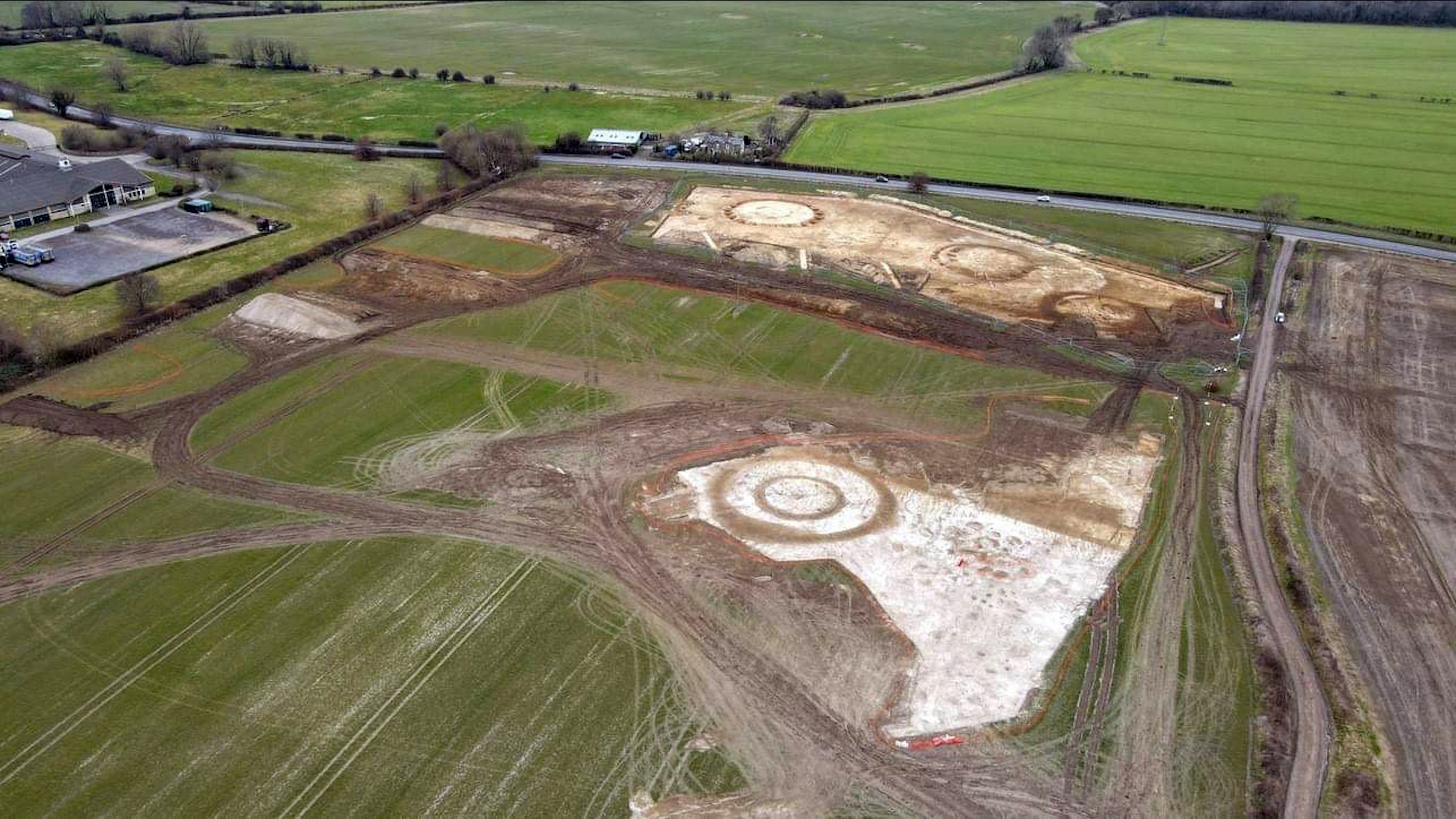
A large cemetery of Bronze Age burial mounds, estimated to be up to 4,400 years old, has been found by archaeologists in advance of a building project less than 10 miles (16 kilometers) from Stonehenge.
The cemetery is home to more than 20 barrows, or round mounds, that were erected on a chalk slope at Harnham, southwest of Salisbury, England, between 2400 and 1500 B.C.
There is no proof that the cemetery was associated with Stonehenge other than the location's closeness to the well-known structure. Yet the barrows were constructed around the same period as some of the main portions of Stonehenge, claims Cotswold Archaeology, the private company in charge of the excavations.
Stonehenge may have served as a community gathering spot, a calendar, or possibly a burial ground, according to several researchers today.
The size of the newly discovered barrows varies, with the smallest being roughly 33 feet (10 meters) broad and the largest being 165 feet (50 meters). Nonetheless, the majority of the barrows are between 20 and 30 meters (65 and 100 feet) across.
According to Alistair Barclay, an archaeologist with Cotswold Archaeology and the site's post-excavation manager, the barrows at the cemetery are arranged in "pairs or small clusters of six or so."
The archaeologists arrived at the location in 2022, and they have now completely excavated five barrows in two locations. The location of the fifth barrow, which may have been obscured by loose material that washed down from an upland area, was unknown. Four of the barrows had previously been identified.
An oval-shaped ditch that surrounded one of the barrows was later replaced by a virtually circular ditch throughout prehistory. Because a mass grave near its center contained the skeletal remains of adults and children, the barrow may have been constructed before the others during the Neolithic period, which ended around 2400 B.C.
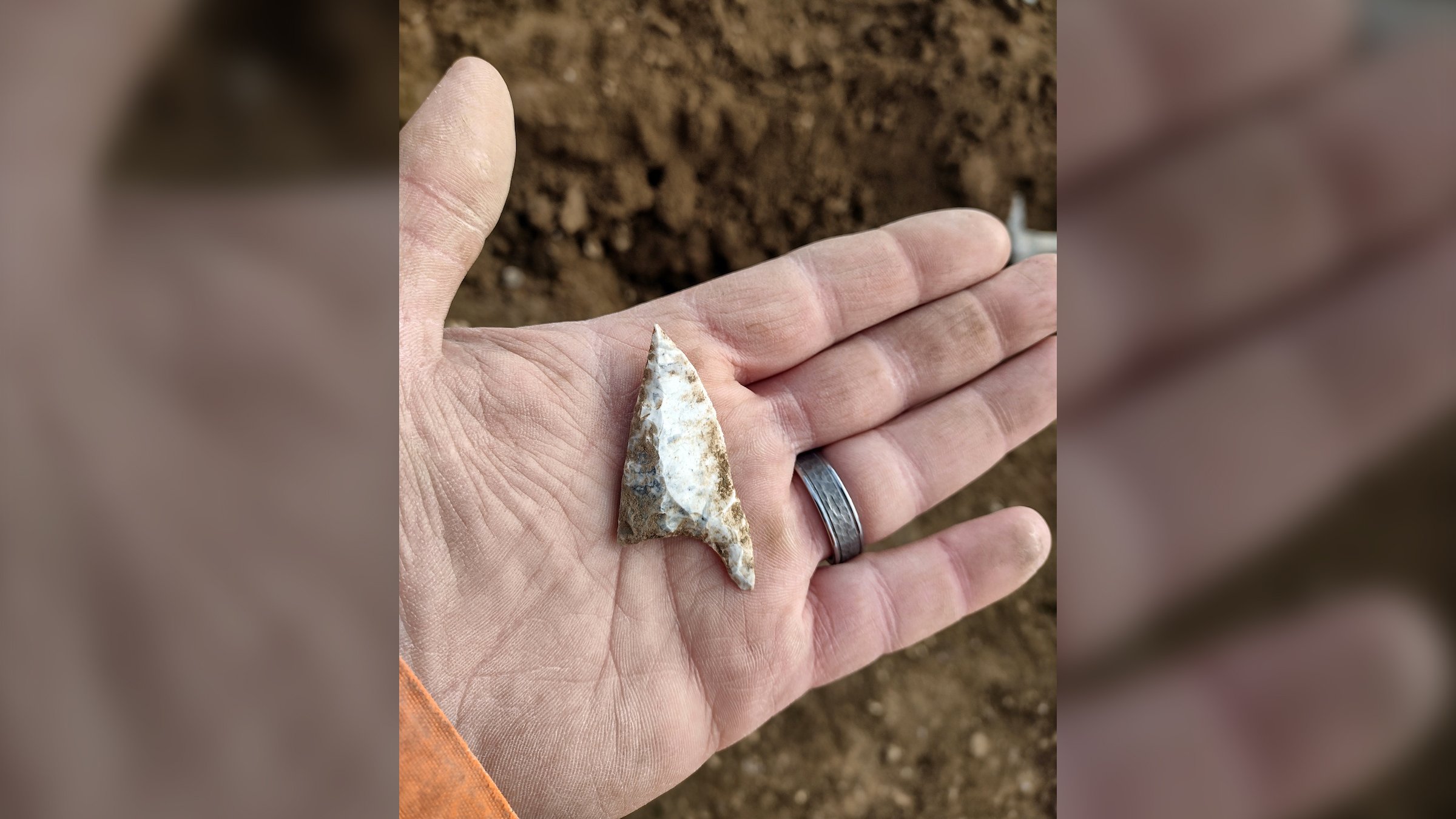
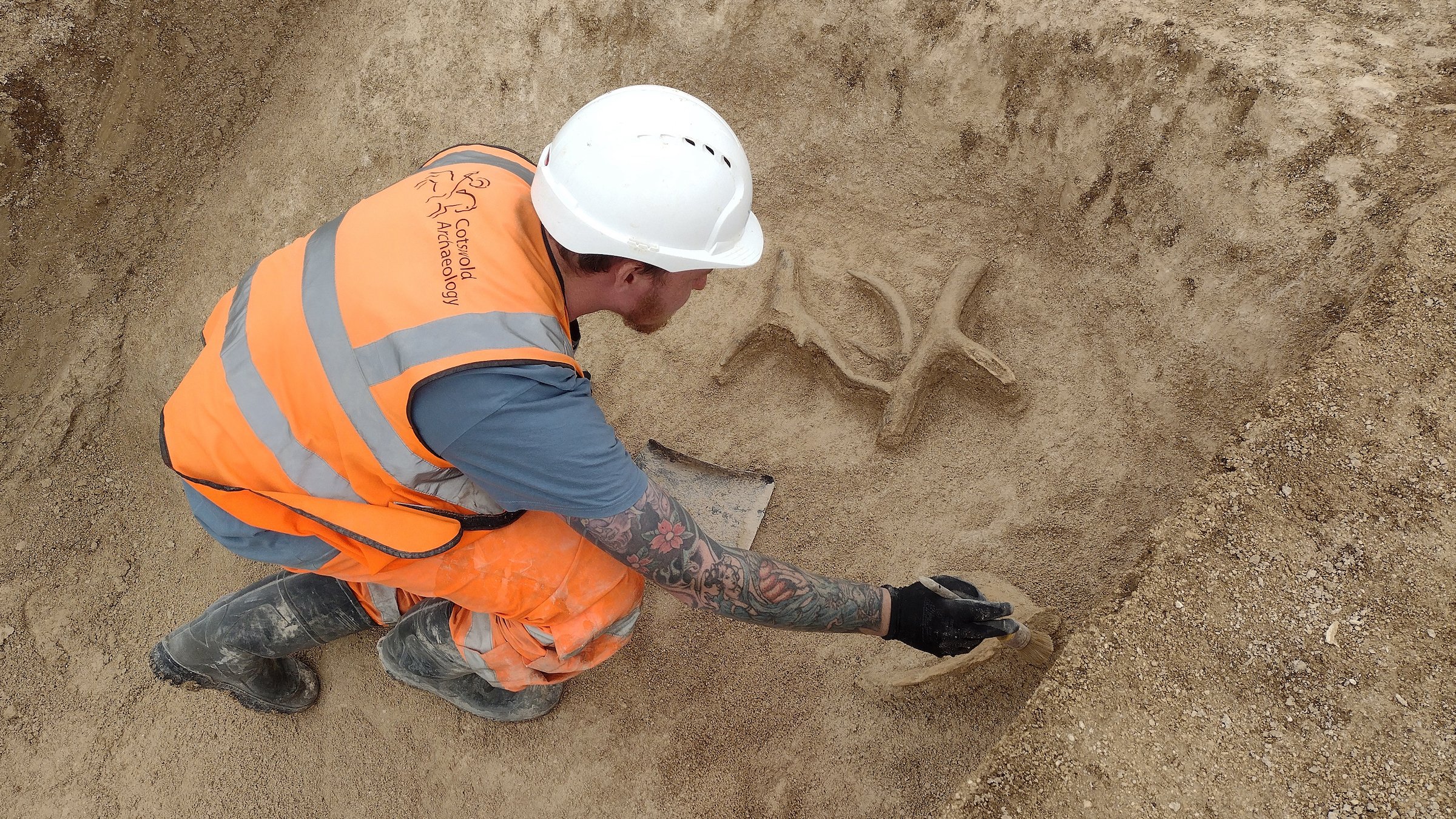
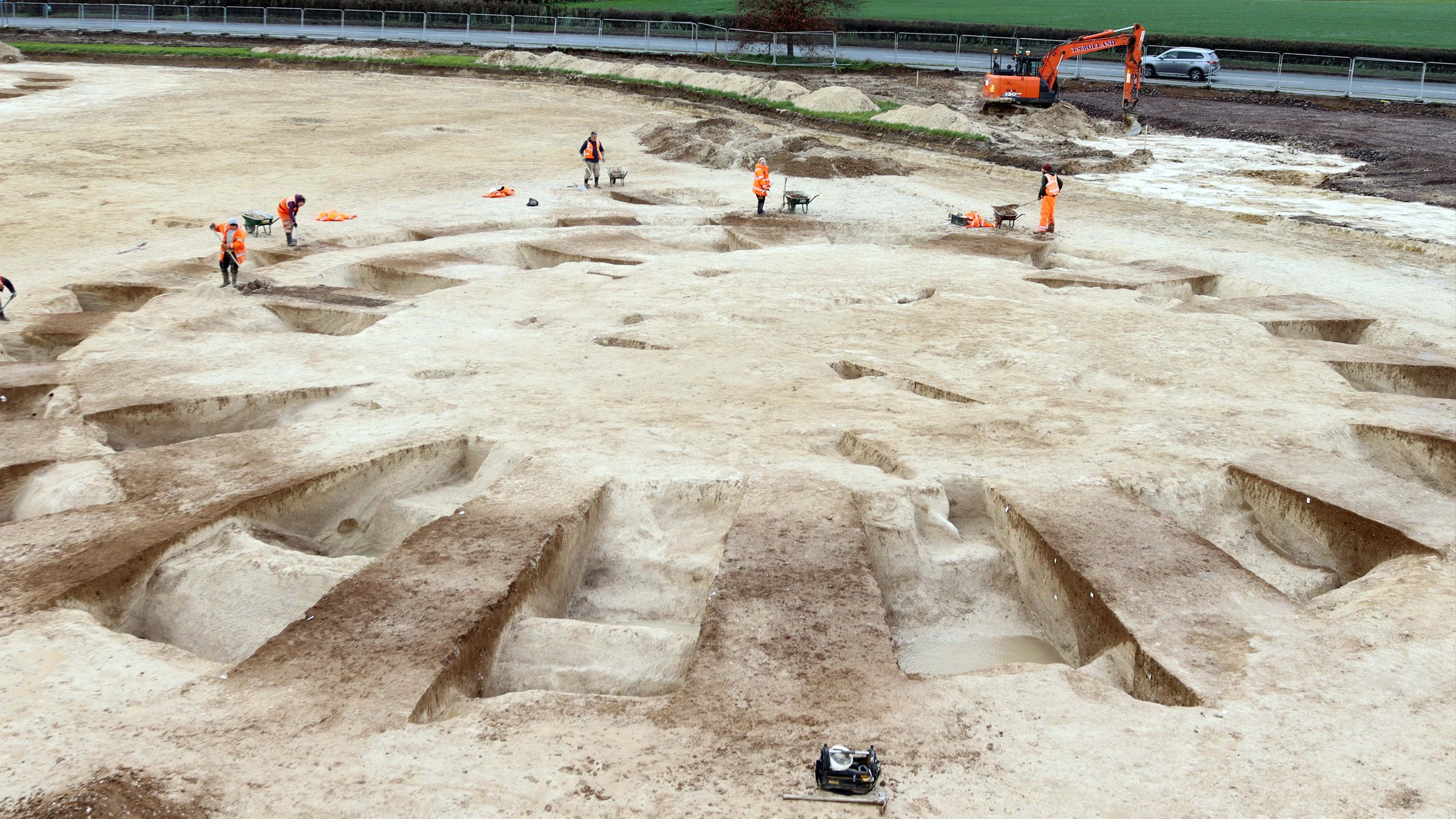
The Neolithic highly valued red deer (Cervus elaphus) antlers, which were used to make tools, ceremonial artifacts, and little things like pins and combs, and the oval ditch also cut through the pits of these antlers.
The antlers will now be examined for indications of intentional damage or wear that would suggest they were originally used to produce tools, according to the statement.
In graves among the barrows, the archaeologists have uncovered the bones of nine additional burials as well as three items. Grave goods like clay "beakers," which are recognizable round drinking vessels, were found in certain graves, showing that the deceased belonged to the Bronze Age "Bell Beaker culture," which expanded throughout Britain after about 2450 B.C.
The site may have had signs of an Iron Age agriculture area, according to the Cotswold Archaeology team, which has also discovered indications of later occupants. There are more than 240 pits and postholes in it. The majority of the pits were used to dispose of trash, which was helpful for archaeologists researching how people lived and farmed the area at that period. Some of the holes may have been used to store grain.
The crew also discovered signs of a Saxon building at the location, along with other Anglo-Saxon era items (fifth to 11th centuries A.D.)
The Unspeakable Things Masters Did To Slaves in Ancient Rome
At one point during the short rule of Julius Caesar (49 BCE-44 BCE), he decided that he needed to shore up his support in the Senate by adding a number of new seats. This had been done before, but this time the men coming to Rome were not Roman, they were from Gaul, what is now France, and they had only recently been defeated by Rome. Though we now know that Gaulish society was much more advanced and intricate than was believed for centuries, it was nowhere near advanced as that of the Romans, and the newly appointed senators were, by all accounts, stunned by the city of Rome: the size of it, the buildings of a type that existed nowhere else on the planet, the crowds, the teeming streets, the art and the technology. It was like they were on another planet.
They did recognize one thing right away – Rome was full of slaves. Some of the Gauls captured during Rome's wars with their homeland. Could the Romans have built their great city without slaves? Probably – but that wasn't the way of things in ancient Rome, or most other places in the world at the time. And like most other people that “owned” slaves, the Romans could be brutal. Very, very brutal.
In today's video we look at The Unspeakable Things Masters Did To Slaves in Ancient Rome...Keep watching to see Roman Slaves, Slavery in Rome, Life as a Roman Slave.
1.2 Billion Years of Rock is Missing; The Mystery of the Great Unconformity
In the Grand Canyon, there is seemingly 1.2 billion years of rock and thus geologic history missing. As, 520 million year old rock directly overlies 1.7 billion year old rock with nothing inbetween the two. This is what is referred to as the "Great Unconformity", and happens to also occur in states such as Colorado, Nevada, and New Mexico. This video will discuss one possible reasoning behind why 26% of Earth's geologic history is missing across a vast area.
The Spartans Explained in 5 Minutes
In this video, we explore the history and legacy of the Spartans, one of the most renowned warrior societies of ancient Greece. From their brutal training as young boys to their legendary feats of bravery on the battlefield, the Spartans have fascinated historians and pop culture enthusiasts alike for centuries. Enjoy!
What They Have Just Discovered In Africa Scares Scientists
From the alien stones to The Skeleton Coast, we will unravel every terrifying secret that lies within the heart of the cradle of civilization!
That’s right- we are delving deep into the shocking discoveries that were made in Africa. Let’s just say: this continent packs a punch when it comes to altering everything we know about our world, its history, and its future! Africa doesn’t only have an affinity with the past- the continent is carving another ocean for the future as we speak. Intrigued?
Join us as we explore What A Man Just Discovered In Africa TERRIFIES The Whole World!
20 Rare Historical Photos That Scientists Can Not Explain
In the video below we will be going through 20 rare historical photos that scientists can not explain. Enjoy!
Stoic Rules to Conquer the Day
In this video we will provide you rules written by us to help you start your day with the right mindset. Watch the video below for more!
"Stoic Quotes for Strength and Resilience in Tough Times" || Epictetus Quotes
This video is a collection of some of the most insightful and inspiring quotes from the great Stoic philosophers. These quotes have been carefully selected to provide motivation and wisdom for anyone seeking to live a more fulfilling and purposeful life. Each quote is presented in a visually stunning format, accompanied by music that creates a calming and contemplative atmosphere. Whether you are new to Stoicism or a long-time student of philosophy, this video is sure to provide you with inspiration and food for thought. So sit back, relax, and allow these timeless words of wisdom to guide and inspire you on your journey.
Ancient Chinese Philosophers' Quotes which are better Known in Youth to Not to Regret in Old Age
The quotes of Ancient Chinese philosophers offer timeless wisdom for navigating the complexities of modern life. We hope that the quotes we share with you in this video will offer you inspiration, guidance and encouragement. Enjoy!
Take a look: What ancient Greeks, Egyptians, and Scythians really looked like
Travel back in time and witness the ancient inhabitants of Greece, Egypt, and Kazakhstan and more like never before! Using the power of AI, we've animated these stunning reconstructions to bring history to life. Don't miss this incredible journey into the past!
The New Discovery in Egypt That Scares Scientists
Egypt has always been famous throughout even the ancient world for its mysteries and incredible feats of structural engineering. The ancient past of Egypt is something that is mostly lost to us, and even though discoveries come to light every now and then, most of Egypt’s secrets are well-kept between the endless scorched sands. Egypt achieved feats so incredible that many people still believe that the ancient Egyptians had to have been in contact with alien beings. From the first-ever pregnant mummy to a giant pit of mummified baboons, here are the 15 Strangest Things Recently Discovered In Egypt.
Why Did the Roman Empire Stop Expanding?
Why, at the height of its power, did the Roman Empire stop growing? The cold northern climate and fierce Germanic tribes were only part of the answer... Watch the video below for more!
The Unholy Truth of Medieval Monasteries | What They Never Confess
In this video we will uncover the hidden and scandalous side of mediaeval monasteries. While they may seem like peaceful havens of spirituality, the truth is far more complex. From harsh living conditions and superstitions to corruption and persecution, the inhabitants of mediaeval monasteries were far from perfect. We'll delve into the dark stories that were often hidden behind the thick walls of the cloister, including coercion and debauchery.
Advice from an Old King Before You Inherit the Throne
After reading Robert Greene's "48 Laws of Power" and a few other books on the subject, we decided to incorporate what we learned into this video and have the lessons spoken through the character of an old king. Enjoy!
Built By Ancient Giants: A Mysterious Pyramid Hidden Inside Of A Mountain In Mexico
In the heart of Mexico, an ancient wonder more than 2,000-years-old looms large, dwarfing even Egypt’s famed Great Pyramid of Giza. This is the Great Pyramid of Cholula, a colossal structure largely concealed by the mountainous terrain it was built within.
Shrouded in mystery, legend attributes the creation of this engineering marvel to a mythical race of giants said to have roamed Mexico centuries ago. This colossal monument, stretching 1500 feet in width and reaching a height of 220 feet, harbors a labyrinth of tunnels stretching five miles beneath its surface. It is the largest pyramid ever constructed by volume, and some consider it to be the largest monument ever crafted by human hands.
The temple complex contains many distinct buildings, each possessing unique historical, archaeological, and spiritual attributes. The largest of these structures are La Conejera, The Pyramid of the Painted Skulls, and The Pyramid of the Nine Stories. Beyond these central edifices, courtyards, altars, outbuildings, and decorative surfaces dot the landscape. These surfaces once bore vibrant Aztec murals, a colorful invocation of goodwill and fortune from the gods.
Astoundingly, most of the Pyramid is crafted from 'adobe' bricks, a blend of mud, sand, and straw, baked solid under the sun. Mexico's arid, dry climate has served to preserve these bricks, maintaining their strength and integrity over millennia.
The Great Pyramid of Cholula is not considered to be a single structure by some but a series of six or more pyramids built on top of one another, each the contribution of another civilization, designed not to replace the preexisting monuments but to preserve them.
Over the centuries, archaeologists, explorers, and anthropologists have endeavored to unearth the secrets held within this monument. They seek to understand its origins, peeling back layer upon layer of its construction. Yet, despite their efforts, they have been unable to reach a consensus regarding the identity of the original builders of this monument...
A New Impact Crater was Discovered by One of my Viewers; Contains Shocked Quartz
In Saudi Arabia, a local viewer of mine has not only discovered a new impact crater but he has also performed field and lab work to prove it! At what he is naming "Toonsi Crater", he found clear cut evidence of shocked quartz along with what appears to be the impact breccia known as suevite. This video will discuss this brand new find, which was made by Abdulrahman Toonsi in Saudi Arabia.

Archaeologists find a 3,000-year-old bronze sword in Germany
Archaeologists from the Bavarian State Office for the Preservation of Monuments have announced the discovery of a well-preserved Bronze Age sword in the town of Nördlingen, Bavaria, Germany.

Most Bronze Age remains around Nördlingen belong to the Urnfield Culture (often divided into several local cultures within a broader Urnfield tradition) which emerged around 1300 BC. The Urnfield Culture grew from the preceding Tumulus Culture and developed advanced metal working skills in Bronze weaponry and armour.

The sword was found among a deposit of grave goods and weaponry, alongside the remains of a man, woman and child. The discovery is extremely rare for this part of Germany, as most burial mounds have long been looted during antiquity or opened during the 19th century.