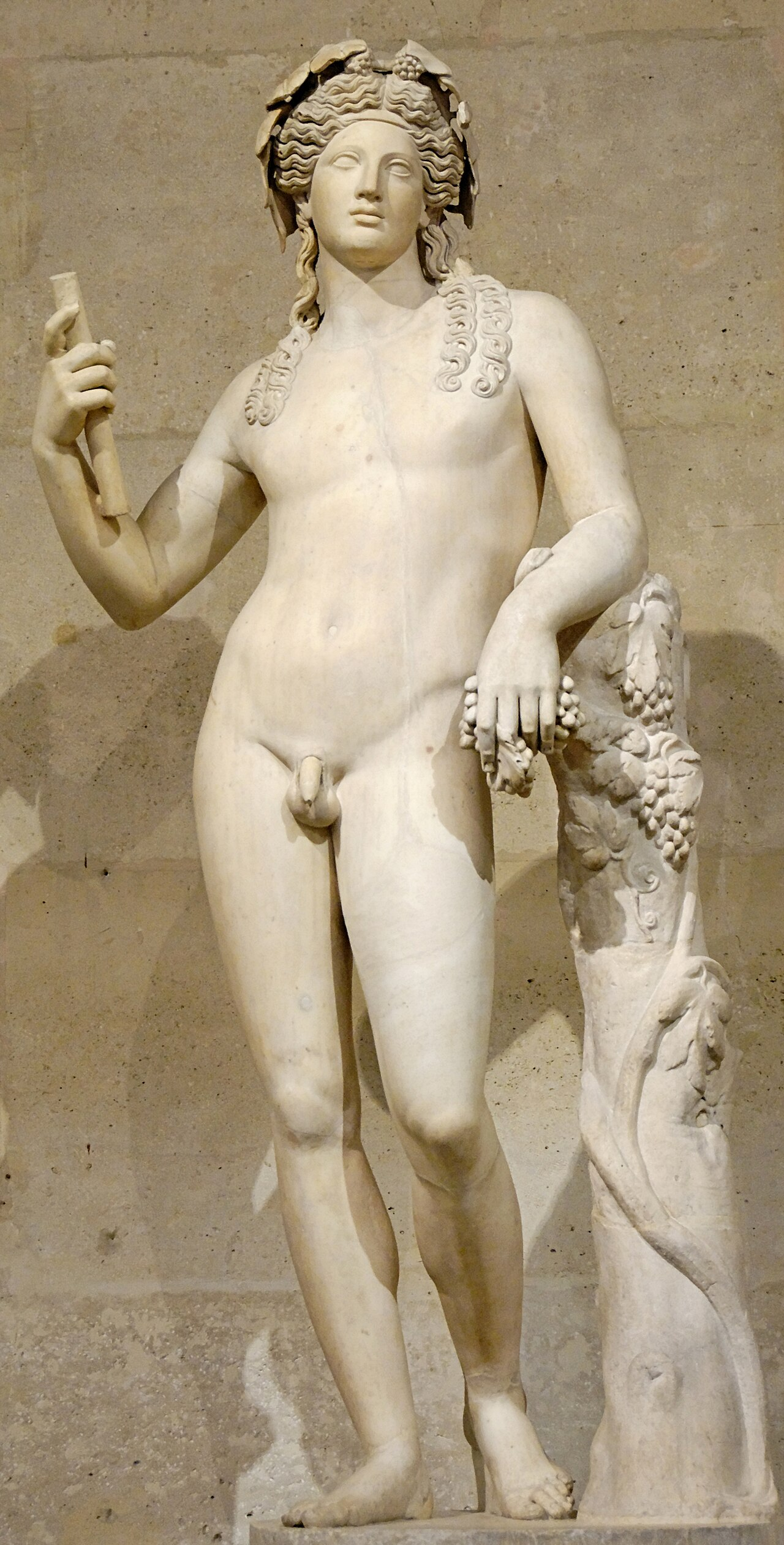
In this video, we will delve into the wisdom of the old Native Americans and their timeless quotes and proverbs. These insightful sayings are passed down through generations and offer invaluable guidance on life, nature, and the world around us. From the teachings of Chief Seattle to the wisdom of Sitting Bull, we will explore the profound messages behind their words and uncover the lessons that we can still learn from today. So, join us on this journey to discover the powerful words of the ancient Native Americans and gain a deeper understanding of their culture and beliefs.
The Creepy Facts About Cleopatra
Think you know Cleopatra? Think again. Get ready to uncover the dark, twisted side of Egypt's most enigmatic queen, where the line between seductress and sinister blurs. Today, we delve into the unknown world of Cleopatra, where dark intrigue, betrayal, and jaw-dropping revelations await. From her wicked manipulations to her incestuous relationship with her brother and chilling power plays, we'll expose the truth behind the legendary beauty that has captivated our imagination for centuries.
In today's video we look at The Creepy Facts About Cleopatra!
The Insane Secret Life of Eunuchs in the Forbidden City
Eunuchs were castrated males who were often recruited as servants or officials in the imperial palace. In the Forbidden City, they held important roles such as overseeing the emperor's personal affairs, managing the palace staff, and guarding the emperor's harem. They were considered to be loyal to the emperor and were often favored by him for their obedience and trustworthiness.
However, life as a eunuch was not easy. They were forbidden from marrying or having children, which often left them feeling isolated and alone.

This is the Oldest Musical Instrument in the World
BY THE ARCHAEOLOGIST EDITOR GROUP
New Paleolithic musical evidence was discovered during the summer 2008 excavations at the Hohle Fels and Vogelherd sites in the form of one virtually complete bone flute's remains and small, isolated shards from three ivory flutes.
A almost complete bone flute, the most remarkable of these discoveries, was discovered in the basal Aurignacian layers at Hohle Fels Cave in the Ach Valley, 20 kilometers west of Ulm. There were 12 components of the flute. The shards were dispersed over a horizontal region of roughly 10 x 20 cm and a vertical distance of 3 cm. Among all the musical instruments discovered so far in the Swabian caves, this flute is by far the most complete.
The Hohle Fels bone flute's preserved piece is 21.8 cm in length and 8 mm in diameter. Five finger holes remain on the flute. The surfaces of the flute and the bone's structure are in superb shape and provide a wealth of information about how the flute was made. To build what would have been the musician's blowing end of the flute, the creator carved two deep, V-shaped notches into one end of the instrument. This strata has a moderately high find density, including charred bone, a lot of flint knapping waste, worked bone and ivory, bones from horses, reindeer, mammoths, and ibex, as well as bones from other animals. Therefore, we infer that modern humans manufactured the artifacts from the base Aurignacian layers not long after their arrival in the area during a migration up the Danube Corridor. No diagnostic human bones have been recovered in Swabian Aurignacian sediments.
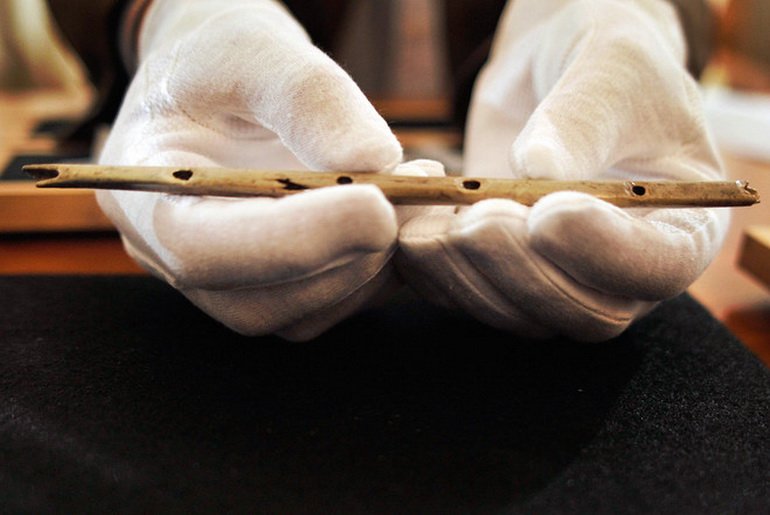
Daniel Maurer/Associated Press
The flute's inventor created the instrument using a griffon vulture's radius (Gyps fulvus). This species produces bones perfect for huge flutes and has wingspan between 230 and 265 cm. The Swabian cave deposits from the Upper Paleolithic period provide evidence of griffon vultures and other vultures.
Two tiny shards of what are almost certainly two ivory flutes from the basal Aurignacian were also discovered during the 2008 excavations at Hohle Fels. The two finds are not from the same instrument, according to the differing diameters of the shards. Another isolated shard of an additional ivory flute was discovered by excavators at Vogelherd in the Lone Valley, 25 km northwest of Ulm.
Making a flute out of bird bone is far simpler technologically than manufacturing one out of ivory. A naturally curved piece of ivory must first be rough shaped along its long axis, split open along one of the bedding plains, carefully hollowed out, and then the holes must be carved. The flute's halves must then be joined together with an airtight seal. It is common to locate single pieces of delicate ivory artifacts given their propensity to break into several pieces.
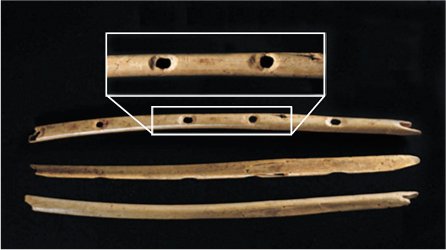
The 31–40 ka BP range is covered by the ten radiocarbon dates from the basal Aurignacian. The flutes from Hohle Fels precede 35,000 calendar years ago, according to independent controls and available calibrations using various techniques. There is no solid proof that musical instruments existed before 30 ka BP, with the exception of the Swabian Jura caves.
These discoveries show how significant music was to Aurignacian culture in the Ach and Lone valleys in southwest Germany. The majority of these flutes come from archaeological contexts that are rich in lithic and organic objects as well as animal remains that have been hunted and burned. This data implies that people who lived at the locations engaged in a variety of social and cultural musical activities and that flutes were thrown with many other types of occupational waste. In the case of Hohle Fels, the bone flute's placement in a sparse archaeological horizon only 70 cm from a female figurine of a comparable age raises the possibility of a contextual connection between these two discoveries.
The flutes from Hohle Fels, Vogelherd, and earlier discoveries from nearby Geißenklösterle Cave show that the Aurignacian had a musical tradition at the time that modern humans first colonized the Upper Danube region. When early figurative art and other innovations, such as a vast variety of new types of personal adornment and new lithic and organic technology, emerged throughout the Aurignacian, a musical tradition also emerged. However, music appears to have contributed to improved social cohesion and new forms of communication, which indirectly contributed to the demographic expansion of modern humans relative to the culturally more conservative Neanderthal populations. Although the presence of music in the lives of Upper Paleolithic peoples did not directly produce a more effective subsistence economy and greater reproductive success, it does seem to have contributed to these factors.
The Predators of Prehistory
In the following video we will be talking about the predators of prehistory. Watch the video to find out more!
Is the Fall of Satan really described in the Bible?
Does the Bible really tell us how Satan fell? Watch the video below to find out!
Solomon's Temple 3D
Visualize Solomon's temple in all its glory in this amazing 3D animation based on scriptural, archaeological, and historical research. Solomon's temple stood in Jerusalem for almost 400 years, and was the center of worship for all of Israel. Now you can see it and experience this most significant building built to the Lord.
Amaterasu: The Japanese Goddess of Sun
In the following video we will be talking about Amaterasu, the Japanese goddess of sun. Watch the video to find out more!
Chinese Mythology Creation Story Explained in Animation
This video on Chinese mythology explains the Chinese creation myth starting from the first god Pangu. In this video, many creation myths have been fused, when often Pangu would be its own answer to the “Creation” question, and Nüwa would be another. With the creation of the humans, the brother and sister myth often does not co-exist with Nüwa, and in some versions, they simply do one test and everything works out. Another version, not included here, has a giant snake give birth to all animals and then finally humans. This said, creation myths are not a dominating aspect of Chinese Mythology and there are not as many records of them as there are of other areas (like the creation of the immortals and various arts or ideas) – it seems like the origin of the human race and Earth was not as important of a question to the ancient Chinese.
Terror birds: predators that can grow up to an incredible 10 feet tall and weigh over 1,000 pounds
These are the horror birds: tough, strong creatures who sliced through small mammals with the ease of the person who once used a pickax to pierce the skull of my insane uncle in a bar brawl (he survived, and no, I'm not even exaggerating).

Like human babies riding in cars, millions of years ago certain species of mammals found themselves simply unable to stay awake while in the jaws of the terror birds. So sleepy! IMAGE: STEPHANIE ABRAMOWICZ, NATURAL HISTORY MUSEUM OF LOS ANGELES COUNTY
You'd be excused if you tried to convince yourself that a pigeon's forebears were dinosaurs by gazing at one. After all, this monster evolved from some of the best killing machines evolution has ever produced, and it now sips gutter water and attacks the elderly in exchange for breadcrumbs. But before birds were begging for food in parks millions of years ago, they had already reached the top of the food chain. In actuality, they filled the voids left by their dangerous theropod ancestors like Velociraptor.
These are the horror birds: tough, strong creatures who sliced through small mammals with the ease of the person who once used a pickax to pierce the skull of my insane uncle in a bar brawl (he survived, and no, I'm not even exaggerating). The tallest of the 18 species, which can reach heights of 10 feet, chose not to use flight in favor of pursuing the beings that had just staged a party to bid farewell to the giant predatory dinosaurs. The unfortunate things had a hangover when they woke up, and the hangover was the terrifying bird.

The 2.5-foot-long skull of KELENKEN, THE LARGEST KNOWN SPECIES OF TERROR BIRD. THAT MASSIVE HOOK LED *KELENKEN'*S PREY TO DISPARAGINGLY REFER TO THE PREDATOR AS "CAPTAIN HOOK." THE TERROR BIRD, THEY KNEW, WAS REAL SORE ABOUT BEING REJECTED FROM THE ARMED FORCES, WHAT WITH ITS LACK OF ARMS. IMAGE: LUIS CHIAPPE, NATURAL HISTORY MUSEUM OF LOS ANGELES COUNTY
The terror birds emerged as apex predators in isolation 60 million years ago in South America, which had not yet united with its northern counterpart. According to paleontologist Luis Chiappe, despite their success, their fossils are fragmentary and extremely rare. In 2007, he detailed the giant, oddly boxy noggin of the greatest terror bird ever: Kelenken, named after the dreadful bird spirit of Patagonia's indigenous Tehuelche people.
He declared, "It's the largest known skull for terror birds." In actuality, it's the biggest bird skull ever discovered. It is a massive, monstrous creature that is around 2.5 feet long and has a huge hook on the end of its beak that resembles an eagle.
Paleontologists believe that terror birds were not crumb-loving pigeons based on fossils like these, and not just because there was no bread in those days. Even while a skull cannot reveal the precise method of death, to Chiappe, this is unmistakably a carnivore's beak.

To the best of paleontologists' knowledge, terror birds weren't see-through. But then again, no one has definitively DISPROVED THAT THEY WERE SEE-THROUGH. IMAGE: STEPHANIE ABRAMOWICZ, NATURAL HISTORY MUSEUM OF LOS ANGELES COUNTY
We all know that a cockatoo, a small parrot, can rip your finger off, the man remarked. Imagine the harm a bird like this could have caused with just one stroke from its enormous beak and skull. So that's definitely one pretty simple way to picture how these animals would have murdered their prey.
The fearsome birds resided in woods, where they were probably waiting in ambush on the numerous tiny mammals that arose in South America after the extinction of the dinosaurs. However, biomechanical tests have demonstrated that their skulls and beaks likely weren't robust enough to take on enormous animals. These were highly quick, swift predators, reaching speeds of maybe 30 mph, and they would have been more than capable of pursuing scampering creatures with their massively expanded legs. (This shouldn't surprise anyone who has seen how ostriches gallop, like huge 40 mph feather dusters having panic episodes, in a really frenzied and entertaining manner.)
Terror bird legs ended with talons, thus it's possible that the creatures shot their prey in the head with their beaks before standing on it and quickly shivving it to death. Or perhaps they shook and chomped on their prey until its spine broke.
For further conjecture, we may also investigate the living relatives of the terror birds, the seriemas. Even though these South American birds are only a few feet tall, they are skilled predators. They catch lizards, rodents, and other prey with their talons and smash them against rocks to break their bones.

I included this fairly ugly photograph because it’s so crummy that it almost makes the terror bird look real, like bigfoot in that grainy video. Also, I like how disgusted this guy is by his creation. Such is the tortured existence of the artist, I suppose. IMAGE: WIKIMEDIA
Even the idea has been floated that the horror birds weren't actually terrifying. Instead, they were fervent vegetarians, or hunted birds. German researchers published the findings of a geochemical investigation of terror bird bones last year, concluding that the bones' calcium isotope compositions were more consistent with herbivores than carnivores.
But Chiappe rejects the idea that a creature with such a formidable build was anything other than a predator. He contends that the terror birds had extremely enormous heads compared to their bodies, much like modern eagles and very different from contemporary omnivorous terrestrial birds like emus, ostriches, and cassowaries.
"I personally think that you can come up with all these very rather innovative views, but I think that it makes a lot of sense that these animals were predators," the man stated. The same thing happened when someone proposed that T. rex was a scavenger. They undoubtedly consumed dead food, but it certainly caused death.
He continued, "Maybe [the terror birds'] bite force was not strong enough, or perhaps they were restricted to preying on particular animals, but that doesn't, in my opinion, make them a non-predatory bird."

A terror bird freaks right out about how poorly its shadow was drawn. IMAGE: WIKIMEDIA
Whatever their food and feeding habits, the terror bird empire began a steady fall starting around 4.5 million years ago, when the Central American isthmus developed, connecting two previously independent continents. All those species who had spent millions of years in seclusion were now mixing, schmoozing, and shaking hands - with their teeth.
While the apex predators of North America—bears and big cats—colonized South America, terror birds migrated up into what is now the southern United States. As a result, Chiappe explained, "they had to contend with new competition for the same resources, and that, coupled with possible climatic changes they may not have been able to handle and that may have affected their hunting strategies, probably drove them to extinction."
Because of this, no matter how dangerous a bird may have been, a cat has always managed to keep it under control. It was somewhat reminiscent of Sylvester and Tweety's never-ending conflict, only with more violence and fewer speech problems.

Foto: Lene Brandt / Handout Nationalmuseet/Free
A huge Rune-stone discovered in Denmark beneath a kitchen floor
The old linoleum kitchen floors of a couple's home in the Danish village of Mosekaer, just outside the city of Randers, were being removed when they stumbled upon a huge rune stone, weighing about 900 kg.
One of the earliest rune stones in Denmark may have been unintentionally discovered by Lene Brandt and her husband, Anders Nielsen, and measured two meters in length and 80 cm in width.
It has been designated a danefæ, or treasure, by the national museum, Nationalmuseet, which is currently putting much effort into figuring out its precise age. The five runes carved on the stone's surface either start or terminate the inscription, depending on the stone's age. The stone's age is important since it determines whether the five runes carved on it begin or end the inscription.
The five runes, which are pronounced "aft bi," mean "after B" in English. Rune stones were frequently created to commemorate notable people, and in this case, the inscription may be referring to a person by the names of Bjrn, Bjarne, or Birk.

The stone most certainly belongs to Denmark's first set of rune stones, making it a very uncommon discovery if the runes indicate the beginning of the text.
Anybody interested in runes should pay special attention to the area near Randers because up to 44 runestones have been found there. Rune, which means "hidden knowledge and wisdom," is an Old Norse word.
Lisbeth Imer, a senior researcher and runologist at the National Museum, estimates that just 10 to 20 rune stones from the 700s–800s have been discovered in Denmark. These early stones are especially interesting because there are only about 200 known Viking Age rune stones dispersed over the country, with the earliest dating to the 700s and the most recent to the 900s. The renowned Jelling Stones, for instance, were built around 965.

The Jelling stones are entire, in their original site, and referenced in historical documents; the Randers rune stone may be older than these, but they cannot be directly compared. In contrast, just a little section of the inscription is still visible on the Randers stone, which is a fragment.
The rune stone is being kept at Museum Stjylland as it waits for additional analysis to establish its age and perhaps shed more light on the history of the Vikings.

Kijimuna: The Red-Haired Mythical Guardians of Okinawa
In this captivating documentary, we journey to the heart of Okinawa to uncover the lore of the Kijimuna, mystical creatures deeply woven into the fabric of local folklore. These mythical beings, often depicted as small, red-haired woodland spirits, are seen as both guardians of nature and symbols of community values.
We delve into the rich tapestry of Okinawan folklore, where the Kijimuna hold a place of prominence. From their abode in the Banyan trees to their playful, sometimes mischievous interactions with humans, every tale adds a unique layer to the Kijimuna's character.
This film explores how the Kijimuna encapsulate the Okinawan respect for nature and the environment. Their tales often serve as parables, reminding us of the importance of co-existing harmoniously with the natural world.
We also shed light on how the Kijimuna reinforce community bonds and cultural norms within Okinawan society. Through heartwarming narratives and traditions, we see how the Kijimuna have become endearing cultural symbols that continue to unite generations.
Whether you're a folklore enthusiast, a cultural explorer, or simply someone fascinated by the mythical, "The Kijimuna: Guardian of Nature and Community in Okinawan Folklore" promises to be an enchanting journey. Join us as we dive deep into the folklore of Okinawa.
Amazing Mongolian Proverbs and Sayings That Will Turn Your Mind
The great Mongolian wisdom carries a parasitic deep meaning that helps to acquire important life knowledge that contributes to a happy life. Great Mongolian proverbs and sayings are filled with vitality, thanks to them you can temper your spirit, fill your heart with freedom and wisdom.
10 Discoveries Scientists Can’t Explain
In this video we will analyze 10 amazing discoveries scientists can't explain. Watch the video & enjoy!
Do Jews and Arabs Really Have Different Ancestors?
In this video you can check the current distribution of Y-DNA haplogroup J1 by country and the famous individuals belonging to J1. Also, through the phylogenetic tree of Haplogroup J1, the time of occurrence and prominent formation places of descendants by era are introduced. Finally, the ancient DNA of J1 was mapped by period.
Potential "Holy Grail" of Pterosaur Research: Footprint Discoveries
Since the discovery of pterosaur remains more than 200 years ago, researchers have been unable to establish how early members of this genus of flying reptiles, from the Triassic or Jurassic periods, walked on land. However, the discovery of these pterosaurs' initial footprints in southern France disproves theories that they were clumsy or sprawling walkers who struggled on land or that they walked on their hind legs like birds.
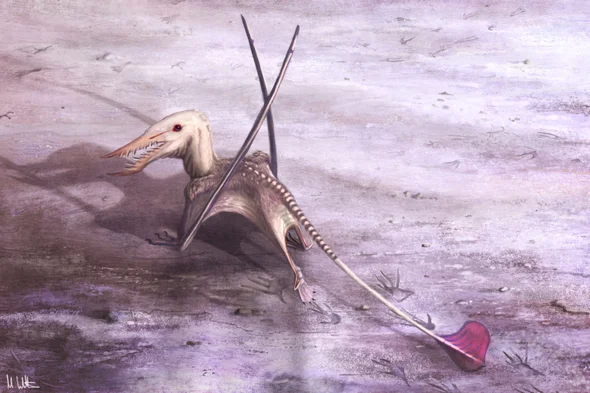
Late Jurassic pterosaur similar to Rhamphorhynchus muensteri (pictured) left footprints on a beach that are now revealing how early pterosaurs moved on the ground. Credit: Mark Witton
A group of pterosaurs known as pterodactyloids, which were widespread in the Late Jurassic and throughout the Cretaceous, left fossilized pterosaur footprints at more than 30 sites around the world in recent years. Some of these latter pterosaurs, like Pteranodon and Quetzalcoatlus, became as large as small airplanes and had short tails and toothless mouths.
Now, French paleontologists reveal in Geobios that they have discovered the tracks of pterosaurs that are not pterodactyloid. The early, less specialized pterosaurs in this vast group, such the fish-eating Rhamphorhynchus, most of which still retained teeth and long tails, are also included.
According to paleontologist Michael Habib of the University of Southern California, who was not involved in the new discovery, "[Until now] these earlier pterosaurs have, strangely, never left any trackways. In comparison, pterodactyloid tracks number in the thousands. Due to this, experts have previously suggested that early pterosaurs had poor ground mobility."
The new discovery was located at a location named Pterosaur Beach in Crayssac, France. Some scientists have even concluded that these creatures "were unable to walk on ground and were only climbers," according to paleontologist and lead study author Jean-Michel Mazin. He continues, "so when we discovered the first unambiguous non-pterodactyloid footprints, we were very happy. Researchers had long searched for fossils to confirm the walking ability of these animals."
The alternating front and back footprints from excavations from 2000 to 2014 comprise four trackways that are each just over one meter long. The pterosaurs, who left the individual footprints, were roughly the size of small birds, weighed barely 100 grams, and walked on all fours. The footprints are each about three centimeters long. By examining the size, depth, and spacing of the footprints, paleontologists can infer the size of the creatures that left them.
Although Crayssac is well inland today, it was a mudflat on the shore of a shallow sea 150 million years ago, during the Late Jurassic. In the mud and sand, animals such as dinosaurs, pterosaurs, turtles, crocodiles, and crabs made imprints that were later preserved as fossils.
The newly discovered tracks were initially mistaken for those of pterosaurs by Mazin and his co-author Joane Pouech, who works with Mazin at a museum in Pterosaur Beach. But the scientists only understood the full implications of their discovery when they noticed that the creatures that had abandoned them had five toes on their back foot. According to Mazin, pterodactyloids had just four toes on their hind feet, but non-pterodactyloids had five.
Additionally, the trackways showed that, unlike their later relatives, these early pterosaurs' front feet had toes that directed forward rather than out to the side. These novel trackways, according to Mazin, "clearly showed that non-pterodactyloids were quadrupedal and good walkers even though they are morphologically very different from pterodactyloid tracks."
Habib notes that Mazin and Pouech "discovered and described a beautiful fossil trackway that was clearly left by one of the earlier types of pterosaurs," and that there is no indication from the footprints that these creatures were incapable of moving quickly on the ground. "Their discovery refutes the notion that early pterosaurs were incapable of efficient running or walking."
The fossil is the "final nail in the coffin of the idea that basal pterosaurs were awkward and clumsily walking around—and definitely of the idea that early pterosaurs might have been bipedal," according to Elizabeth Martin-Silverstone, a pterosaur expert at the University of Bristol in England who was not involved in the research.Not only did they move rapidly and elegantly, but they also walked on all fours, she continues.

Small pterosaurs walking adeptly on all fours left a series of trackways, such as this one, on a French beach about 150 million years ago. Credit: Jean-Michel Mazin PaleoAquitani
It has been a long and painful wait to find proof of how their older, long-tailed predecessors walked on the ground, according to Mark Witton, a pterosaur expert at the University of Portsmouth in England. Although the earliest known tracks from pterodactyloid pterosaurs were discovered in the 1950s. He did not participate in the actual study, but he examined the publication outlining the new research. "This is one of those 'holy grail' discoveries that we've long needed to answer a list of questions about early pterosaur biology," he claims. This represents a significant advance for pterosaur science.
According to Witton, the discovery will drastically alter perceptions of early pterosaurs, forcing paleoartists to start over and update their previous depictions of these creatures. "Ideas of them being bipeds or sluggish sprawlers are out the window," he continues.
There is a possibility that more early pterosaur trackways will be discovered now that fossil hunters are more aware of what to search for. These findings could provide further information about posture, speed, and gait. But because these animals didn't come down to the ground very often, it's possible that these specimens are so uncommon, making them treasured finds. "They seem really less common in the track fossil record, maybe because they were walkers but also climbers or cliff dwellers" like certain seabirds do today, claims Mazin.
Habib argues that non-pterodactyloids were capable of walking, even if they only did so occasionally. He speculates that they might have preferred to climb in trees to avoid predators. The majority of Triassic and Jurassic pterosaurs were small in size and would have had a wide variety of ground-based predators.

History of the Inca Empire (Documentary)
The Rise of a Mountain Empire
In the annals of pre-Columbian America, the Inca Empire, known as Tawantinsuyu, stands as a remarkable example of complexity and sophistication. Emerging in the early 13th century, the Incas originated in the Peruvian highlands. Their foundational legend revolves around Manco Capac, who, along with his siblings, emerged from the sacred Lake Titicaca. He is often regarded as the first Sapa Inca, or emperor, to establish the capital at Cusco.
A Unique Social and Political Structure
The Incas developed an intricate social hierarchy. The Sapa Inca was at the apex, revered as a divine ruler. Below him was a class of nobility, consisting of relatives and those of royal lineage. Incan society was highly stratified, yet it offered a level of social mobility through military or administrative service.
The empire’s administration was a marvel of its time. A vast network of roads and bridges, covering approximately 40,000 kilometers, connected the empire. These were not only logistical achievements but also a means of consolidating power and integrating diverse cultures under Incan rule.
The Economy and Religion: Foundations of Inca Power
The Inca economy was based on a system of communal labor known as 'mita'. This system ensured a workforce for agricultural and state projects. Notably, the Incas did not use money or markets; instead, the state distributed goods as needed.
Religion was central to Inca life. They worshipped a pantheon of gods, with Inti, the sun god, being preeminent. The Incas believed their emperor to be the son of Inti, which legitimized his rule. Religious festivals and rituals were a significant part of Inca culture, intertwining the sacred with daily life.
The Conquest of an Empire
The Inca Empire’s expansion was rapid and extensive, reaching its zenith under the reigns of Pachacuti and his son, Topa Inca Yupanqui. They employed a combination of military force, diplomacy, and cultural assimilation to incorporate vast territories, from Ecuador to central Chile.
However, the empire was not without internal strife. Succession disputes were common, and the one following the death of Huayna Capac in 1525 was particularly damaging. Atahualpa and Huascar, his sons, engaged in a devastating civil war, weakening the empire at a crucial moment.
The Fall to the Spanish Conquistadors
The arrival of the Spanish conquistadors, led by Francisco Pizarro, marked the beginning of the end for the Inca Empire. Taking advantage of the weakened state post-civil war, Pizarro captured Atahualpa during the Battle of Cajamarca in 1532. Despite a hefty ransom paid in gold, Atahualpa was executed.
The following years saw a protracted struggle between the remaining Inca forces and the Spanish, culminating in the fall of Cusco in 1533. The last Inca stronghold, Vilcabamba, held out until 1572, marking the definitive end of the empire.
Legacy of the Incas
The legacy of the Incas is profound. They left behind significant architectural feats, like Machu Picchu, and a network of roads that astonishes modern historians and archaeologists. Their agricultural innovations, such as terrace farming, are still in use today. The Quechua language and many aspects of Incan culture endure, a testament to the resilience and sophistication of this extraordinary civilization.
In conclusion, the Inca Empire’s history is a narrative of rapid rise, complex governance, and tragic fall. It serves as a poignant reminder of the impermanence of empires and the enduring legacy of ancient civilizations.
Top 10 Gods and Goddesses of Aztec Mythology
The Aztecs may be a civilization long since gone, but the stories they left behind, their mythology, is forever ingrained in time. It may not be as widely retold as Greek or Roman mythology, but this Mesoamerican religion, which focused heavily on human sacrifice, was fascinating on its own, breeding these top ten deities of Aztec mythology. Enjoy!
Hindu Mythology Creation Story Explained in 15 Minutes
Victorian Great Britain imported luxurious and exotic items from China, but China only accepted payments in silver, creating a huge imbalance in trade. To avoid losing money on imported goods, Britain had to sell something back to China, and in desperation, the decision was made for Britain to sell opium.
When diplomatic efforts to introduce opium to the Chinese market failed, the British Parliament approved an alternative: war. There were two wars, one from 1839 to 1842 and another from 1856 to 1860. They are collectively known as the Opium Wars. These conflicts are largely forgotten in the Western world, perhaps out of a sense of collective shame. But in China, the Opium Wars are still symbols of national humiliation at the hands of the Western powers.
Stonehenge is 6,000 years older than the oldest dwelling in Britain, which is 11,500 years old
It's small, clumsy, and not likely to win any accolades for architecture. But archaeologists claim that this wooden cottage is among the most significant structures ever created in Britain.

Ancient find: Manchester University student Ruth Whyte on the archaeological dig in Flixton near Scarborough which has unearthed an 11,000-year-old tree and remains.
The recently unearthed circular building is the nation's oldest known residence, as depicted by our artist. It was constructed more than 6,000 years before Stonehenge and gave nomadic hunters roving Britain during the end of the last ice age protection from the freezing winds and storms.
The building's remnants, which were found close to Scarborough, North Yorkshire, were at least 8,500 years old. It was located adjacent to the ruins of a wooden quayside and next to an old lake.
It was between 500 and 1,000 years older than the previous record-holder, a building discovered in Howick, Northumberland, according to Dr. Chantal Conneller of the University of Manchester.

Pictures from the dig where archaeologists believe that one of the first houses in Britain may have been buried
This alters how we perceive the life of the first people to return to Britain after the previous ice age, she said. "We used to believe that they were elusive and left little traces.
We now know that they created substantial structures and had strong attachments to certain locations in the terrain.
The building's timber from construction has all been destroyed. Instead, 18 timber poles set in a circle were clearly visible, according to researchers. An organic substance had been used to fill the structure's hollow center.
The researchers think there may have been a fireplace and that the floor once had a carpet of reeds, moss, or grasses. According to Dr. Conneller, the hut was used for at least 200 to 500 years and may have been left unoccupied for extended periods of time.

We don't know much about it, she added, and we're not sure what it was used for. Although it could only hold three or four people, the structure may have been a home. Given that there is evidence of ritual activity at the site, it might have been a type of ceremonial building.
Near the cabin, previous archaeological digs uncovered headdresses made from deer skulls as well as flint tools, a boat paddle, antler tools, fish hooks, and beads.
Alongside the ancient lake at Star Carr, which has long since vanished, the archaeologists also discovered a sizable wooden platform. It was constructed using split and hewn timbers.
The platform is the earliest indication of carpentry in Europe and may have been a dock. Britain at the time had connections to the rest of Europe. Nomads who moved from a region that is now under the North Sea to hunt deer, wild boar, elk, and wild cattle were the previous occupants of the hut.
"This is a sensational discovery and tells us so much about the people who lived at this time," said Dr. Nicky Milner of the University of York.
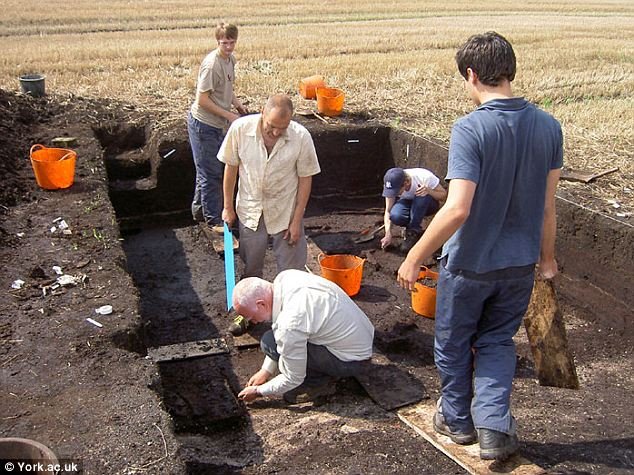
Archaeologists have been excavating at the Mesolithic site Star Carr since 2003
This dig has given us a clearer understanding of how these people lived. For instance, it appears that the house may have undergone numerous stages of reconstruction.
It's also possible that there were several homes and a large population living here. Additionally, the antler artifacts—especially the antler headdresses—are noteworthy because they allude to ritual activities.
Although Britain had been visited by hunter-gatherers for hundreds of thousands of years, it was only at the end of the last ice age, when the glaciers finally retreated from Scotland, that the country became permanently occupied.
Thousands of miles away, in the ‘Fertile Crescent’ of Mesopotamia, the earliest farmers were learning how to sow seeds and domesticate animals in a discovery that would transform the world – and herald the age of villages, writing and civilisation.
But in northern Europe, the hunter-gatherer way of life that had served prehistoric man for millennia remained unchallenged.

A depiction of a stone-age house in Ireland. The original building at Star Carr would have looked very similar to this, with thatched roof and circular shape
Hunter-gatherers had been coming to Britain for hundreds of thousands of years, but the country didn't become inhabited permanently until the end of the last ice age, when Scotland's glaciers finally retreated.
The world's first farmers were discovering how to domesticate animals and plant seeds thousands of miles away in Mesopotamia's "Fertile Crescent," a finding that would usher in the age of villages, writing, and civilization.
However, the hunter-gatherer lifestyle that had supported prehistoric man for thousands of years remained undisturbed in northern Europe.