We're about to explore extraordinary archaeological discoveries that transcend time and ignite our imagination. From ancient artefacts to hidden civilisations, these remarkable finds unravel the secrets of our past and leave us in awe. Join us on the journey as we showcase the most incredible archaeological revelations that continue to fascinate and inspire everyone who sees them.
Things Found In Old Churches That Caused A Stir
Four different institutions display a severed head they claim belonged to Saint John the Baptist. But which one is the real head? Watch the video to find out more!
The Antikythera Mechanism: An Astonishing Invention from Ancient Greece | The 1st Analogue Computer
In Indiana Jones and the Dial of Destiny, they embark on a quest for the missing pieces of the Antikythera Mechanism. They also say it was built by Archimedes during the time of the Battle of Syracuse around 212 BCE, and that it has powers to travel through time. Reality? I think not!
This is the real story of the Antikythera Mechanism. The first underwater archaeological investigation, the oldest known analogue computer and the only scientific instrument that has survived from the Hellenistic era.
The Giants of Catalina Island | Prehistoric Mysteries on California's Channel Islands
A new documentary exploring the mysteries of Santa Catalina Island. The islands have turned up hundreds of controversial discoveries; not only giant skeletons, but a prehistoric stone circle, incredibly ancient carbon dating and evidence of historic red and blond-haired islanders. Thousands of giant skeletons, artifacts, and evidence of occupation going back as far as 9,000 years have been scientifically recorded on the Islands, with human occupation possibly dating as far back as 30,000 years ago. The story is intriguing and controversial, and it stars amateur archaeologist Ralph Glidden and his bizarre museum on Catalina Island, but a few years before that, a German Naturalist got the story going in 1913. Dr. A. W. Furstenan unearthed an 8 foot skeleton with artifacts such as mortar and pestles and arrow heads on Catalina. He was told of a legend while in Mexico of a giant and noble race that lived on the Island that existed long before the white man and had since vanished. The film features Hugh Newman and Jim Vieira, authors of 'Giants On Record', ancient symbolism researcher Jj Ainsworth and Native American islander Mason Sanchez Lassos, member of the Tongva Gabrielino Tribe.
Mysterious Discoveries Scientists Can’t Explain
In the following video we will be exploring mysterious discoveries that scientists can’t explain. Watch the video to find out more!
Unique Bronze Age treasure discovered on the Roman battlefield in the Swiss Alps
Archaeologists excavating the Switzerland Oberhalbstein valley have discovered a metal hoard containing more than 80 bronze artifacts dating from 1200 BC to 1000 BC or the late Bronze Age.
Oberhalbstein is in Graubünden canton, the easternmost region of Switzerland, and about 100 miles southeast of Zurich.In 2021, the Archaeological Service of Graubünden launched a new research project to systematically examine the landscape for the remains of the conflict between Rome and the Suanetes. The Bronze Age hoard was discovered as part of this project.
The hoard, which was discovered in a field south of an ancient settlement on a transalpine trade route, dates to the 12th or 11th century BC. It is the largest and most important Bronze Age hoard ever discovered in the canton of Graubünden.
The Archaeological Service of Graubünden unearthed the hoard in October 2022 after a volunteer metal detectorist surveying the site alerted the team to its presence. The artifacts were found last fall but only recently announced.
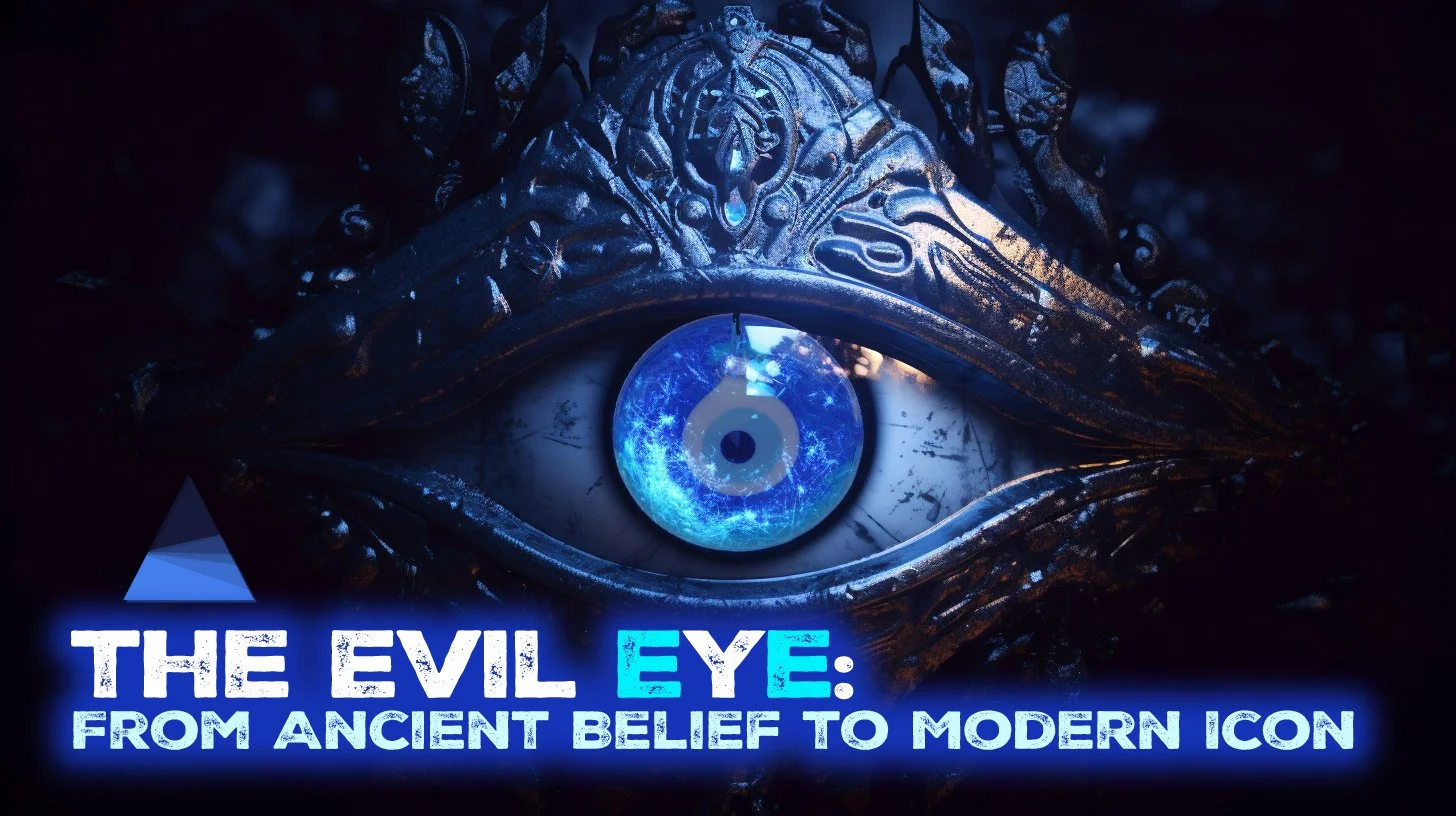
The Evil Eye: The Cultural Journey of An Ageless Symbol
BY THE ARCHAEOLOGIST EDITOR GROUP
The evil eye is a belief, widely propagated throughout millennia, that certain individuals can inflict harm, misfortune, or illness on others simply through a malicious gaze. These beliefs are prevalent in various cultures around the globe, dating back to ancient times. Despite its ominous name, the concept of the evil eye transcends mere malevolence; it holds deep sociocultural meanings that continue to evolve over the years. To fully comprehend the depth of this symbol, one needs to delve into its historical origins and its subsequent metamorphosis over centuries.
The Sumerian 'Eye of Death': Tracing the Roots of the Evil Eye Belief
The ancient Sumerians, one of the world's earliest civilizations, were known for their advanced society, flourishing around 4000 BC in Mesopotamia (present-day southern Iraq). As with many early civilizations, the Sumerians had their own unique cosmology and mythology. One concept that is particularly interesting is the "eye of death," which is often considered an early iteration of the evil eye concept.
Historical texts and archaeological evidence suggest that the Sumerians, like many cultures around the world, held beliefs relating to the power of a destructive gaze. While specifics about this "eye of death" are somewhat limited, it is generally thought to have been associated with supernatural or divine powers capable of inflicting harm, misfortune, or death upon its target.
The Sumerians believed in an array of gods and goddesses, each with their own domains and powers. These deities were not always benevolent, and their ire or jealousy could manifest as a destructive gaze or "eye of death". Similarly, supernatural creatures in Sumerian mythology, such as the demon Lamashtu, were believed to harm humans, particularly children, and their destructive gaze was greatly feared.
In addition, some of the Sumerian rulers and high priests were also attributed the power of the "eye of death". They were considered semi-divine, and their gaze, particularly when angered or dissatisfied, could supposedly bring about calamity.
The Sumerians used various talismans and incantations as protective measures against these malevolent forces. For instance, clay amulets featuring divine symbols or cuneiform inscriptions were common, and these were often placed in homes or carried on one's person.
While we lack a wealth of detailed information about the Sumerian "eye of death", its existence illustrates the universality of the 'destructive gaze' belief that transcends cultures and eras. The modern notion of the evil eye, as it has evolved and spread throughout numerous cultures around the world, likely carries echoes of these ancient beliefs, with the Sumerians' "eye of death" being a key early example.

Mesopotamian Lapis Lazuli, Limestone and Black Stone Eye Inlay, Syrian, Early Dynastic, Circa 2550-2250 BC
The 'Eye of Horus' and its Impact on the Evil Eye Phenomenon
The ancient Egyptians often used the Eye of Horus as a protective amulet, adorning the entrances to their homes or tombs with this symbol to ward off evil spirits. Similarly, sailors would paint the Eye of Horus on the bows of their vessels to ensure safe sea voyages.
The Eye of Horus was also popular in funerary practices, painted onto coffins or used in jewelry to protect the pharaoh in the afterlife and ward off evil. Blue and green were the common colors used in such amulets, representing the Nile, fertility, rebirth, and the heavens, further augmenting the protective quality of the Eye of Horus.
In modern times, the Eye of Horus continues to be a popular symbol, seen in various forms of jewelry, tattoo designs, and even used in the context of the evil eye as a protective symbol against malevolence. It is a testament to the enduring legacy of ancient Egyptian culture and its profound influence on subsequent civilizations.
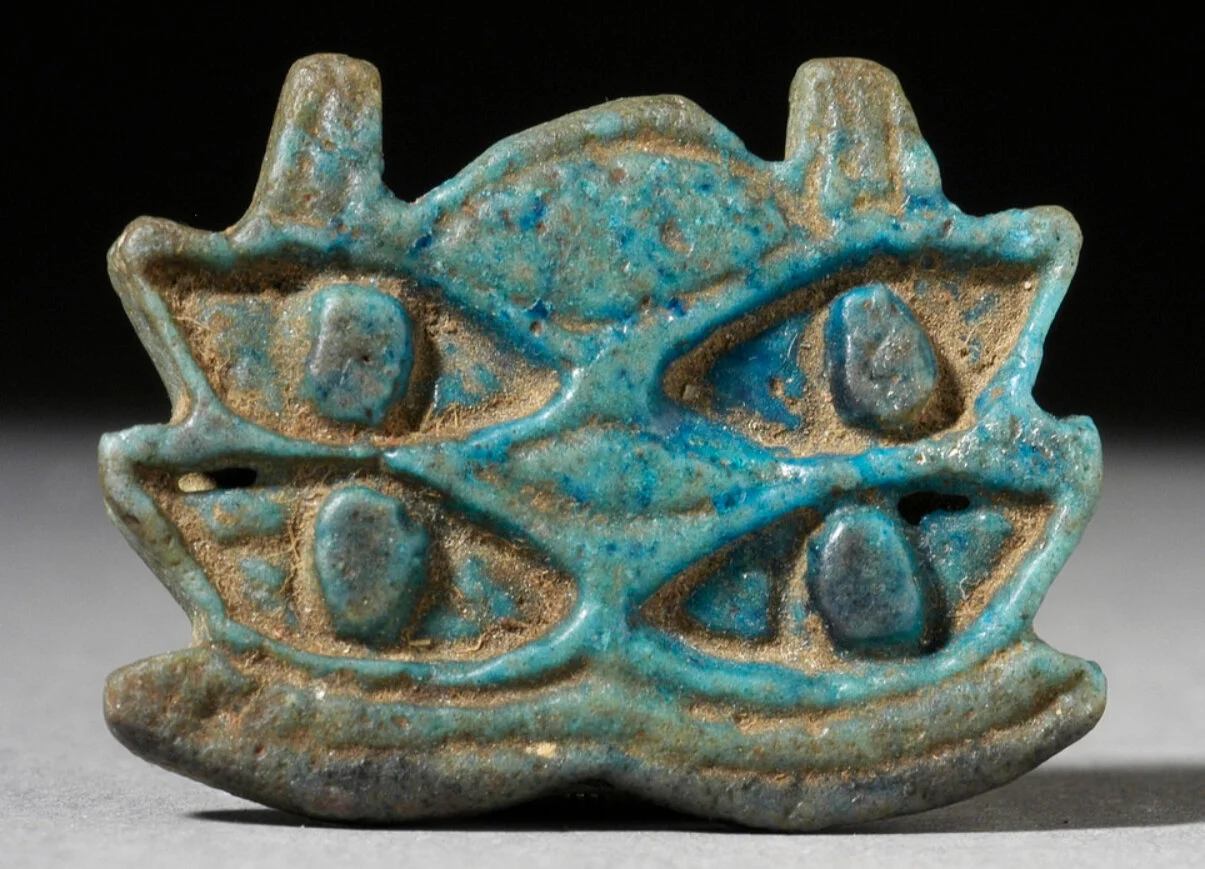
Multiple Eyes of Horus Amulet
Gorgoneion and Fascinus: Combatting the Evil Eye in Ancient Greece and Rome
The ancient Greeks and Romans had a profound belief in the power of the evil eye, known in Greek as the "Baskania". It was thought to be a malevolent glare cast out of envy or malice, capable of bringing misfortune, illness, or even death upon those it targeted. This belief was so deeply ingrained in these ancient societies that it transcended social and economic boundaries, affecting both the rich and the poor, the powerful and the humble.
The concept of the evil eye in ancient Greece and Rome was often associated with envy (phthonos in Greek, invidia in Latin). The belief was that those who were overly successful or blessed in some way could become the targets of envy, leading to a malicious gaze or an evil eye curse. This superstition acted as a sort of social equalizer, discouraging the flaunting of wealth or success to avoid envy and the potential curse that could come with it.
To counter the evil eye, ancient Greeks and Romans employed a variety of amulets, charms, and rituals. One popular amulet was the 'Gorgoneion', a symbol depicting the head of the gorgon Medusa, which was thought to ward off the evil eye. The Greeks also employed the gesture of 'kataskopia', which involved pulling down one's lower eyelid as a protective measure. In contrast, the Romans used the 'Fascinus', a phallic symbol believed to counteract the evil eye's ill effects.
The notion of the evil eye was so pervasive in ancient Rome that it was enshrined in Roman law. The Lex Cornelia, a body of laws drawn up by Lucius Cornelius Sulla in the 1st century BC, included regulations against anyone who used incantations and amulets to damage grain crops, vineyards, and orchards, or who cast an evil eye on children.
In the realm of literature, several famous Roman and Greek authors, such as Plutarch, Pliny the Elder, and Theocritus, have mentioned the evil eye in their works, demonstrating the depth of this belief in society. They often discussed it in relation to envy and the potential harm one could cause through a malevolent gaze.
In sum, the evil eye was a fundamental component of both Greek and Roman cultures, shaping social norms, superstitions, and legal systems. Its legacy is still felt today, with the symbol of the evil eye continuing to be recognized and utilized worldwide as a protection against malevolent forces.
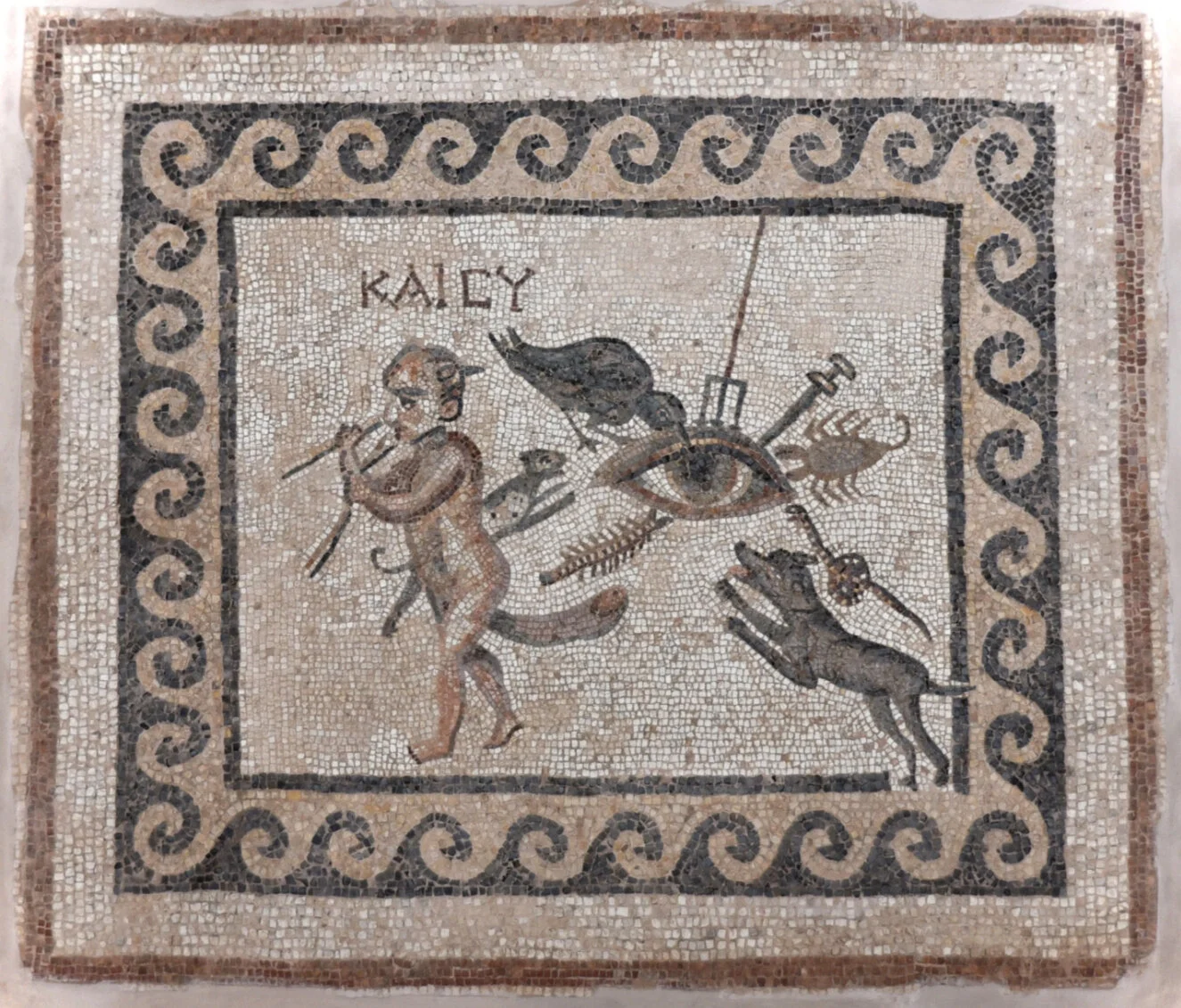
Roman mosaic of the Evil Eye from Antioch. The eye is pierced by a trident and sword, pecked by a raven, barked at by a dog, and attacked by a centipede, scorpion, cat, and snake. A horned dwarf with a gigantic phallus crosses two sticks. Greek annotation "KAI SU" meaning "and you (too)". Dated to the 2nd century CE.
Hatay Archaeology Museum, Antakya, Turkey
Evil Eye in the Middle Ages and Beyond
The belief in the evil eye didn't vanish with the collapse of the Roman Empire, but instead, it persisted and evolved throughout the Middle Ages and beyond. This period marked a confluence of various cultural, religious, and societal influences that further shaped and perpetuated the concept of the evil eye.
With the spread of Christianity across Europe, the belief in the evil eye was incorporated into Christian thought, even though it contradicted the core monotheistic beliefs. Church authorities often decried the evil eye as superstition, but the belief was so deeply rooted in the cultures they sought to convert that it proved resistant to eradication.
The Bible contains indirect references to the evil eye, notably in the Gospel of Matthew (6:22-23), where the 'good eye' is associated with generosity and light, while the 'evil eye' is associated with stinginess and darkness. This, along with the common belief that witches and sorcerers could cast an evil eye, helped sustain the concept in Christian societies.
The Jewish tradition also acknowledges the concept of the evil eye, or 'ayin hara'. Talmudic texts reference the evil eye as a destructive force that can be invoked through envy or praise without immediately following a blessing. To ward off the 'ayin hara', a variety of practices were followed, including wearing red strings or amulets bearing the 'Hamsa', a hand-shaped symbol.
In Islamic tradition, the belief in the evil eye, or 'al-ain', is also prevalent. The Qur'an and several Hadiths refer to the evil eye and its harmful potential. To counteract its effects, Muslims often recite prayers, like the 'Surah Al-Falaq' and 'Surah An-Nas', or use amulets with the Hand of Fatima (the Islamic equivalent of the Hamsa) or blue 'nazar' beads.
During the Middle Ages in Europe, belief in the evil eye was widespread among all classes. It was commonly thought that certain people, like witches, those with strabismus (crossed eyes), or the seventh sons, had the power to cast the evil eye. To ward off the evil eye, people carried talismans, created signs with their hands, or wore certain colors. Blue, for example, became popular as a protective color, which is why doors and window frames in some countries are still painted blue.
In the later Middle Ages and Early Modern Period, fear of the evil eye played a role in the witch-hunts that swept across Europe. Many of those accused of witchcraft were believed to have the power to cast the evil eye, leading to their persecution.

Byzantine Amulet with the Evil Eye and the Holy Rider, 5th-6th century (Late Antique),
The Evil Eye in Contemporary Times
The evil eye continues to be a strong belief system in many cultures. In the Mediterranean and Aegean regions, including Turkey and Greece, it is common to see the 'Nazar Boncuk,' a blue glass bead with an eye design, hung in homes, businesses, and even vehicles to deflect the evil eye. These regions attribute the evil eye more to envy than malice, which is often invoked unwittingly.
In India, the 'Drishti' or 'Buri Nazar' concept aligns with the evil eye, signifying the destructive gaze that arises from jealousy. To ward it off, people use 'Nimbu-Mirchi Totkas' (lemon-chili charm) or black dot symbols.
In Latin America, the evil eye, or 'Mal de Ojo,' is believed to harm babies and young children when someone gazes at them with envy. The preventative measures often include amulets or rituals like passing an egg over the body of the affected individual and then breaking it in a glass of water to absorb the negative energy.
In Jewish tradition, the concept of 'ayin hara' is still prevalent. To avoid invoking it, it's customary to say "kein ayin hara" (no evil eye) after complimenting someone or discussing good fortune. The 'Hamsa', a hand-shaped symbol, is also commonly used as an amulet against the evil eye in Jewish and Muslim communities.
In popular culture, the evil eye has become a trendy symbol, finding its way into high-fashion jewelry, clothing, and home decor. Celebrities have been seen wearing evil eye amulets, further promoting the symbol's popularity and recognizability.
Despite its ancient origins, the evil eye in the modern context often serves more as a general symbol of protection, warding off not just malevolent gazes but negative energies or bad luck. The belief in the evil eye's power varies widely among individuals, with some taking it as a literal threat, while others see it as a cultural or aesthetic symbol rather than a deeply held belief.
Even in today's globalized and secularized world, the evil eye symbol has been adopted by the fashion and art industries, serving as a striking visual symbol and, by extension, a protective talisman in the form of jewelry, tattoos, or home decorations.

Cultural and Psychological Implications
The longevity and wide cultural dispersion of the evil eye belief underscore its potent sociocultural and psychological implications. Fundamentally, it serves as a regulator of human behavior, discouraging excessive pride, boasting, or envy within societal structures, thereby preserving harmony.
From a psychological perspective, the belief in the evil eye provides a means to explain or rationalize misfortune, illness, or loss in a world often marked by inexplicable adversities. Its protective symbols serve as psychological defenses, empowering individuals to confront their fear of the unknown or uncontrollable.

Through the millennia, the evil eye has transcended its superstitious origins, becoming an ageless symbol of cultural identity and a repository of societal norms and fears. Despite variances in interpretation across different cultures and epochs, the essence of the evil eye endures, a testament to its universal resonance in the human psyche's complex labyrinth. Its journey continues, and as it does, it will undoubtedly keep reflecting and shaping our evolving perceptions of good, evil, and the delicate balance in between.
It Happened! New Terrifying Discoveries in Egypt That Scare Scientists!
Archaeologists uncover artifacts whose significance and contents are initially almost beyond belief. Egypt is known for ancient treasures dug up by archeologists. Are enigmatic creatures and archeological finds your thing? Like, and comment as well. Let us know what you think in the comment section! Are you ready? Let's count down to 20 Egyptian discoveries that shocked scientists.
The Most Incredible Dinosaur Discoveries
In today’s video we will be exploring the most incredible dinosaur discoveries. Watch the video to find out more and enjoy!
13,000 Years Ago in Asia: What Did Life Look Like?
Uncover the secrets of ancient Asia in the following video! Join us as we take a journey back in time to explore the rich history and cultures of the region 13,000 years ago. Learn about the unique flora and fauna, the human populations that lived in the area, and the most recent information and speculations of human activity during this time period. Discover the significance of lower sea levels and how it affected human activity and habitats. See the evidence of the different human species that existed up to 150,000 years ago in the region. Explore the most significant archaeological sites and the artifacts that have been found there. Join us as we delve into the mysteries of ancient Asia and discover the secrets of our past. ancient history, human populations, lower sea levels, archaeological evidence, human species, cultures, and Asia.
The Tale of the Elephant Bird: The Biggest Bird Ever
The biggest bird to ever exist is a member of the same group of birds that includes the ostrich, the emu and even the extinct Moa of New Zealand. But this was by far the largest of all of this flightless birds. And around this creature is a mystery about exactly how and when this 1600 pound behemoth disappeared. I get to study how this animal became such a massive beast as well getting to see the monstrous egg that it laid. And we find out the very surprising answer to the question 'what is it's closest living relative today?'
Misunderstood Moments in History - Why the Persians Failed to Conquer Greece
In this documentary we explore the Greco-Persian wars to understand why the Persians failed to conquer Greece. The video begins with a historical overview of the Achaemenid Persian Empire and then an analysis of the Ionian Revolt which led to war. We then look at what the Persian army of Darius and Xerxes wished to achieve and see to what extent these objectives were met. This includes looking at the Battle of Marathon, Thermopylae, Salamis, Mykale, and more which featured Greek armies of Athens, Sparta and more.
Gilgamesh and the Flood
In today's video, we examine the genesis and development of one of the world's oldest Mythological figures, the legendary King of Uruk, Gilgamesh, and the Epic that bears his name. Along the way we'll explore over 2000 years of history, culminating in an examination of the origins of the Mesopotamian flood myth, which continues to echo in modern religions to this day.
15 Most Controversial Recent Archaeological Discoveries!
It is actually very normal for new finds and discoveries to first puzzle scientists in their relevant fields. What is a new discovery all about, what is its context and what can it tell us that is significant to the bigger picture? But then there are discoveries that do not simply cause speechlessness for a moment. Many finds cannot be explained or put into a larger context, even years later, and quickly these things become a great mystery to the relevant fields. This is also the case with the following examples, which have been analysed frequently and for which there are many theories, but proof for these theories is still lacking in many cases.
12 Most Ancient And Mysterious Objects Finds
We’re looking at strange and mysterious objects in this video, but we’re going to play a little fast and loose with the definition of “object.” After all, nobody said an object had to be small enough to fit in the palm of your hand. Objects can be any size. Some of the mysterious objects you’re about to see are bigger than a whole cliff face! The only thing they all have in common is that they’re bizarre and brilliant. Let’s get started!
Bronze Age Armor of Europe | Ancient History Documentary
When did metal armour first emerge in Europe? Where was it first developed? What about the first metal helmets and shields? And what can all this armour tell us about its users and the societies they came from?
The Dendra Panoply of Mycenaean Greece is famous, as is the boar's tusk helmet. But bronze armour was worn right across Europe and warriors defended themselves with circular bronze shields and bronze helmets.
This is the story of European Bronze Age armour.
Scientists In Egypt Just Announced That While Looking For Cleopatra They Found An Untouched Miracle
In the following video we will be discussing what scientists have discovered in Egypt while looking for Cleopatra. Watch the video for more and enjoy!
The London Stone: Historic Mysteries, Myths and Legends
The London Stone is an historic landmark housed at 111 Cannon Street, across the river from Shakespeare’s Globe theatre. This building on Cannon Street, number 111, isn’t some grand museum or ancient historic structure; it’s a relatively new-build bank or investment centre, a standard office building, but at its foot, there is a strange little structure at ground level.
Directly above, it says “London Stone” and there are two plaques either side to tell passers-by what they are looking at: a modest chunk of oolitic limestone, measuring 53 cm x 43 x 30, apparently the remnants of a once much larger object that had stood for many centuries on the southern side of the street.
So, an old rock in the middle of the capital, but what’s the deal with the London Stone? What was it? Why is it so important? Watch the video to learn more!
How to Identify Rocks
How can you tell what type of rock you have? Join us to learn how you can tell one type of rock from another.
Forgotten Wars - The Greek Invasion of Africa (310 BC)
In this animated history documentary we will analyze the Punic Sicilian Wars. This episode covers the Seventh Punic Sicilian War which saw Agathocles rise as tyrant of Syracuse to challenge Carthage once more. Yet unlike his predecessors, he would raise the stakes of this conflict by launching an invasion of north Africa. This Greek invasion would see the very capital of Carthage put to siege. But the siege of Carthage was just the start of Agathocles' ambitious campaign to take North Africa from the enemy.