Church of Holy Sepulchre excavations are ongoing 24/7, producing historical artifacts

The Custodia Terrae Sanctae, which is in charge of looking after Christian holy places in Israel, reports that experts from Rome have finished weeks of meticulous archaeological work in one of the Church of the Holy Sepulchre's most vulnerable areas. The area surrounding the Holy Edicule, or main tabernacle, was excavated by archaeologists from the Department of Antiquities of the University of Rome Sapienza as part of a NIS 41 million ($11 million), two-year rehabilitation and archaeological excavation.

Christian pilgrims hold candles as they gather during the ceremony of the Holy Fire at Church of the Holy Sepulchre, where many Christians believe Jesus was crucified, buried and rose from the dead, in the Old City of Jerusalem, on April 23, 2022. (Olivier Fitoussi/Flash90)

According to Christian legend, Jesus was crucified by the Romans 2,000 years ago outside the city's walls and buried nearby in a cave tomb.

From June 20 to June 27, archaeologists worked nonstop for seven days and seven nights while excavating the area in front of the Edicule. Because the excavation involved closing the Edicule to the public, the tight schedule was designed to cause as little inconvenience to tourists as possible. The Edicule was constructed where it is thought that Jesus was interred.

More details concerning the Edicule's early Christian layout, some of which date to the fourth century, were discovered during the most recent excavation. Archaeologists uncovered a currency trove under one of the floor slabs, which contained coins produced up until the reign of the Roman Emperor Valens (364–378 AD).

Other intriguing finds include a section of the main Edicule's external wall that was covered in 18th-century graffiti in multiple languages, including Greek, Latin, and Armenian.

Earlier this summer, with the aid of a conservation team from Turin, Italy, and the Franciscan Faculty of Biblical Sciences and Archaeology in Jerusalem, archaeologists worked on the repair of additional sections of the basilica floor. They investigated several construction methods and cement types while discovering an old drainage system.
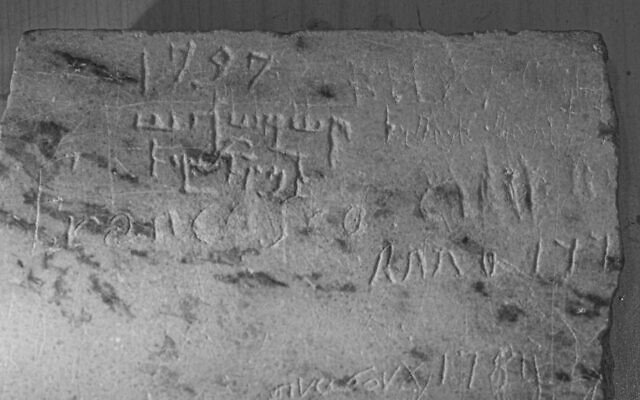
Part of the cladding of the Church of the Holy Sepulchre in Jerusalem’s Holy Edicule contained 18th-century graffiti. (Courtesy Gianfranco Pinto Ostuni/Custodia CTS)

Christian church's past

Around 330 CE, when Emperor Constantine converted to Christianity and his mother Helena visited the Holy Land to locate locations associated with Jesus, the Church of the Holy Sepulchre was constructed. She ordered the construction of grand structures, such as the Church of the Holy Sepulchre, which is thought to be the site of Christ's crucifixion and burial.

It was perhaps a pilgrimage place for early Christians before that. Latin inscriptions from before the church was built have also been found by archaeologists on the site, further supporting the idea that it may have already been a place of pilgrimage for Christians.

However, it was a pagan temple until the church was constructed there beginning in 330 CE. The early Christian community was persecuted by the Romans, and Emperor Hadrian believed that the location would be excellent for a temple to Jupiter or Venus.

The church was burned down by Persian invaders in 614, and it was once more destroyed in 1009 by the psychopathic caliph al-Hakim, who attacked Christians, Jews, and even other Muslims. The Church of the Holy Sepulchre was renovated by Crusaders in the 12th century, giving it its present form.

A partially excavated floor in the Church of the Holy Sepulchre in Jerusalem in June 2023 reveals the different types of construction and masonry used throughout the centuries. (courtesy Archivio Università La Sapienza, Roma)

The "status quo"—a strict power-sharing arrangement among the many Christian denominations—has ruled the site since 1852. The church's keys have been in the hands of a Muslim family for at least 800 years.

According to the agreement, the various religions have made minor improvements to the chapels that are under their jurisdiction, but coordinated action to maintain shared areas has frequently proved challenging. When Israeli officials momentarily shuttered the Edicule in 2015 because they deemed it unsafe, it served as a wake-up call.

The Edicule's limestone and marble construction need immediate repair after years of exposure to elements like water, humidity, and candle smoke.

Christian community leaders visit archaeological excavations at the Church of the Holy Sepulchre in Jerusalem in June, 2023. (courtesy Archivio Università La Sapienza, Roma)

A church that renovates collectively remains collective

The Holy Edicule underwent its first significant refurbishment since the clearing up after a fire in 1808 in 2016, when representatives of various Christian traditions joined together. Conservationists asserted to have discovered the original limestone bed on which Jesus was interred in October 2016, when the restoration project was in full gear. A year later, the public may enter the Edicule after its restoration.

The Edicule's refurbishment, however, brought attention to the need for more repairs, including immediate work on the basilica's floor, as renovations often do. The church's floor, like much of it, is a jumble of construction techniques from different eras, with stones from the Crusader period in the 12th century, more modern extensions from the 19th century, and splotches of concrete and cement from previous, shoddier reconstructions.

The church, which is tucked away in the middle of Jerusalem's bustling Old City, will get the opportunity to undergo archaeological investigation as well as repairs to the sewage and power lines that run beneath it during the reconstruction.

Between 2020 and 2022, when it was largely empty owing to the coronavirus pandemic, the church conducted a preliminary investigation. The restorations and archeological excavations got under way in March 2022.

Part of the Italian team excavating the Church of the Holy Sepulchre in Jerusalem in June, 2023. (courtesy Gianfranco Pinto Ostuni/Custodia CTS)

Phased repairs will be made to the 1,200 square meter (13,000 square foot) level so that liturgical services and visitation can continue. Depending on what the archaeologists find, the renovation will be paid for by contributions and should be finished in May 2024.

When the excavations first started last year, Rev. Francesco Patton, the leader of the Catholic Franciscan order dedicated to protecting Christian monuments in the Holy Land, said, "The cooperation among the three communities is the most important thing." "It demonstrates to the whole world that fraternal relationships between Christians from various churches and communities are possible."

The restoration effort itself appears to have aided in the reconciliation of the various denominations' disputes.

As Patton stated last year, "discussion is really facilitated when you are doing something together with the others." "Working together is something that helps people get to know each other and to start a process of trusting."

Source: https://www.timesofisrael.com/round-the-cl...

Researchers find the oldest stilt settlement in Europe

Scientists have discovered what may be one of Europe's earliest settled towns beneath the turquoise waters of Lake Ohrid, the "Pearl of the Balkans," and they are working to understand why it hid behind a protective spike fortress.

A diver scouring an archaeological site at the bottom of Lake Ohrid in Albania, the site of Europe's oldest stilt village - Copyright AFP Jade Gao

Archaeologists think a town of stilt dwellings previously stood along a section of the lake's Albanian shore around 8,000 years ago, making it the oldest lakeside settlement in Europe to be found thus far.

The site was shown by radiocarbon dating to date between 6000 and 5800 BC.

According to Albert Hafner, an archaeology professor at the University of Bern in Switzerland, "it is several hundred years older than previously known lake-dwelling sites in the Mediterranean and Alpine regions."

According to our research, it is the oldest in all of Europe, he told AFP.

The most ancient of these towns, according to the authority on European Neolithic lake houses, were found in the Italian Alps and date to around 5000 BC.

The excavations at Lin, on the Albanian side of Lake Ohrid, which spans the hilly border of North Macedonia and Albania, have been conducted by Hafner and his team of Swiss and Albanian archaeologists for the past four years.

The village, which included homes built on stilts above the lake's surface or in locations frequently inundated by increasing waves, is said to have been home to between 200 and 500 people.

Spike fortification

And it is gradually exposing some astounding secrets.

Archaeologists recently discovered evidence that suggests the settlement was reinforced with thousands of spiked planks that were used as defensive barricades during the plunge.

Hafner remarked, "They had to clear a forest to protect themselves in this way.

But why, in order to defend themselves, did the hamlet construct such massive fortifications? The evasive question has archaeologists scratching their heads in search of an explanation.

Hafner described the find as "a real treasure trove for research" and researchers believe that over 100,000 spikes were driven into the lake's bottom off Lin.

Having existed for more than a million years, Lake Ohrid is one of the oldest lakes in the world.

With the help of trained divers, archaeologists have been searching the lake's bottom, frequently finding valuable oak and timber that has been preserved as fossils.

Similar to a Swiss watch

According to Albanian archaeologist Adrian Anastasi, tree ring analysis offers "valuable insights into the climatic and environmental conditions" of the time. This allows the researchers to reconstruct the daily lives of the locals.

Oak is extremely exact, like a Swiss watch, according to Hafner.

Anastasi, the leader of the Albanian research team, continued, "In order to comprehend the structure of this prehistoric site without hurting it, we are performing very painstaking investigation, working very slowly and very carefully.

The site's dense foliage can sometimes make the labor tediously sluggish.

It's crucial to comprehend why these folks made this decision, according to Anastasi, who said that building their village on stilts was a challenging and intricate undertaking.

Scientists say it is safe to presume for the time being that the village relied on agriculture and tamed cattle for food.

Professor of archaeology from Albania Ilir Gjepali remarked, "We discovered various seeds, plants, and the bones of wild and domesticated animals."

However, it will take another 20 years for the location to be thoroughly investigated, analyzed, and the results to be determined.

Each excavation trip, according to Anastasi, provides useful material that helps the team piece together a picture of life along the beaches of Lake Ohrid thousands of years ago, including the design of the homes and the makeup of their society.

These are significant prehistoric sites that fascinate the entire southwest of Europe, according to Hafner.

A 3,800-year-old clay tablet in cuneiform was discovered in a prehistoric tumulus in southern Turkey

After the significant earthquakes that struck the area earlier this year, restoration work revealed a 3,800-year-old cuneiform clay tablet in southern Türkiye.

A 25-person team discovered the clay tablet with the cuneiform inscription in the Akkadian language in the approximately 4,000-year-old Accana tumulus in the southern Hatay region, according to Murat Akar, an archeology professor at Hatay Mustafa Kemal University.

The historical site, which was identified as the site of Alalakh, the location of the Mukish Kingdom's capital during the Middle and Late Bronze Ages, was impacted by the twin earthquakes on February 6 that were centered in Kahramanmaras and caused significant damage in Hatay.

According to Akar, the Turkish Culture and Tourism Ministry has begun restoration and preservation work to address the damage to portions of the palace wall ruins.

A clay tablet was discovered among the ruins by the crew that cleared the wall rubble for the investigation.

When the Akkadian language tablet was initially examined, it contained information about a deal that Yarim-Lim, the first king of Alalakh who is known to have existed, had made to buy a different city.

The tablet is undamaged, and Akar described the discovery as "so exciting."

It demonstrates to us that the monarchs of that era had the financial capability and potential to acquire a second city.

He continued, "There is probably also the name of the significant city residents who saw this sale on the tablet.

According to Akar, "the work emerged as an extremely singular example, particularly to decipher the economic structure of that era, the relationship between cities, and the economic and political model."

After the inspections, the tablet will be moved to a museum, according to the leader of the restoration team.

Source: https://www.aa.com.tr/en/culture/3-800-yea...

Beginning of the third dig to uncover an 8th-century Berkshire monastery

The excavation of an eight century monastery has moved on to the next stage.

The dig is taking place in Paddock Field, next to Holy Trinity Church, in Cookham, until 2 September

The Anglo-Saxon site near Cookham, Berkshire, was initially uncovered in 2021 by a team from the University of Reading.

Since then, it has carried out two extensive excavations close to Holy Trinity Church. The third dig will concentrate on Paddock Field's graveyard area.

Prof Gabor Thomas says the dig will "push the frontiers of our knowledge"

Prof. Gabor Thomas, the head of the dig, expects that the excavation work will provide a window into daily life at the monastery.

"Monastic culture was at its height then," he said. It was crucial for the Christianization of Anglo-Saxon England, but the documentary sources don't really provide any information on how they were set up.

Our archaeology will advance our understanding of day-to-day life in these societies in truly innovative ways.

Senior archaeologists also hope the remains found in the cemetery will give insight into the health of people in Cookham at the time

Archaeologists discovered an industrial and craft zone that would have provided nuns with food and helped to move imported goods down the River Thames during the final full-scale dig in the summer of 2022. The teams' goal this year is to employ scientific examination of the burials discovered in the cemetery area to ascertain the social identities and health of those buried there, including residents of the monastery and nearby people.This site is significant from an archaeological standpoint, according to Prof. Thomas. There are no other monastic settlements from this time period in southern England that are in such good condition.

During the last dig in the summer of 2022, excavators found an industrial and craft zone

Senior archaeologists will give free site tours to the general public every Saturday from the start of the dig until 2 September 2023.

Archaeologists will be offering free tours of the site every Saturday over the summer

The Friends of Cookham Abbey organisation is also working to raise money for the excavation effort and is coordinating an outreach program to inform locals about the findings.

Source: https://www.bbc.com/news/uk-england-berksh...

Mummies and their secrets inside the Sarcophagus

Ancient Egypt has always been shrouded in mystery, capturing the imagination of scholars and laypeople alike. Few civilizations have been surrounded by as much mystery as ancient Egypt, with its elusive origins, intricate religious beliefs, and monumental architectural feats. From colossal temples to towering pyramids, and from magnificent sphinxes to sprawling necropolises, the grandeur of Ancient Egypt continues to fascinate and bewilder even today. One team of archeologists set out to find out what lies beneath the bandages.

In this video, we explore the secret lives of mummies with a team from the National Archeaological Museum in Madrid, Spain. Using the latest technology, they reveal fascinating aspects of the lives of these mummified individuals. Three Egyptian mummies and the world's best-preserved Guanche mummy were analyzed with a state-of-the-art CT scanner, revealing that 25 plates were placed under the bandages of Nespamedu.

The investigation raises many questions about the mummy's identity and life in ancient Egypt. Travel with us from Spain to Egypt, exploring Saqqara and the necropolis of Giza, in search of answers.

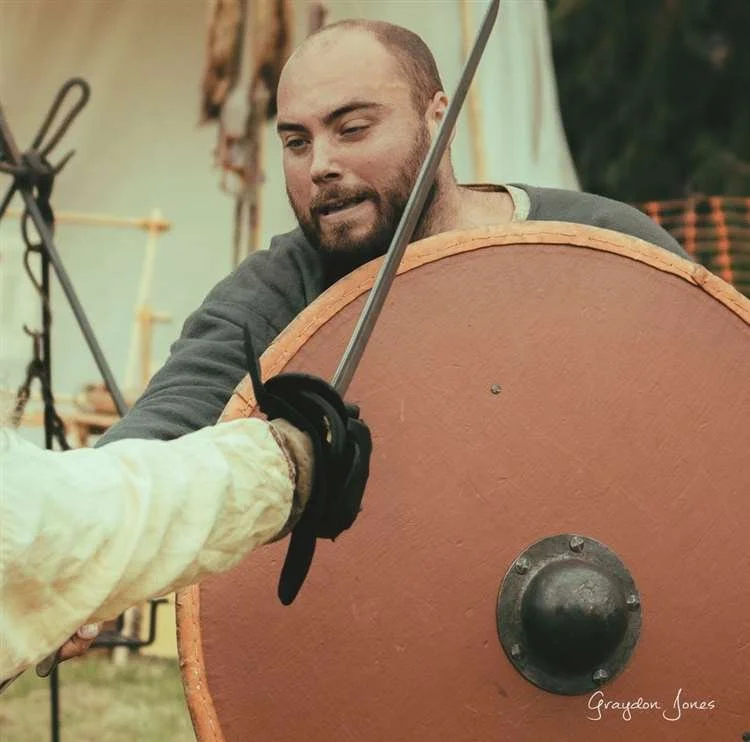
Entry is unrestricted Battle reenactments, lectures, and archaeologists will all be part of the Threekingham Viking Festival.

The center of a community is hosting a Viking festival.

The Georgian Festival in Folkingham was held earlier this year. Photo: Graydon Jones

The Threekingham Viking Festival, organized by the Aveland History Group as part of Heritage Open Days, will take place throughout the weekend of September 16 and 17, all around the hamlet.

No tickets are needed for the two festival days because admission is free to everyone. This is because to the kind funding from the UK government's Levelling Up Fund that North Kesteven District Council has been entrusted with managing.

A free admittance lecture program sponsored by The Viking Society for Northern Research will operate on both days in addition to all the action in the living history camp and battlefield.

The Georgian Festival in Folkingham was held earlier this year. Photo: Graydon Jones

To whet the appetite, Mark Randerson, a heritage officer from North Yorkshire Council who has conducted research on this, will give a presentation on Friday at 7.30 p.m. in St. Peter's Church on the topic of Viking camps and The Great Heathen Army.

Tickets for this ticketed event will be on sale at the end of August through Eventbrite or at the door.

This weekend will also feature a recreation of the 870 AD Battle of Stow, as well as a demonstration of the laborious search for Viking relics by an archaeologist digging in a test pit.

The Aveland History Group hosted a Medieval Festival in 2021. Photo: Graydon Jones

The carried over Georgian Festival in Folkingham earlier this year was one of the previous living history events offered by the Aveland History Group. Another Medieval festival is scheduled for 2021.

"We are hoping that families will flock to learn more about our ancestors from the days of the Danelaw," said Alison Carr, secretary of the Aveland History Group.

Source: https://www.granthamjournal.co.uk/news/vik...

South Downs' historic archaeology is depicted via aerial photography

New research includes aerial imagery charting hundreds of South Downs archaeological sites from the Neolithic era to the Second World War.

Historic England hopes the project will inspire people to explore the heritage of the South Downs

More than 9,500 aerial photographs and airborne laser scans were analyzed by Historic England to identify map markers on the Downs to the north of Brighton.

The findings encompass a range of archaeological characteristics, including huge field systems and tiny chalk pits.

They now appear in a fresh paper outlining the region's lengthy history.

An accompanying interactive map invites users to contribute information to describe the present state of the earthworks' appearance or condition and to share personal links to websites.

The project, called Downs from Above, is a component of Changing Chalk, a larger South Downs National Park-focused initiative managed by the National Trust.

According to Tom Foxall, regional director at Historic England, "these archaeological sites contribute to the distinctive character of the South Downs, from the echoes of Neolithic ceremonies to the upheaval of the Second World War.

They have been combined in our brand-new interactive map using archive research and aerial sources.

The ancient burial site is protected as a scheduled monument

The addition of information to the map, according to Historic England's aerial survey principal Matthew Oakey, "should result in a lasting legacy of archaeological investigation of the Downs."

National Trust archaeologist James Brown stated: "Downs from Above has not only enhanced previously-known sites for us, giving us a better understanding of how they relate to each other and overlay each other, revealing a story of how humans have adapted the Downs for their needs.

"This deeper understanding enables our teams on the ground to balance the preservation of nature and heritage to preserve it and celebrate it with our visitors," they say.

Source: https://www.bbc.com/news/uk-england-sussex...

A bone was found by anthropologists in the Grotte du Renne cave in France that might point to the existence of a previously undiscovered Homo sapiens lineage

An undiscovered lineage of Homo sapiens may have existed, according to a bone found in France's Grotte du Renne cave. The bone was removed from the cave many years ago; it was a hip bone known as an ilium.

With Neanderthal remains, the cave is regarded as one of Europe's most remarkable Paleolithic locations. Archaeological studies have been conducted at the Grotte du Renne cave for many years, revealing strata of historical value. The cave's higher strata represent the period when anatomically modern humans (AMHs) lived there, while the lower layers represent the time when Neanderthals lived there. The team found a stratum in between that points to the coexistence of both hominid species.

One of the three bones that make up the human pelvis, the ilium, was found to belong to a newborn (AR-63) whose morphology required careful examination in order to compare it to that of 32 recently deceased people who died during the perinatal period (the period just after birth) and to two Neanderthals in order to explore their morphological variation.

The bone, which was found to be from a newborn child, was neither fully anatomically Neanderthal nor totally modern human. Researchers found that it had a different shape from modern infant bones and other Neanderthal baby bones. Because of this, it can be inferred that the bone belongs to a different lineage of Homo sapiens that differs just slightly from AMHs.

Lateral (left) and medial (right) view of (a) the right ilium (mirrored in left) of AR-63, (b) the left ilium of the perinatal Neanderthal LM2, and (c) the left ilium of a recent perinatal individual (T41). Credit: Scientific Reports (2023)

Our findings show that newborns with anatomically modern ilia differ from Neanderthal ilia in terms of morphology. Even though AR-63 slightly deviates from recent variability, it differs from Neanderthals in several ways. According to the researchers' report, "We propose that this is because it descended from an early modern human lineage, whose morphology differs slightly from that of current humans.

The research group also suggests that diffusion might have produced the stone tools discovered in the Châtelperronian techno-cultural complex layer of the cave. According to this hypothesis, Neanderthals adapted and maybe changed the tools to fit their particular needs after AMHs produced them. During the time that Neanderthals and AMHs coexisted in diverse regions of Europe, this hybridization may have taken place.

The study, which was published in the journal Scientific Reports, advances our knowledge of human evolution and the intricate relationships that have existed between various hominid species. Additional investigation at the Grotte du Renne cave and other archeological sites may reveal more information on the evolution of Homo sapiens.

Source: https://arkeonews.net/anthropologists-disc...

Top 10 Incredible Archaeological Discoveries That Changed History

Unearthed from the depths of time, archaeological treasures have the power to rewrite history, illuminating the secrets of ancient civilizations and transforming our understanding of the past. These remarkable artifacts bear witness to the ingenuity, creativity, and cultural heritage of our ancestors, captivating us with their beauty and revealing insights into our shared human story. Among the vast array of archaeological finds, some stand out as truly extraordinary, altering the course of historical knowledge forever.

From intricate sculptures and exquisite jewelry to enigmatic manuscripts and monumental structures, these top 10 archaeological treasures have left an indelible mark on the pages of history. Each discovery has provided invaluable clues about ancient civilizations, their achievements, and their ways of life. As we delve into their stories, we will embark on a journey through time, exploring the wonders that have reshaped our understanding of the world.

Prepare to be amazed as we uncover these incredible archaeological treasures, each a testament to the resilience and brilliance of the human spirit. Join us as we delve into the captivating world of history, where the relics of the past hold the key to unlocking our collective heritage.

A Rare Ancient Sword Was Found in The Talas Region of Kyrgyzstan

An ancient saber (heavy military sword with a long cutting edge and, often, a curved blade) was found by three brothers in Amanbaev, a village in the Talas Region of Kyrgyzstan.

The discovery of the ancient saber was announced by Siyatbek Ibraliev, a researcher at the Kyrgyz national complex Manas Ordo.

The find was made by three brothers, Chyngyz, Abdylda, and Kubat Muratbekov, along with Nurdin Jumanaliev, who have been actively involved in archaeology. Three brothers, over the past year, have contributed around 250 historical artifacts to the museum fund.

The sword was discovered on June 4, 2023, and it is a gorgeous example of medieval art, making it a unique find not just in Kyrgyzstan but also in all of Central Asia. Its excellent craftsmanship and condition demonstrate the skill of blacksmiths from that time.

The saber consists of various parts, including a pommel, hilt, blade, and guard. This type of sword originated in Iran in the 12th century and then spread from Morocco to Pakistan. Its curved shape suggests it may belong to a Muslim country, similar to “shamshir” sabers found in the Indo-Iranian region.

Known to Europeans as the scimitar, the shamshir is the quintessential long sword of the horsemen of Persia (Iran), Moghul India, and Arabia. It scales primarily with Strength and Dexterity and is a good Weapon for high-dexterity characters who can excel at slashing attacks while spinning. A curved sword with a thin blade of ample length. Light of weight despite its larger size, its slicing attacks come in rapid succession. Such sabers were renowned for their sharpness and lethality.

The brothers also found a 5 cm diameter vessel for melting metal and a coin with Arabic inscriptions on both sides. Such coins were used in Kyrgyzstan in the 11th century when the Karakhanid state developed.

According to Sıyatbek Ibraliyev, the tools used to melt metal and coins indicate that there were workshops for minting coins in the area.

It is hoped that more swords resembling this one may be discovered in the area in the future as the discovery offers fresh opportunities for archaeological research.

Full History of the Ancient Britons: Origins to Post Rome Documentary

In today’s documentary we will talk about the Ancient Britons, as we discuss the origins of the inhabitants of Britain and Ireland, talk about their early history, their invasion by Caesar and then Claudius, the Boudicca rebellion, Roman invasions of Scotland and Ireland, the role Britain played in the politics of the Roman empire, how the Romans left the island, starting the Sub-Roman Britain period and how the southeastern portion of Britain was conquered by the Angles, Saxons and Jutes. Enjoy!

An Expert Claims To Have Unraveled The Mystery That Shrouds King Tutankhamun’s Death

The death of Tutankhamun – also known as King Tut – has long been shrouded in mystery. The larger-than-life ancient Egyptian leader only lived 17 short years before his life came to an abrupt end. Experts have tossed around a slew of theories regarding his mysterious demise, and as it turns out, the moments leading up to his death were nothing short of traumatic. And now experts think they’ve pinpointed the real reason why his light went out so early.

Top 5 Greatest Ancient Greek Athletes and Their Extraordinary Feats

Join us as we uncover the legends behind some of the greatest athletes of ancient Greece. We will delve into the awe-inspiring tales which straddle the world of history and mythology. From Ancient Olympic boxers, to wrestlers, to runners, physical prowess was revered in ancient Greek society, and these five exceptional individuals stood at the pinnacle of physical excellence.

Peru's Geography is Crazy

Take a look at this exaggerated relief map. The Andes mountains cover the western side of the country, leaving little room between them and the ocean. Yet this strip of land is where Peru’s largest cities are located. Such as Lima, which has more than 10.5 million people in its metropolitan area.