• MAIN PAGE
  • LATEST NEWS
    • Lost Cities
    • Archaeology's Greatest Finds
    • Underwater Discoveries
    • Greatest Inventions
    • Studies
    • Blog
  • PHILOSOPHY
  • HISTORY
  • RELIGIONS
    • Africa
    • Anatolia
    • Arabian Peninsula
    • Balkan Region
    • China - East Asia
    • Europe
    • Eurasian Steppe
    • Levant
    • Mesopotamia
    • Oceania - SE Asia
    • Pre-Columbian Civilizations of America
    • Iranian Plateau - Central Asia
    • Indus Valley - South Asia
    • Japan
    • The Archaeologist Editor Group
    • Scientific Studies
    • Aegean Prehistory
    • Historical Period
    • Byzantine Middle Ages
    • Predynastic Period
    • Dynastic Period
    • Greco-Roman Egypt
  • Rome
  • PALEONTOLOGY
  • About us
Menu

The Archaeologist

  • MAIN PAGE
  • LATEST NEWS
  • DISCOVERIES
    • Lost Cities
    • Archaeology's Greatest Finds
    • Underwater Discoveries
    • Greatest Inventions
    • Studies
    • Blog
  • PHILOSOPHY
  • HISTORY
  • RELIGIONS
  • World Civilizations
    • Africa
    • Anatolia
    • Arabian Peninsula
    • Balkan Region
    • China - East Asia
    • Europe
    • Eurasian Steppe
    • Levant
    • Mesopotamia
    • Oceania - SE Asia
    • Pre-Columbian Civilizations of America
    • Iranian Plateau - Central Asia
    • Indus Valley - South Asia
    • Japan
    • The Archaeologist Editor Group
    • Scientific Studies
  • GREECE
    • Aegean Prehistory
    • Historical Period
    • Byzantine Middle Ages
  • Egypt
    • Predynastic Period
    • Dynastic Period
    • Greco-Roman Egypt
  • Rome
  • PALEONTOLOGY
  • About us

A 100% Accurate Reconstruction of Ancient Greek Music

November 19, 2023

Reconstructing the Echoes of Ancient Greece: The Revival of Greek Music

In the annals of history, the music of ancient Greece has always been a subject of fascination and intrigue. Spanning from 750 BC to 400 BC, the Ancient Greeks crafted songs that were not just mere entertainment but also integral to their cultural and religious practices. These compositions, meant to be accompanied by the lyre, reed pipes, and various percussion instruments, have long been shrouded in mystery. However, recent scholarly efforts have brought us closer than ever to experiencing these ancient melodies with what is claimed to be 100% accuracy.

Understanding Ancient Greek Instruments

The key to unlocking the secrets of ancient Greek music lies in understanding the instruments used. As Armand D’Angour, a musician and tutor in classics at Oxford University, notes on the BBC website, these instruments are known from historical descriptions, paintings, and archaeological remains. This knowledge allows scholars to establish the timbres and range of pitches produced by these ancient instruments, forming the foundation for accurate reconstruction.

Decoding the Musical Notation

The turning point in this musical resurrection came with the examination of ancient documents inscribed with a unique vocal notation, believed to have been devised around 450 BC. These notations, consisting of alphabetic letters and symbols placed above Greek words' vowels, provide crucial insights. They offer an accurate indication of relative pitch, revealing the mathematical precision of the Greeks in understanding musical intervals, such as an octave being 2:1, a fifth 3:2, and a fourth 4:3.

The musical instruments of the Late Minoan "Sarcophagus of the Hagia Triada" of the 12th century BC and their similarity with the much later archaic and classical of the 7th (and later) century!

Image (a): Priestesses or goddesses carrying the blood of the sacrificed bull accompanied by a musician with a lyre, a detail of the second long side of the Holy Trinity sarcophagus.

An ancient tradition wants Terpandros from Antissa of Lesvos to be the inventor of the seven-stringed lyre; of course, we find it much earlier in this specific scene of worship of the dead. The seven-stringed and eight-stringed lyre is also attested by the Mycenaean culture, although it does not seem likely that the use of the instrument was preserved after the destruction of that culture. According to experts, their origins date back to Mesopotamia. The first evidence of lyres in the Greek area can be found in the palace of Pylos and in Crete.

Image (b): Sacrifice of a bull by the priestess with the accompaniment of aulos (diaulos), in detail from side A of the Holy Trinity sarcophagus.

The flute (=tube) or reed is one of the most beloved instruments in ancient Greece. It appears from the mid-3rd millennium on a Cycladic figurine. Its origin is probably from Minor Asia. The flute was a key wind instrument in all celebrations in Ancient Greece, especially in ceremonies honoring Dionysus. Also, the auricle appears as an accompanying instrument in the movements of the athletes in sports events.

Bringing Ancient Melodies to Life

So, what did Greek music sound like? The efforts of modern scholars have led to the performance of these ancient songs with remarkable accuracy. A standout example is David Creese, a classicist from the University of Newcastle, who performed an ancient Greek song taken from stone inscriptions. This piece, played on an eight-string ‘canon’ (resembling a zither with movable bridges), is credited to Seikilos.

The Seikilos epitaph, as it is known, is not just a piece of music but a window into the soul of ancient Greek culture. Its melody, harmonized by the mathematical precision of the Greeks, offers a glimpse into a world where music was a celebration of life, a component of philosophical thought, and an integral part of religious ceremonies.

The Significance of This Reconstruction

This accurate reconstruction of ancient Greek music is not merely an academic exercise. It represents a bridge across time, connecting us with our cultural ancestors. Through these revived melodies, we gain a deeper understanding of the ancient Greek worldview, their appreciation for the arts, and their sophisticated knowledge of acoustics and mathematics.

Moreover, this revival has implications for the broader field of musicology, offering insights into the evolution of musical scales, harmony, and instrument construction. It challenges and enriches our understanding of the history of music, providing a tangible link to the past that was once thought to be forever lost to the sands of time.

In conclusion, the reconstruction of ancient Greek music is a testament to the enduring power of music across centuries. It underscores the depth of human ingenuity and the timeless nature of artistic expression. As we listen to these ancient tunes, we are reminded of the universal language of music, a language that transcends time and continues to resonate in the human heart.

Canadian Artist Peter Pringle Sang the Epic of Gilgamesh in Sumerian Language on a Sumerian Instrument

November 18, 2023

Peter Pringle and the Musical Echoes of Ancient Sumer: Reviving the Epic of Gilgamesh

In an artistic endeavor that spans millennia, Canadian artist Peter Pringle presents an awe-inspiring performance, resurrecting the echoes of ancient Sumer through the Epic of Gilgamesh. This ambitious undertaking not only revives one of the oldest known literary works but also employs the use of a historically resonant instrument, the Gişgudî, offering a rare auditory glimpse into a long-forgotten past.

The Epic of Gilgamesh: A Literary Time Capsule

The Epic of Gilgamesh stands as a testament to human storytelling and is hailed as the earliest significant literary work. Originating around 2100 B.C., this Sumerian masterpiece predates the famed works of Homer by centuries. Its narrative, etched in the annals of history, unfolds in the realm of Ancient Sumer, nestled between the Tigris and Euphrates rivers in what is now Mesopotamia.

The language of the Sumerians, central to this narrative, remains an enigma, distinct from the Semitic tongues of their Akkadian and Babylonian neighbors. Written in cuneiform, a unique syllabary system, the Sumerian language faced a gradual decline, paralleling Latin's contemporary scholarly exclusivity. As a consequence, the actual pronunciation of Sumerian has been shrouded in mystery for over 4,000 years, until efforts like Pringle's endeavor to reimagine its phonetic heritage.

Gişgudî: A Stringed Link to Antiquity

Pringle's choice of instrument, the Gişgudî, is an authentic representation of Sumerian musical heritage. This long-neck, three-string lute, tuned to G-D, shares characteristics with modern instruments such as the tar, setar, and saz. However, the ancient lutes, including the Egyptian "nefer", were distinct in their use of gut strings, offering a different sound quality from their steel-stringed descendants. The oud, a short-neck lute, provides the closest contemporary sound comparison, although it differs in its fretless design and shorter string length.

The Performance: A Window to Ancient Sumer

Set against the historical backdrop of Nebuchadnezzar's palace courtyard in Babylon, Pringle's performance is a meticulously crafted portrayal of ancient Sumerian music. Lasting four minutes, the piece is more than just a musical performance; it's a historical immersion. This rendition of the Epic of Gilgamesh, accompanied by the Gişgudî, is not merely about the notes played but about the cultural and historical context they revive.

Pringle's project is underpinned by extensive research, including insights from "The Archaeomusicology of the Ancient Near East" by Professor Richard Dumbrill, a significant work in the field. This scholarly foundation adds an additional layer of authenticity to Pringle's interpretation.

Conclusion: Bridging Millennia Through Music

Peter Pringle’s performance is more than just a recital of an ancient epic; it is a cultural resurrection. By combining the linguistic complexity of the Sumerian language with the historical significance of the Gişgudî, he creates an immersive experience that transcends time. This endeavor is a reminder of the enduring power of music and literature to connect us to our past, enlighten our present, and inspire our future. Through his work, Pringle has not only paid homage to a civilization long gone but has also provided a tantalizing taste of what the music of ancient Sumer might have sounded like, keeping alive the legacy of one of humanity's earliest civilizations.

In Mesopotamia

Neolithic China's Greatest Headhunting Massacre of Women and Children Discovered

November 18, 2023

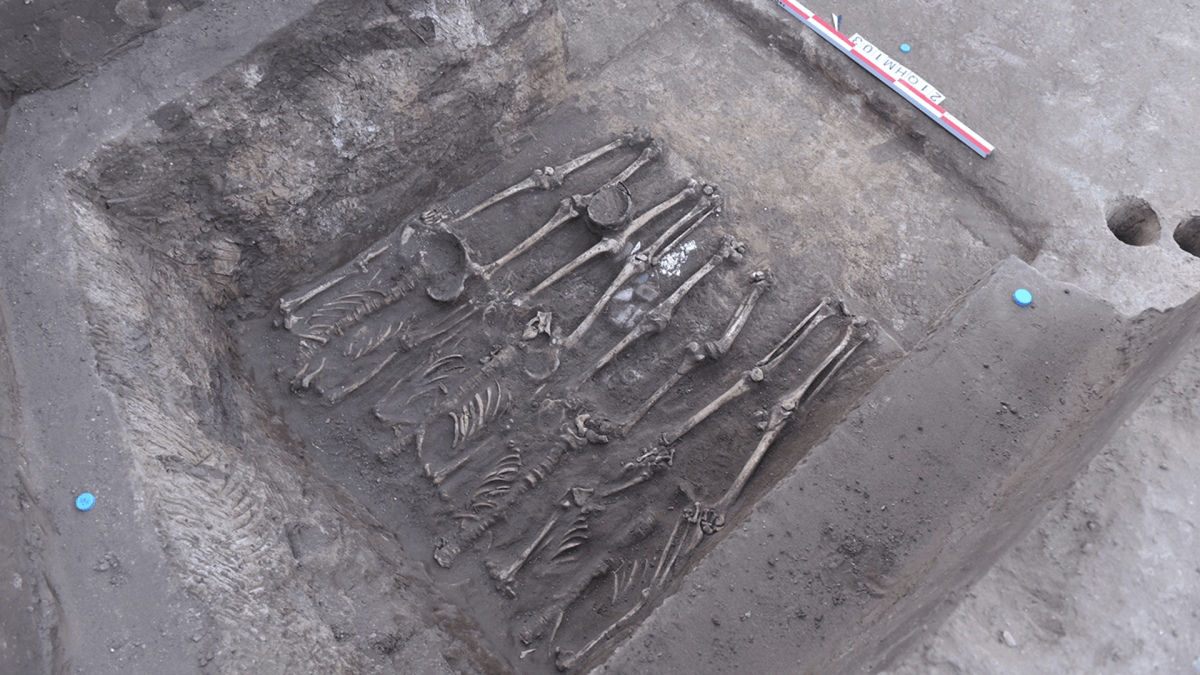
In a chilling revelation, researchers in China have uncovered the largest Neolithic headhunting massacre in history, shedding light on a gruesome event that transpired around 4,100 years ago. The discovery was made at the Honghe site, where a mass grave containing 41 headless skeletons was unearthed, marking a significant breakthrough in understanding the violent practices of ancient civilizations.

The Honghe site has been under investigation since its initial discovery in the 1990s, with six excavations conducted to date. In the latest effort, researchers unearthed a total of 68 skeletons, including 41 without heads, in two houses and three tombs. The victims, all women and children, displayed cut marks across their neck vertebrae, with some exhibiting V- and U-shaped cuts on the second vertebra. The assailants used bone-handled knives with stone blades, showcasing a uniformity in the perpetrators' techniques and weapons.

The discovery challenges the notion of headhunting as a rare and isolated phenomenon in ancient China. The presence of deliberate decapitation marks on all the victims indicates a conscious head-hunting behavior, suggesting that this act was not an isolated incident but rather a part of a larger pattern.

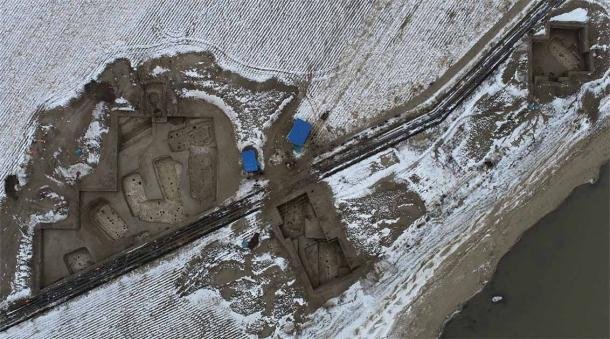
An aerial view of the burial site. Photo: Qian Wang/Texas A&M

The study, published in the Archaeological and Anthropological Sciences journal, employed visual inspections and imaging techniques to identify signs of decapitation. Shockingly, the researchers found that 32 of the 41 beheadings occurred in a single horrifying event, pointing to a coordinated and large-scale act of violence.

Headhunting was a common practice in various Asian countries, often driven by a combination of ritualistic, social, and territorial motives. Tribes engaged in headhunting to gain spiritual power, demonstrate dominance over rival communities, and appease ancestral spirits. In this context, the researchers propose two theories for the Neolithic headhunting massacre at the Honghe site.

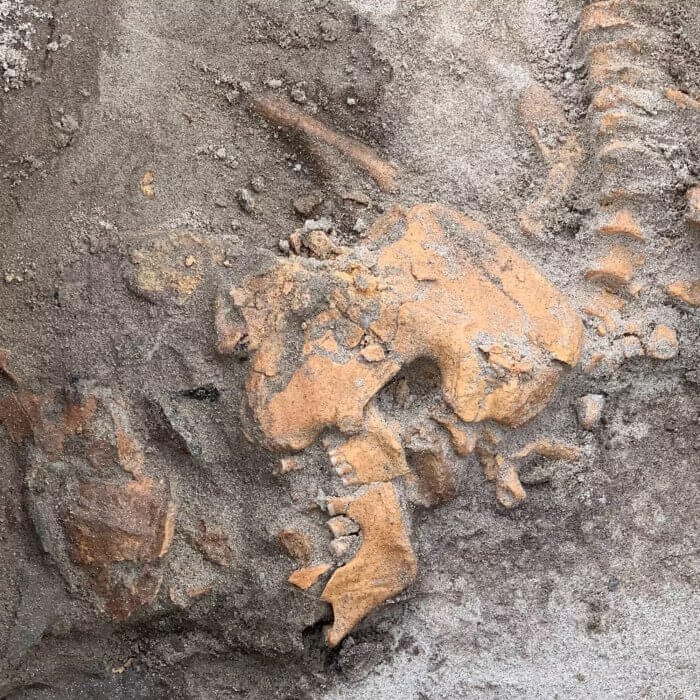
Four skulls in a pit outside the burial house. Photo: Qian Wang/Texas A&M University School of Dentistry

The first theory suggests that the massacre may have been a result of an interpersonal conflict with a high level of cruelty. It is possible that rival groups attacked the settlement, specifically targeting women and children. Alternatively, the researchers propose the existence of a ritualistic aspect, where heads of enemy tribes were sought after for a specific ritual meaning, potentially to conquer or possess the soul and energy of the enemies.

The second theory revolves around settlement rivalry, as evidenced by defensive trenches surrounding the site. The choice of women and children as victims could have been a strategic move to cause maximum outrage and cruelty, aiming to destabilize the Honghe community. The researchers speculate that the men of the settlement may have been away during the attack and returned to find their loved ones massacred, leading to the decision to bury them in the houses before abandoning the settlement.

The discovery at the Honghe site provides a chilling glimpse into the violent past of Neolithic China, raising questions about the motivations and societal dynamics that led to such brutal acts. The researchers hope that further exploration and analysis of archaeological sites will contribute to a deeper understanding of ancient civilizations and the complex factors that shaped their practices and beliefs.

Over 100,000 Coins Shed Light on Japan's Historical Turmoil

November 18, 2023

In an extraordinary archaeological revelation, researchers in Maebashi City, Japan, have unearthed a hidden cache of over 100,000 ancient coins during the construction of a new factory in the Sojamachi district. This remarkable discovery provides a captivating glimpse into the rich history of the region, spanning from China's Western Han Dynasty to the Southern Song Dynasty.

The coins, meticulously bundled in 1,060 packages, showcase a remarkable diversity, with an analysis of 334 coins revealing 44 distinct currency types. Notably, among them are the Ban Liang coins, introduced by China's first emperor, Qin Shi Huang, around 210 BC. These coins continued to be in use under the Western Han dynasty until the adoption of the Wu Zhu cash coins in 118 BC.

The cache includes coins dating back to 175 BC, with the oldest Ban Liang coin boasting a 2.3-centimeter diameter, a 7-millimeter square hole in the center, and inscriptions of "liang" (an old Chinese unit of weight) on the left and "ban" on the right. Coins as recent as AD 1265 from the Southern Song Dynasty period are also part of this fascinating collection.

The Maebashi City Government suggests that the coins were likely concealed for security reasons during the Kamakura jidai, a turbulent period in Japanese history marked by conflicts against the Northern Fujiwara and Mongol invasions. This era witnessed the emergence of the samurai, the warrior caste, and the establishment of feudalism in Japan.

The Kamakura jidai, beginning in AD 1192, was a time of significant political upheaval, with the Kamakura shogunate governing amidst conflicts and external threats. The coins found in the cache offer valuable insights into the economic and political dynamics of this period, shedding light on the measures taken to safeguard wealth during times of uncertainty.

The Newly Excavated Cultural Artefacts Exhibition 2023 in Maebashi City's Otemachi district currently showcases these historic coins. The exhibition provides locals and visitors with an opportunity to appreciate the significance of the find, offering a unique connection to Japan's rich cultural heritage.

Markus Milligan, an award-winning journalist and the Managing Editor at HeritageDaily, underscores the cultural and historical importance of the coins, contributing to a better understanding of Japan's past. As the exhibition unfolds, archaeologists and historians eagerly await further analysis of the coins, hoping to unlock more secrets about Japan's ancient civilizations and the intriguing circumstances that led to the concealment of this treasure trove. The find stands as a testament to the resilience of cultures in the face of adversity, preserving their heritage for future generations to uncover and appreciate.

Largest Floor Mosaic Reveals Grandeur in Central Anatolia

November 18, 2023

In a groundbreaking discovery, archaeologists conducting excavations in the Örenşehir District of İncesu, Kayseri province, have unearthed the largest ancient floor mosaic in the Cappadocia and Central Anatolia Region. The sprawling villa, estimated to have been constructed in the 4th century, has revealed an impressive 600 square meters of intricately designed floor mosaics. This significant find sheds light on the region's rich history, showcasing the craftsmanship of a bygone era.

The ongoing excavations, led by Dr. Can Erpek from Nevşehir Hacı Bektaş Veli University's Department of Art History, have been underway for three years. The initial assessment of the mosaic area, which started at 300 square meters, has now doubled in size. Kayseri Provincial Director of Culture and Tourism, Şükrü Dursun, notes that the structure is expanding annually, emphasizing its historical importance.

Dating Back Centuries

Based on archaeological findings, the researchers suggest that the villa dates back to the 4th century, with traces extending into the 3rd century and beyond. The quality craftsmanship displayed in the floor mosaics indicates that the villa served as a prominent residence during its era. Greek and Latin inscriptions, found in the reception hall, further contribute to the historical narrative, providing glimpses into the past.

The Byzantine and Turkish Periods

Director Can Erpek highlights that the villa continued to be utilized during the Byzantine period and after the arrival of the Turks in Anatolia. The expansive structure boasts approximately 33 rooms, showcasing a high level of architectural sophistication. Notably, the floor mosaics, characterized by intricate geometric patterns, affirm the villa's significance.

The Name 'Hyacinthos'

Among the inscriptions discovered, the name 'Hyacinthos' stands out, leading researchers to believe it may belong to an administrator of imperial property. While further research is needed to confirm this hypothesis, the potential association with an important figure adds to the villa's historical allure.

Kayseri as a Cradle of Civilization

Metropolitan Mayor Memduh Büyükkılıç asserts that Kayseri, resembling an open-air museum, has once again proven its status as the cradle of civilization in Anatolia. The support for six archaeological excavations across the city underscores the region's commitment to uncovering and preserving its rich cultural heritage.

The discovery of the largest ancient floor mosaic in Cappadocia and Central Anatolia Region adds a new chapter to the historical narrative of Kayseri. As excavations continue to reveal the secrets buried beneath Örenşehir, the villa's grandeur invites us to envision the opulence of life in the 4th century and appreciate the meticulous craftsmanship of a bygone era.

Gunung Padang: Exploring the Secrets of the World's Oldest Pyramid

November 18, 2023

Nestled in the lush landscapes of West Java, Indonesia, Gunung Padang, a colossal megalithic structure, has captured the imagination of archaeologists and historians alike. Recent groundbreaking research challenges established historical timelines, proposing that this ancient site may predate Egypt's renowned pyramids and even surpass Turkey's stone marvels at Göbekli Tepe, making it the world's oldest pyramid.

Led by geologist Danny Hilman Natawidjaja and his team at Indonesia's National Research and Innovation Agency, the new research suggests that Gunung Padang dates back to the last Ice Age, around 25,000 to 14,000 years ago. This revelation positions the structure millennia ahead of the Egyptian pyramids, prompting a reconsideration of human civilization's emergence and advanced construction techniques.

Advanced Engineering Skills of a Mysterious Civilization

The study challenges conventional beliefs by highlighting the advanced masonry capabilities exhibited by the builders of Gunung Padang. Contrary to expectations based on traditional hunter-gatherer cultures, the research reveals the existence of advanced construction practices during the last glacial period, challenging the notion that such skills only emerged with the advent of agriculture around 11,000 years ago.

Tomographic Revelations and Hidden Chambers

Tomographic tests conducted at Gunung Padang unveil intriguing anomalies, suggesting the presence of hidden chambers or cavities within the site. The research team's findings, aligning high-resistive anomalies in electric resistivity tomography with low-velocity anomalies in seismic tomography, point to a complex underground construction. Drilling operations further support this hypothesis, revealing significant water loss indicative of substantial underground spaces.

A view of the Gunung Padang site from below the hilltop (Credit: Arie Basuki/CC 4.0).

A Complex Underground Construction

Gunung Padang transcends being a mere set of terraces, revealing itself as a complex underground construction with substantial chambers and cavities. Some of these hidden spaces reach up to 15 meters in length and 10 meters in height, positioning Gunung Padang as a potential rival to the iconic pyramids of Egypt.

Unraveling the Mystery

Despite over a century of awareness about Gunung Padang, much remains unknown about the people who constructed this ancient marvel. Ongoing research aims to unlock the secrets hidden within the site's unexplored chambers, providing crucial insights into the mysterious builders and the purpose behind this extraordinary feat of Neolithic engineering.

Gunung Padang stands as a testament to the ingenuity of an ancient civilization, potentially rewriting the narrative of human history. As researchers embark on further investigations and interdisciplinary studies, the world eagerly anticipates the unraveling of Gunung Padang's hidden secrets, shedding more light on the enigmatic ancient civilizations that thrived in this captivating site.

Ancient Egyptian Tomb Unveils Enchanting Snake Protection Spells

November 18, 2023

Archaeologists from the Czech Institute of Egyptology (CIE) have uncovered a remarkable tomb at the Abusir archaeological site, situated between Giza and Saqqara in Egypt. This tomb, believed to be from the 1st millennium BC, is adorned with intricate magic spells designed to protect the tomb's occupant from snake bites.

The discovery, made during excavations in April and May, sheds light on the fascinating burial practices of ancient Egyptians and their efforts to safeguard against the constant threat of venomous snakes. The tomb is located in a western section of Abusir, historically used as a cemetery for high-ranking officials and military commanders during Egypt's 26th and 27th dynasties.

Ladislav Bareš, who has been coordinating the research of Abusir shaft tombs, describes the tomb as a medium-sized shaft tomb belonging to Džehutiemhat, a royal scribe who held a prestigious position. Analysis of the skeletal remains suggests that Djehutyemhat passed away at around 25 years of age, possibly due to an "occupational disease" linked to sedentary work, displaying signs of acute osteoporosis.

The tomb itself is adorned with a rich array of inscriptions, artwork, and texts. Notably, the northern wall features a series of spells specifically crafted to protect against snake bites. During this period, venomous snakes posed a constant threat, and these spells were considered essential for ensuring the safety of the deceased. Interestingly, the spells also depict snakes as powerful guardians of the deceased and their mummy.

Renata Landgrafova, the director of the Czech Institute of Egyptology, highlighted the southern and western walls of the tomb, which are painted with depictions of sacrificial rituals and a long list of victims. The burial chamber, hidden almost 50 meters below ground level, features ritual offerings and intricate depictions of the sun's journey across the sky, accompanied by hymns to the celestial body.

At the center of the burial chamber lies a large stone sarcophagus adorned with hieroglyphic inscriptions and depictions of gods. The sarcophagus lid is decorated with three columns of hieroglyphic text from the 178th chapter of the Book of the Dead, aimed at guiding and protecting the deceased in the afterlife. Images of goddesses Isis and Nephthys, along with accompanying texts, provide additional protection to the deceased, with the presence of Imentet, the goddess of the West, adding a symbolic layer of meaning to the tomb.

The magical texts and inscriptions within the tomb served a profound purpose, ensuring a secure journey into the afterlife for Djehutyemhat. This discovery not only offers insights into the individual and their role during this period but also unveils the captivating beliefs and rituals of ancient Egyptians from the 6th to 5th centuries B.C.

In unraveling the mysteries of this ancient tomb, archaeologists continue to piece together the rich tapestry of Egypt's history and the cultural practices that shaped the lives and afterlives of its people.

Archaeological Excavation in Argyll Reveals 5,000-Year-Old Discoveries

November 17, 2023

In a recent archaeological dig at Glendaruel's Stronafian Community Forest in Cowal, Argyll, a team of researchers led by Andrew Jepson of Archaeology Scotland has unearthed captivating artifacts that may date back as far as 5,000 years. The 12-day excavation, which engaged 25 local volunteers and 40 schoolchildren from Kilmodan Primary, Strachur Primary, and Dunoon Grammar, not only unveiled historical treasures but also added an educational dimension to the discovery process.

A standout discovery from the excavation is a piece of pottery believed to be from either the Bronze Age or Neolithic period. The pottery, identified as two small sherds of reddish-brown gritty ware, includes a rim that holds the potential to provide valuable insights into the ancient cultures that once inhabited the region. However, further analysis is required to determine the precise age and origin of these artifacts.

The dig commenced with the reopening and extension of Trench 1, situated over a possible stone wall. A large upright stone discovered in the trench has ignited considerable debate among archaeologists regarding its purpose and significance within the ancient landscape. As the excavation progressed, the team uncovered a substantial wall approximately 1 meter in width, forming the footprint of a sub-rectangular structure. The internal turn of the wall, a moment described as a "Eureka" by the researchers, unveiled a clearer picture of the ancient architecture.

Despite challenging weather conditions, the dedication of the volunteers remained steadfast throughout the excavation. Andrew Jepson expressed his enthusiasm for the project, stating, "The weather was, at times, challenging but everyone continued undeterred, and we will be back next year to further explore what is looking to be a real archaeological gem on the Cowal peninsula."

The involvement of schoolchildren in the excavation adds an educational and community-oriented aspect to the project, fostering an appreciation for local history and archaeology among the younger generation. The discoveries made during this dig contribute to the growing body of knowledge about the ancient civilizations that once thrived in Argyll.

The archaeological site at Glendaruel's Stronafian Community Forest is proving to be a rich source of information about the region's past, and the anticipation is high for future excavations that may uncover even more secrets from the mists of time. As researchers continue their analysis of the unearthed artifacts, the story of Argyll's ancient history is gradually unfolding, inviting us to connect with our ancestors and understand the rich tapestry of human civilization in this corner of Scotland.

Chile's mysterious, oblong-headed 'Atacama skeleton' (above), according the Spanish businessman who has spent a decade studying it, may have once been a small class of terrestrial humanoid: a human cousin he believes may have once lived in Chilean caves

The Enigma of Chile's Atacama Skeleton: Ancient Human or Extraterrestrial Oddity?

November 17, 2023

Chile's Atacama Desert has long been a hotbed of mysterious discoveries, with one of the most perplexing being the Atacama skeleton, an oblong-headed, six-inch-long mummy that has fueled speculation about extraterrestrial life. The owner of this enigmatic specimen, Ramón Navia-Osorio Villar, a Spanish businessman and UFO enthusiast, has recently proposed a new theory about the tiny being's origins, suggesting that it may belong to an ancient species of cave-dwelling humans. However, this theory has been met with skepticism from experts who argue that the skeleton is nothing more than that of a premature human fetus.

Ramon Navia-Osorio Villar (left) who now owns the eerie, but tiny, skeletal mummy dropped his new theory on Spain 's Mitele TV network late last week. In 2013, the Barcelona-based entrepreneur also led a UFO research at the Institute for Exobiological Investigation and Study

The Origin of Ata

The Atacama skeleton, affectionately nicknamed Ata, first captured public attention when it was discovered in the ghost town of La Noria, perched high in the Andes at 3,225 feet above sea level. Navia-Osorio acquired the mummy from treasure hunter Oscar Muñoz in 2003, sparking a decade-long study and fascination with the tiny, otherworldly figure. The initial excitement surrounding Ata as a potential extraterrestrial being has been met with skepticism by experts in infant anatomy and anthropology.

Based on an assessment by biological anthropologist Siân Halcrow and her colleagues, which included the tiny Ata's 6-inch crown-of-the-head-to-heel-length measurement, the skeleton likely belonged to a fetus or premature infant that died less than four months into pregnancy

Scientific Critique

Seven experts, including Professor Siân Halcrow from New Zealand's University of Otago, have consistently contested the extraterrestrial claims, arguing that Ata's skeletal features align with those of a human fetus. Halcrow's team estimated Ata's age to be approximately 15 weeks in utero gestation, suggesting a premature birth. Their 2018 analysis, published alongside archaeologists from Stockholm University and experts from Stony Brook medical school, dismissed the notion of extraterrestrial origins, attributing the peculiar skeletal features to genetic mutations associated with dwarfism and scoliosis.

A longtime UFO hunter and enthusiast, Navia-Osorio spearheaded the publication of a report on the 'Atacama skeleton' in 2013 via the UFO organization that he led: the Institute for Exobiological Investigation and Study (IIEE)

Navia-Osorio's New Theory

Despite the scientific consensus, Navia-Osorio persists in his belief that Ata represents an ancient species of cave-dwelling humans. In a recent appearance on Spain's Mitele TV network, he proposed that these tiny individuals lived alongside the indigenous Aymara people for centuries, emerging from caves only at night. Navia-Osorio challenges the scientific community, arguing that Ata cannot be a 15-week-old fetus due to the presence of calluses on its feet.

That report, ' The Anthropomorphic Being From Atacama ,' was followed by a more thorough, peer-reviewed study conducted by a team at Stanford five years later

The Ethical Debate

The study of Ata has not been without controversy. The 2018 peer-reviewed research conducted by a team at Stanford University faced immediate backlash for ethical concerns related to the acquisition of Ata's remains. Critics accused the researchers of potentially violating Chilean law, raising questions about the legitimacy of their findings.

The Stanford team's 2018 research , however, was met with instant backlash as many questioned the findings and the ethics of the study itself, criticizing them for working with parties who arguably violated Chilean law by taking Ata's remains

As the debate over the origins of the Atacama skeleton continues, the scientific community remains steadfast in its assertion that Ata is a human fetus with unusual genetic mutations. Navia-Osorio's alternative theory, rooted in the existence of an ancient race of cave-dwelling humans, faces considerable skepticism from experts who argue that the evidence overwhelmingly supports a terrestrial, albeit unusual, human origin. The mystery of Ata persists, challenging both scientific rigor and the allure of extraterrestrial possibilities in the vast, arid landscapes of the Atacama Desert.

Navia-Osorio, who has written several books on UFOs and aliens, told Cuarto Milenio's viewers that he heard this theory via 'a native friend from the Aymara tribe,' who told him 'that these beings used to live with their ancestors before the Spanish settlers arrived'

4,000-Year-Old Stone Map in France Unlocks Secrets to Ancient European Landscape

November 17, 2023

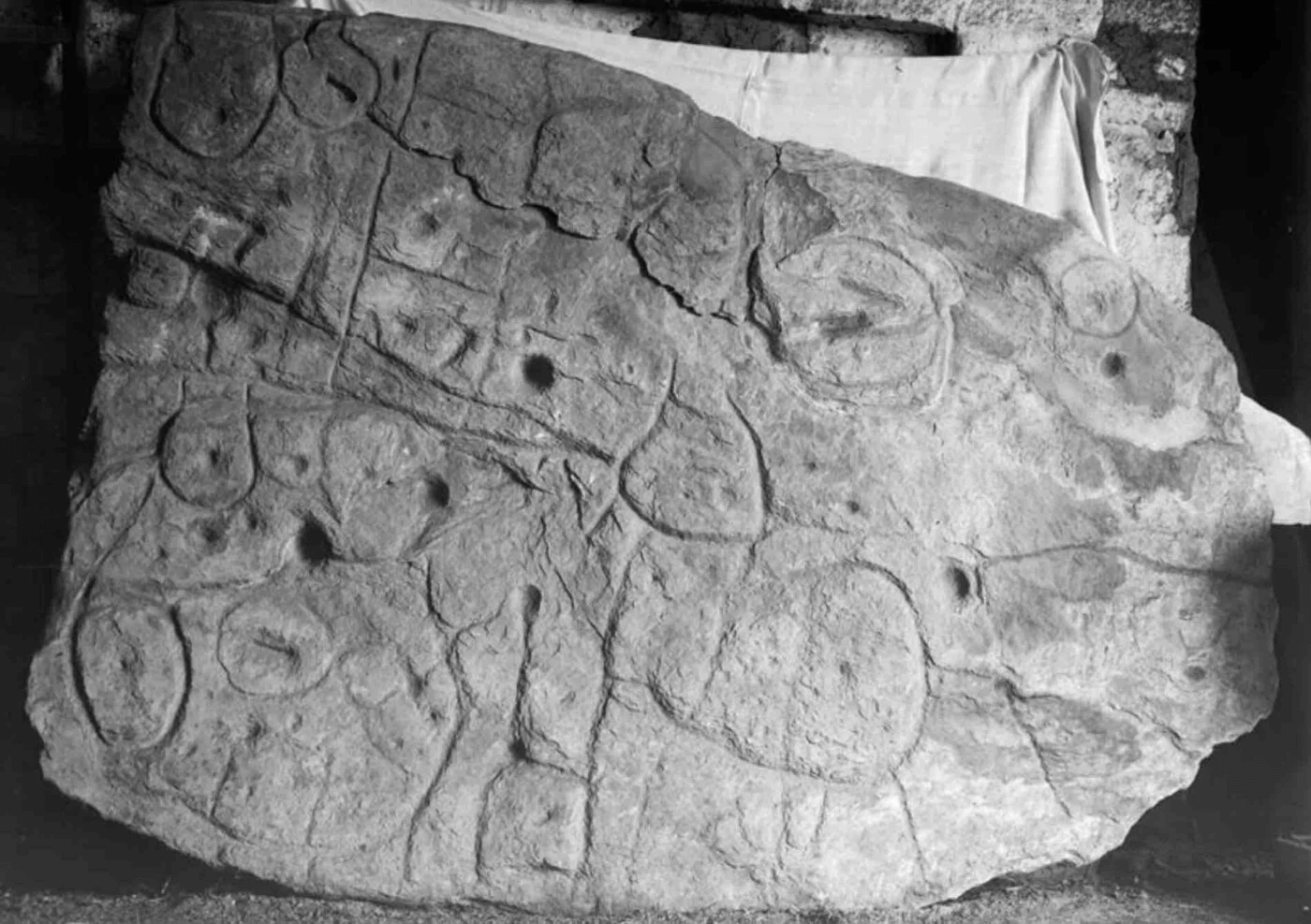
An ancient stone, adorned with mysterious markings, is believed to hold the key to unlocking new archaeological treasures in Europe. The Saint-Bélec slab, a 4,000-year-old relic considered Europe's oldest map, was discovered in 1900 in an ancient burial mound in the Leuhan parish near France’s Finistère Department. Recent findings suggest that the stone's enigmatic carvings may serve as a treasure map, guiding archaeologists to previously undiscovered ancient sites.
Unearthed in 1900 by French historical researcher Paul du Châtellier, the Saint-Bélec slab was initially housed in du Châtellier's home before finding its way to the French National Archaeological Museum. However, it was eventually forgotten for nearly a century until its rediscovery in 2014. Studies initiated in 2017 revealed that the stone depicts the Odet valley during the Bronze Age, making it the oldest known map of any European territory.

The Stone's Potential as a "Treasure Map"

Yvan Pailler, a professor at the University of Western Brittany, and his colleagues believe that the Saint-Bélec slab is a literal treasure map. They speculate that the stone, with its detailed markings of the surrounding region, could lead archaeologists to previously unknown archaeological sites. In an era where remote sensing technologies can make significant discoveries without physical excavation, the slab's markings may offer a novel method of locating and exploring ancient sites.

Deciphering the Ancient Clues

The markings on the Saint-Bélec slab include representations of rivers, mountains, and other natural features that closely match about 80% of their modern counterparts. While some symbols remain mysterious, researchers are optimistic that these engravings could represent burial mounds and other significant archaeological sites. The deciphering process is ongoing, with Pailler and his colleague Clement Nicolas estimating that it may take more than a decade to identify and verify all the locations depicted on the stone.

The Saint-Bélec slab, was first discovered in 1900, and thereafter largely forgotten for almost a century (public domain).

Recent Excavations and Fragment Discoveries

In a recent archaeological investigation at the original site of discovery, additional fragments of the Saint-Bélec slab were unearthed. These fragments, along with the main portion recovered in 1900, had been repurposed in the construction of a tomb wall. The ongoing research aims to provide a better understanding of the context in which the stone was found, offering valuable insights into the ancient landscape it represents.

While the Saint-Bélec slab is the oldest known map in Europe, similar ancient maps have been discovered worldwide. The Imago Mundi, or the Babylonian Map of the World, dating back to the 5th century BC, is considered one of the oldest maps globally and is currently housed at the British Museum in London.

The Saint-Bélec slab, once forgotten but now a focal point of archaeological research, has the potential to rewrite history by leading researchers to undiscovered ancient sites in Europe. As the decoding of its intricate markings continues, the stone stands as a testament to the enduring power of ancient cartography in unlocking the secrets of our past.

4,000-Year-Old Stone Box Grave Reveals Insights into Norway's Agricultural History

November 17, 2023

In a groundbreaking discovery, archaeologists in Western Norway have unearthed a 4,000-year-old stone box grave, marking a significant milestone in the study of Norway's Stone Age history. The grave, identified as a 'hellekistegrave' or stone box grave, is a unique find not only for its age but also for its location, providing valuable insights into the region's ancient past.

Situated south of Vestkapp in Selje, Vestland, the grave measures an impressive four meters in length and over two meters in width, making it a substantial archaeological find. Morten Ramstad, from the antiquities section at the University of Bergen, describes it as the most unique Stone Age discovery in Norway in the last century.

What makes this discovery particularly noteworthy is the type of burial site found. Hellekistegraves, or stone box graves, were previously known to exist in Buskerud, Østfold, and Denmark but had never been documented in Western Norway. This variation in burial practices raises questions about the cultural and historical significance of the region during the Stone Age.

The researchers believe that the grave may hold crucial information about the introduction of agriculture to Western Norway. Agriculture, which first appeared in Norway around 3950 BC, played a pivotal role in the transition from hunter-gatherer societies to settled communities. Understanding how and when agriculture reached Western Norway could provide key insights into the region's societal evolution.

The exceptionally well-preserved human bone material discovered at the site is a treasure trove for researchers. It opens up the possibility of determining the ages of the individuals buried, their places of origin, and the methods of transportation to Western Norway. This level of preservation is rare and offers a unique opportunity to delve into the lives of the people from the distant past.

To contextualize the discovery, it's essential to consider the historical timeline. The first inhabitants of Norway, migrating north around 10,000 years ago after the retreat of ice sheets, were hunter-gatherers relying on seafood and game for sustenance. The advent of agriculture, between 5,000 and 4,000 BC around the Oslofjord, marked a significant shift in lifestyle.

The Neolithic period, commencing in 4000 BC, ushered in the era of agriculture in Norway. Subsequent periods saw the establishment of chieftains, the construction of hilltop forts during the Migration Period, and Norwegian expansion to the British Isles and beyond during the Viking Age.

The discovery of the 4,000-year-old stone box grave in Western Norway contributes to our understanding of the region's agricultural history. The potential wealth of information contained within the well-preserved grave could reshape our knowledge of ancient societies and their journey from hunter-gatherer lifestyles to settled agricultural communities.

As researchers continue their analysis, this find promises to unlock new chapters in Norway's prehistoric narrative, shedding light on the cultural, social, and economic dynamics that shaped Western Norway over four millennia ago.

Ashurbanipal: The Cruelest King of Assyria

November 17, 2023

Ashurbanipal, a skilled military commander, ruled the Neo-Assyrian Empire in the mid-7th century BC. Renowned for his strategic acumen and an avid pursuit of knowledge, he undertook the construction of The Royal Library of Ashurbanipal. Born in Nineveh, the Neo-Assyrian capital, in 685 BC, he hailed from the Sargonid dynasty initiated by his great-grandfather Sargon the Second.

In 671 BC, Ashurbanipal's father achieved a historic milestone by conquering Egypt, becoming the first ruler to govern both Mesopotamia and Egypt. Ashurbanipal not only quelled a rebellion his father had initiated in Egypt but also extended his campaigns to Thebes, accomplishing a thorough sacking of the city. By 665 BC, the Assyrian Empire had once again established complete control over Egypt, with Ashurbanipal appointing an Egyptian prince, Psamtik, as pharaoh.

In 653 BC, Ashurbanipal launched a devastating assault on Elam, culminating in the Battle of Ulai near Susa, the Elamite capital, where he secured a decisive victory. The growing tensions between Ashurbanipal and his brother Shamash-shum-ukin eventually erupted into a civil war in 652 BC. Despite being outnumbered and outmatched from the outset, Shamash-shum-ukin sustained his cause for several years by forging alliances with Ashurbanipal's adversaries.

In this video, we delve into a comprehensive analysis of the life of Ashurbanipal, often hailed as "The Cruelest King of Assyria."

Who were the first people in recorded history?

November 17, 2023

The oldest recorded names in human history are found in Mesopotamia, the birthplace of writing. Cuneiform, the world's earliest writing system, emerged over 5,000 years ago alongside Egyptian hieroglyphics.

Cuneiform is incredibly complex, and the study of it even more so. In order to learn more about the oldest recorded names, Stefan Milo turned to an Assyriologist, Dr. Sara Mohr, who explained that cuneiform is a script used to write a variety of different languages in the ancient Near East. The names that have been recorded are from contemporary documents from the time that the person was alive with their name on it. None of the names from the Old Testament of the Bible or the Torah, or from oral history, can be included in the list because they cannot be dated accurately.

Stefan also discusses how modern humans have been on Earth for probably around 200 to 300,000 years, and one thing we can never know about anyone who lived in prehistory is their names. He also talks about the importance of humanizing our ancestors and making sense of our place in the world.

The Origins of the Ancient Israelites, DNA and non-Biblical evidence

November 17, 2023

Dr. Aren Maeir joins us to navigate the contentious and extensively debated origins of the Ancient Israelites.

He delves into scholarly discussions, considering questions such as:

1. Did the Israelites emerge from the Canaanite populations?

2. Was there a gradual migration over time, and if so, where did they migrate from?

3. Could the answer be a combination of both, with natives and migrants eventually forming a distinct group?

The conversation spans across archaeology, ancient DNA, dietary laws, primary sources for the earliest non-Biblical evidence of the Israelites, and much more.

We also explore intriguing topics like:

1. Is the term "Israel" derived from a pagan Canaanite deity?

2. How should we interpret the Old Testament when examining history?

3. Can we use the terms "Israelite" and "Hebrew" interchangeably?

As we conclude, Dr. Maeir advises caution in interpreting results from ancient DNA studies, emphasizing the frequent misconstrual of such findings.

What Was Earth Like Before the Dinosaurs?

November 17, 2023

This video explores lesser-known prehistoric creatures that have evolved incredible adaptations to survive catastrophic events and thrive in their environment. For example, the docorus was a giant walking rock covered entirely with hard bone plates, making it virtually impervious to predators.

The megatherium, one of the largest mammals, was related to the modern-day sloth and weighed up to 4 tons. The feathered gastornis was a bloodthirsty bird that could cut its prey in half with its broad and powerful beak. Ambulo cetus was one of the first mammals to live underwater, with a streamlined body shape and fins for limbs. These weird hybrids gave rise to whales and orcas. The xenosaurus was a 10-meter long, furry duck with claws longer than Freddy Krueger's, but it was herbivorous and quite friendly. Watch the video to find out more.

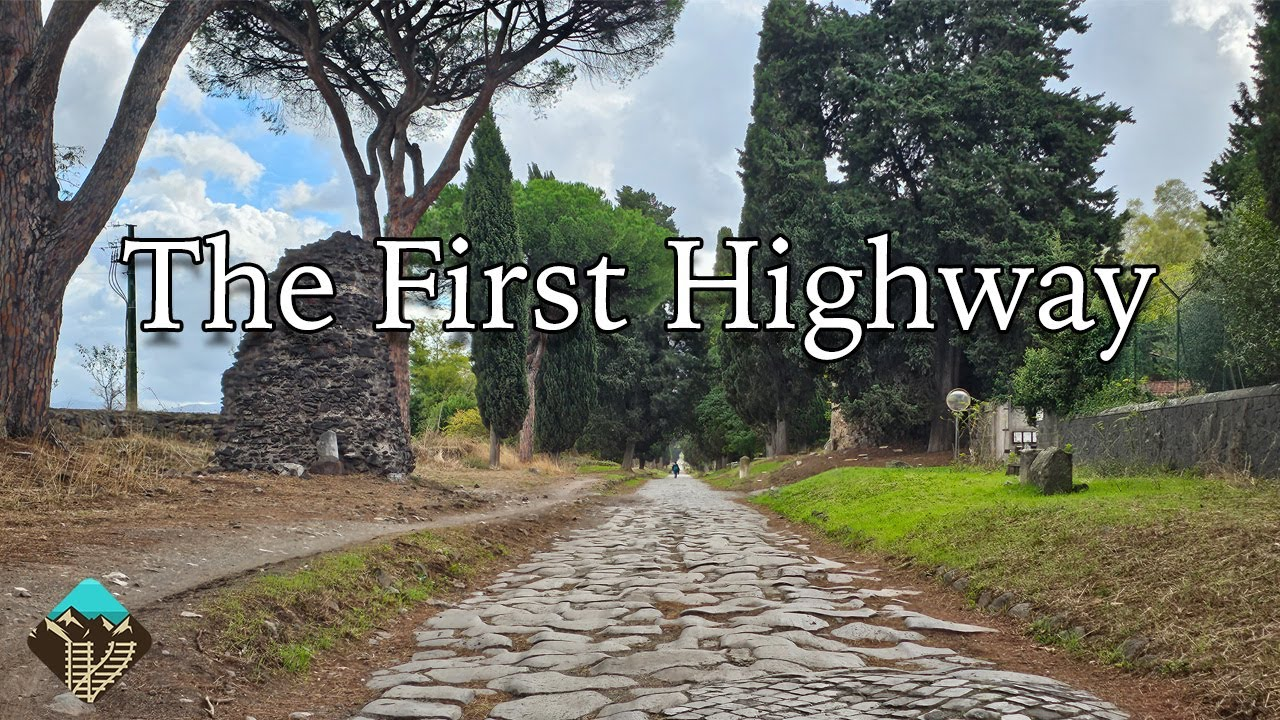
Exploring The Appian Way - Ancient Rome's First Highway

November 17, 2023

The Appian Way, the first Roman highway dating back over 2,300 years, begins at the Circus Maximus in Rome. The road was named after censor Appius Claudius Caecus who planned the first 132 miles of the road leading from Rome to Capua during the Second Samnite War, with the purpose of allowing Rome to move its soldiers more easily. By 191 BC, the road extended all the way to Brindisi on the southeast coast of Italy.

The historic starting point of the Appian Way is the Circus Maximus, an ancient Roman chariot racing stadium that predates the Republic of Rome and is said to have held up to 150,000 spectators. Today, the road starts a little over a mile from the stadium.

Visitors can explore the first five miles of the road on rented e-bikes, which can be challenging due to narrow streets and heavy traffic. The road is lined with landmarks such as the Arch of Drusus and the Tomb of Geta.

Early Christians buried their dead underground in catacombs, and millions of them are buried in miles of catacombs in S. Calisto, one of the biggest religious sites along the road.

The YouTube video titled "Exploring The Appian Way - Ancient Rome's First Highway" features a historical tour of the Appian Way. The vlogger explore the significance of historical landmarks such as the Tomb of Geta, The Church of Dominikadus, and the Villa of Maxentius. He also take a detour to discuss the Villas of Quint Tilli and the unfortunate fate of the Quint brothers. The tour concludes at the Flint Tower, and effortlessly shows you the beauty while experiencing the historical background of the Appian Way. Enjoy!

Oldest Native American Footage of All Time! Must See Videos and Photos!

November 17, 2023

In this video, we explore an extraordinary collection of rare and compelling photographs that showcase the rich tapestry of Native American culture, customs, and traditions. Join us on a journey as we unveil hidden treasures, illuminating the vibrant heritage of indigenous peoples.

These captivating images freeze moments in time, providing glimpses into the lives of Native American tribes across various regions. From commanding portraits of tribal leaders and warriors to intimate snapshots of daily life, these rare photographs offer a unique window into a diverse culture spanning centuries.

As we analyze each photo, we'll share intriguing stories, historical context, and insightful perspectives, fostering a deeper appreciation for the significance of these visual artifacts. This is an opportunity to gain insights into the Native American way of life, their spiritual beliefs, and their profound connection with nature.

Prepare to be captivated by the artistry and symbolism captured in each frame, as well as the resilience and strength depicted in the faces of Native American people. Our goal is to pay homage and celebrate their heritage, presenting the beauty and diversity of their traditions through these exceptional and must-see photographs.

Whether you're passionate about history, a photography enthusiast, or simply curious about Native American culture, this video guarantees a mesmerizing visual journey that will both inspire and inform. Come with us as we uncover the untold stories behind these extraordinary Native American photographs.

Archaeologists Find Preserved Fetus in Newly Discovered Mummy

November 16, 2023

The Warsaw Mummy Project, which uses radiology machines to study ancient mummies, recently discovered a mummy from the 1st century BC that was initially identified as a male priest but was actually a pregnant woman, with a preserved fetus in her womb.

This unprecedented finding provides valuable insights into ancient burial practices. The fetus was intentionally left untouched by the embalmers, possibly due to its status as a separate individual or religious beliefs.

One theory suggests that the fetus may have been a secret, possibly to protect a wealthy individual's reputation. The cause of death for both the mother and fetus is unknown, but further investigation is needed. The mummy, found with a set of amulets, indicating high social standing, will likely be displayed in the National Museum of Warsaw along with other Egyptian mummies.

See more:

10 Most Mysterious Recent Archaeological Discoveries

November 16, 2023

The YouTube video "10 Most Mysterious Recent Archaeological Discoveries" highlights 10 fascinating recent discoveries in the field of archaeology. One such discovery is the Lady of Baza, a pre-Roman funerary statue of a woman found in a cemetery in Spain. Another exciting find is the discovery of the skeleton of a woman in Georgia, which has unexpected features that suggest a different cultural background. The video also covers a tomb in Lahore, Pakistan, which has been restored and is now helping to preserve the city's history. These discoveries can help historians and archaeologists better understand societal structures and cultural practices of the past. However, there are still many questions that remain unanswered.

In the following video we will analyze 10 of the most mysterious recent archaeological discoveries. Watch the video to find out more!

Every Prophet Explained

November 16, 2023

In this video we will provide an overview of the prophets in Judaism, Christianity, and Islam. Starting with Adam and Eve and their descendants, it covers key figures like Abraham, Moses, Samuel, David, Elijah, John the Baptist, Jesus, and Muhammad.

We will outline their roles and contributions in the formation of monotheistic religions and the establishment of important religious movements, such as the exodus from Egypt and the kingdom of Israel. It serves as a comprehensive guide to understanding the major prophets in these three faiths.

← Newer Posts Older Posts →
Featured
image_2026-01-17_204356244.png
Jan 17, 2026
Archaeologists find a supersized medieval shipwreck in Denmark
Jan 17, 2026
Read More →
Jan 17, 2026
image_2026-01-17_203016176.png
Jan 17, 2026
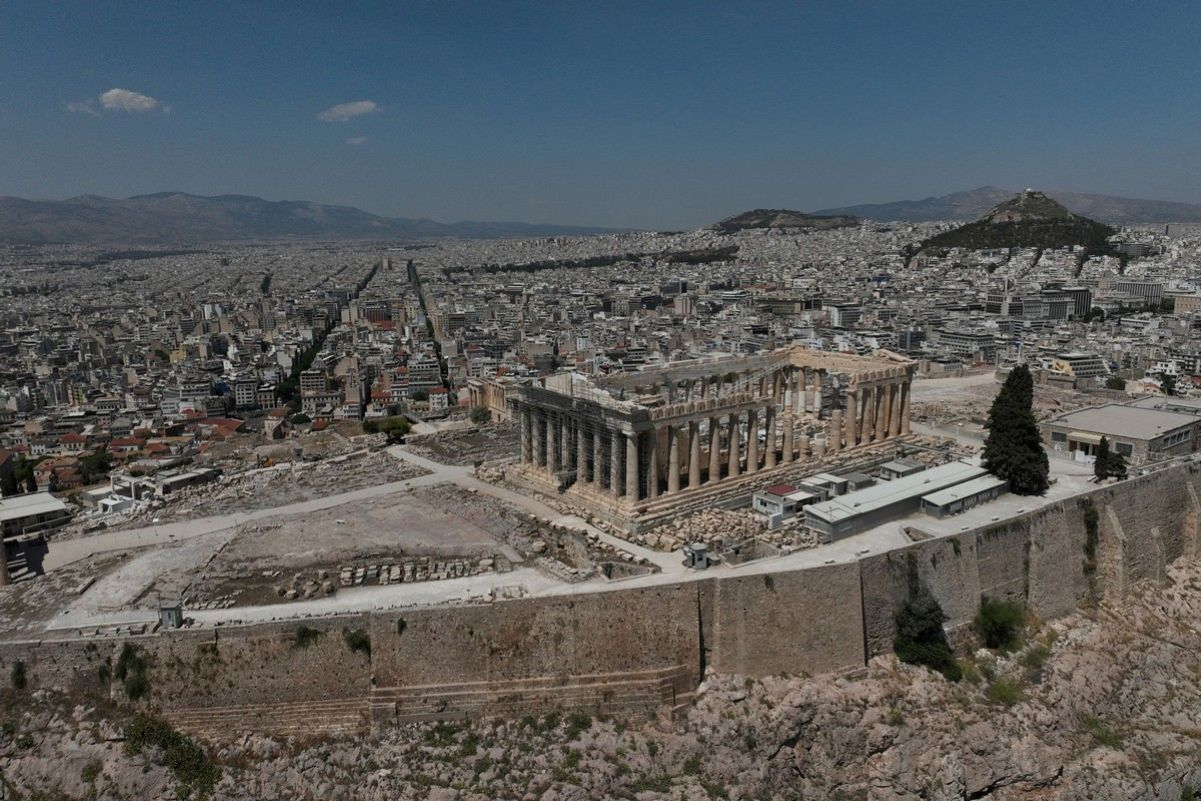
Free Access to Greece’s Archaeological Treasures This Sunday
Jan 17, 2026
Read More →
Jan 17, 2026
image_2026-01-17_202652467.png
Jan 17, 2026
Ancient temple rich with gold and ritual altars unearthed on Evia island
Jan 17, 2026
Read More →
Jan 17, 2026
image_2026-01-17_194536616.png
Jan 17, 2026
Signs of neolithic trading and medieval monastery among National Trust’s top discoveries of 2025
Jan 17, 2026
Read More →
Jan 17, 2026
image_2026-01-17_194400111.png
Jan 17, 2026
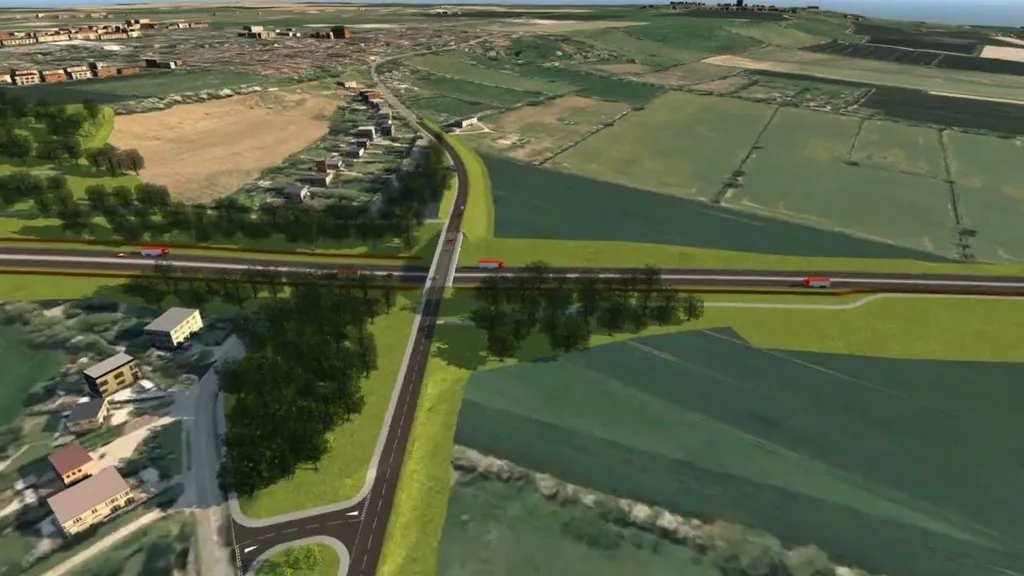
Meet £200m road team and view ancient artefacts
Jan 17, 2026
Read More →
Jan 17, 2026
image_2026-01-17_193815498.png
Jan 17, 2026
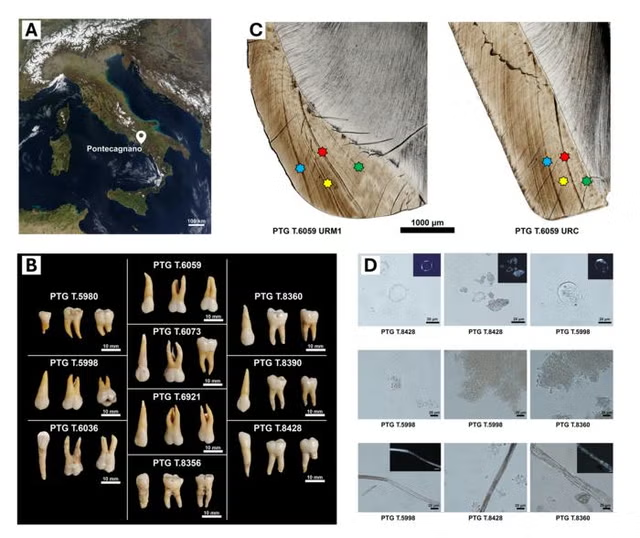
Iron Age teeth fossils reveal diversity of diet of ancient Italians
Jan 17, 2026
Read More →
Jan 17, 2026
read more

Powered by The archaeologist