The Role of the Knights Templar in the Crusades

Title: "The Role of the Knights Templar in the Crusades"
Prompt: Explore the history of the Templars, their rise to power, and the myths surrounding their downfall.

The Knights Templar remain one of the most intriguing groups from medieval history. Known for their bravery, discipline, and mysterious reputation, the Templars played a major role during the Crusades and left behind a legacy filled with both historical achievements and legendary stories. This article explores how they emerged, rose to influence, and eventually faced a dramatic collapse that still sparks curiosity today.

Origins and Purpose

The Knights Templar began in the early 12th century with a simple mission: to protect Christian pilgrims traveling to the Holy Land. As violence along pilgrimage routes increased, a small group of knights formed a brotherhood dedicated to defending travelers and safeguarding important religious sites. Their commitment earned them recognition from the Church, giving the order legitimacy and support.

Growth and Rise to Power

As the Crusades progressed, the Templars expanded rapidly. They became known for their strict discipline, exceptional combat skills, and unshakable religious devotion. These qualities made them a valuable force in many key battles.

Beyond the battlefield, the order built a strong financial network. They managed estates, offered safe storage for valuables, and even developed early forms of banking. Their wealth and connections allowed them to establish influence across Europe, making the Templars not only warriors but also powerful economic figures.

Daily Life and Values

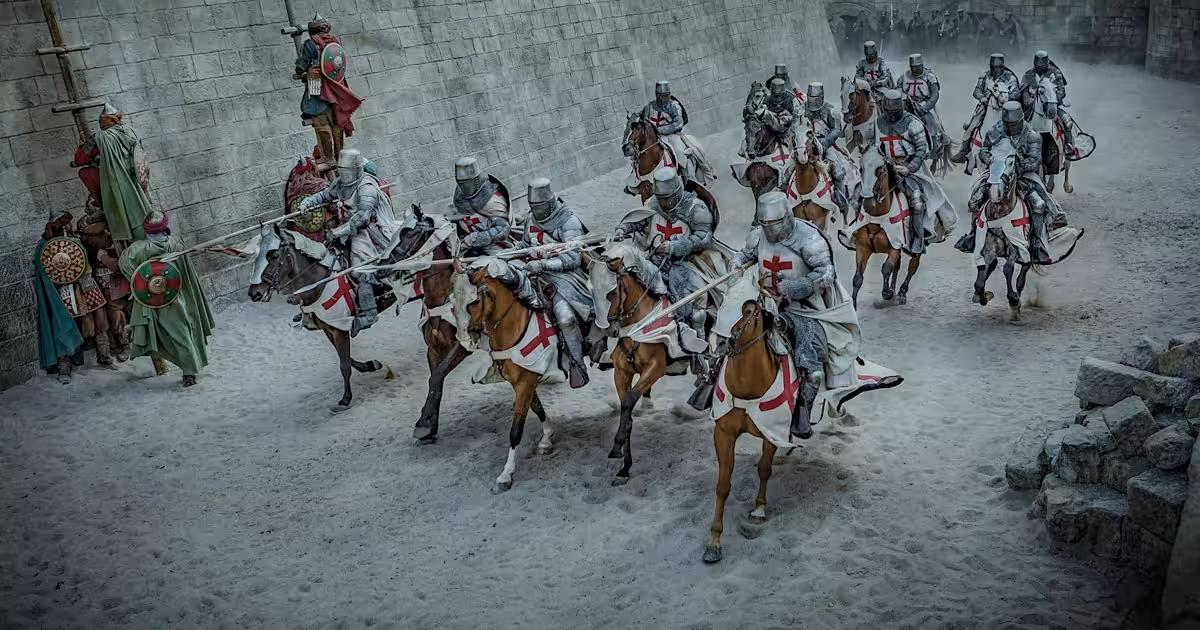
Life within the order demanded obedience, humility, and purity. Members lived under a strict code that emphasized simplicity and loyalty. Their uniform, marked with a red cross, symbolized sacrifice and faith. This disciplined lifestyle strengthened their reputation and set them apart from other military groups of the time.

The Fall of the Templars

Despite their success, the Templars faced a sudden and dramatic downfall in the early 1300s. Political tensions, jealousy, and financial motivations fueled accusations of heresy and corruption. Many historians believe these charges were exaggerated or fabricated by powerful leaders who saw the Templars’ wealth as an opportunity.

The order was eventually disbanded, and many members were arrested or executed. This abrupt end gave rise to countless stories and conspiracies about hidden treasures, secret rituals, and surviving members who continued the Templar legacy in the shadows.

Enduring Myths and Legacy

Even centuries later, the Knights Templar continue to capture the imagination of historians, writers, and the general public. Movies, books, and legends often portray them as guardians of sacred relics or holders of ancient secrets. While many of these stories are more fantasy than fact, they reveal how deeply the Templars have shaped popular culture.

Their real legacy lies in their military contributions, innovative financial practices, and the lasting fascination they inspire. The Templars remain a symbol of courage, mystery, and the complex history of the Crusades.

The Myth of Excalibur: King Arthur’s Legendary Sword

Origins of the Excalibur Legend

The story of Excalibur has fascinated readers for centuries, beginning with early medieval tales about King Arthur. Although versions differ, many early accounts describe the sword as a gift granted by mystical forces, emphasizing Arthur’s destined role as a great ruler. Some traditions say Excalibur was handed to Arthur by the Lady of the Lake, while others connect it to the famous “sword in the stone” test that only the rightful king could pass. These stories, shared through poems, folklore, and later literature, helped shape Arthur as a figure of honor and heroism.

Symbolism Behind the Legendary Sword

Excalibur is more than just a weapon it represents the qualities expected of a true leader. The sword symbolizes divine approval, justice, and the strength needed to protect a kingdom. Its shining blade often reflects clarity, courage, and moral integrity. Many storytellers use the sword as a symbol of rightful authority and the weight of responsibility that comes with power. For readers and audiences today, Excalibur continues to stand for honor, resilience, and the enduring hope for a noble leader.

Real-World Inspirations

While Excalibur is a mythical item, the idea behind it likely came from real historical influences. Early swords belonging to tribal leaders and warriors were often treated as sacred objects, believed to hold spiritual or supernatural significance. Archaeological discoveries show that ancient European cultures sometimes placed special weapons in lakes or rivers as offerings possibly inspiring the tale of the Lady of the Lake. Additionally, the tradition of proving one’s worth through physical challenges may have contributed to the “sword in the stone” motif. These real-world practices, combined with storytelling over generations, helped shape the powerful legend we know today.

Europe’s Oldest Lakeside Settlement Discovered in Ohrid

Findings in Ohrid have been dated to between 6,000 and 8,000 years old.

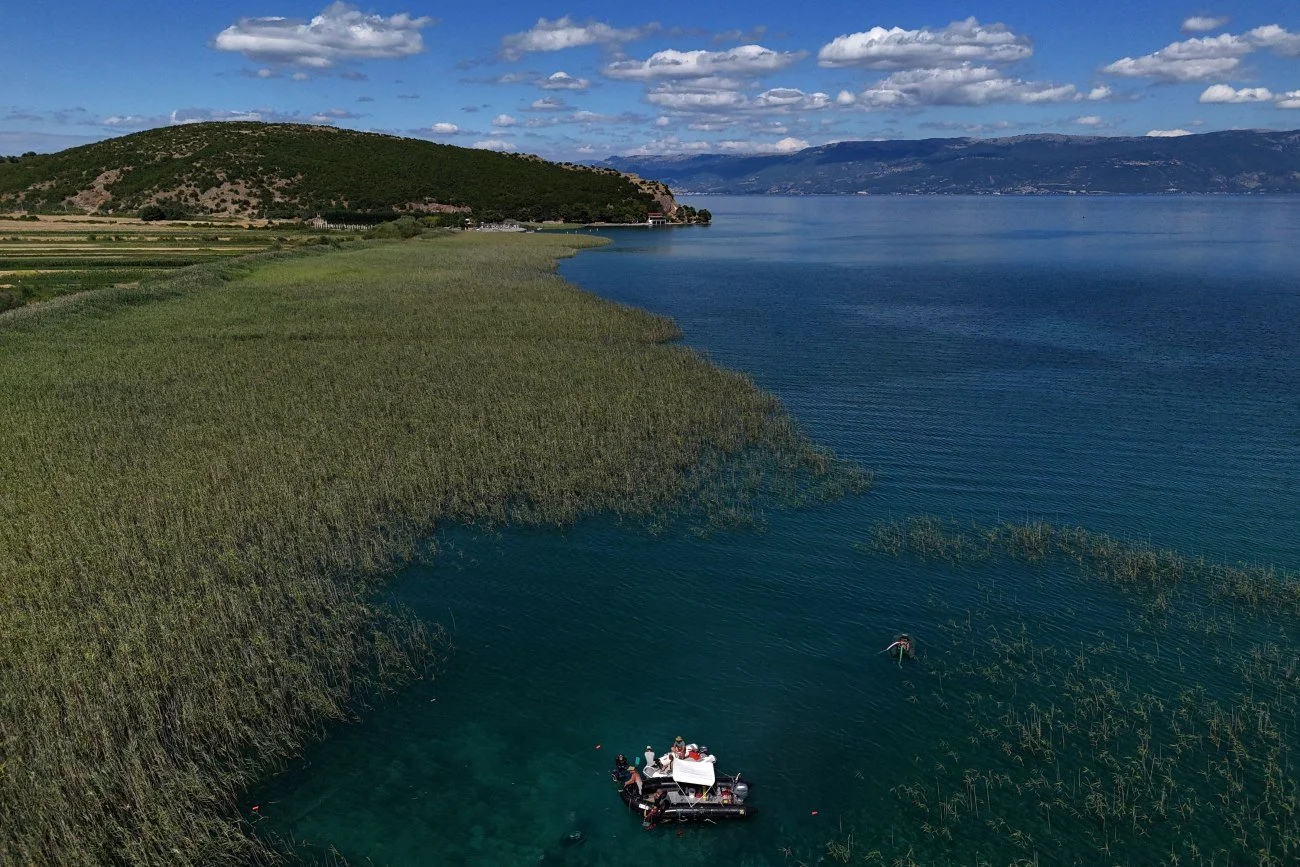
Wooden posts discovered in Lake Ohrid, on the Albanian side, are the submerged remains of a prehistoric village dating back 6,000 to 8,000 years the oldest lakeside settlement in Europe.

Swiss and Albanian archaeologists spend hours each day at a depth of three meters, retrieving the wooden piles that once supported the homes.

They also collect bones from domestic and wild animals, bronze objects, and clay vessels engraved with patterns remnants of a community of dozens or even hundreds of inhabitants who hunted and fished but relied mainly on agriculture.

A drone image shows the underwater excavation site (Reuters)

“Because it lies underwater, the organic material is well preserved, which allows us to examine what these people ate and what they cultivated,” Albert Hafner of the University of Bern, a member of the research team, told Reuters.

Previous studies have repeatedly shown that Lake Ohrid which is shared by Albania and North Macedoniais by far the oldest lake in Europe, more than one million years old.

The new findings are at least half a millennium older than prehistoric lakeside settlements in the Alps and the Mediterranean, the archaeologists reported.

A section of a wooden post recovered from the bottom of Lake Ohrid (Reuters)

The wooden remains were dated using carbon-14 analysis and dendrochronology, which is based on measuring tree growth rings.

The settlement is estimated to have covered around 60 acres, but only about 1% has been explored so far. Archaeologists believe that a full investigation will take decades.

A Fossilized Skull Reveals What the Enigmatic Denisovans Looked Like

Very little is known about the Denisovans, the mysterious cousins of the Neanderthals. A 146,000-year-old skull now offers new clues.

Since 2010, when the first fossil of the species was discovered in a Siberian cave, anthropologists have wondered what the Denisovans enigmatic relatives of Neanderthals and modern humans might have looked like.

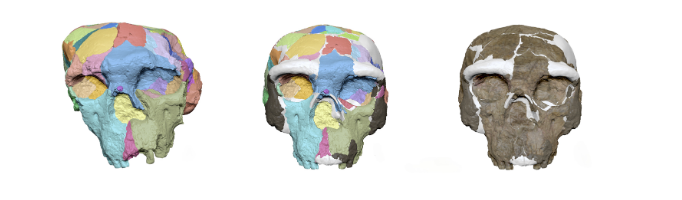
Now, a re-examination of a 146,000-year-old fossilized skull from Harbin, China, provides the answer: they had a brain comparable in size to ours, prominent brow ridges, a broad nose, and large eyes.

Two new studies published in Science and Cell examine an almost complete skull first described in 2021 by Qiang Ji, a paleontologist at Hebei University in China, who acquired it from a man whose identity remains anonymous.

A 3D model of the skull from China (Xijun Ni)

According to Ji, the man who may have found the skull himself without reporting it to authorities claimed the fossil was discovered in 1933 by his grandfather. Shortly before his death, the grandfather revealed that he had hidden it in an abandoned well.

In 2021, Ji and his colleagues published a study stating that the fossil belonged to a previously unknown species of archaic human, which they named Homo longi.

Now, Ji co-authors the two new studies that overturn that conclusion. Although the team could not extract DNA from the fossil itself, they managed to recover genetic material from a small amount of stone that remained stuck to the skull’s only preserved tooth. Hardened like rock, the dental calculus helped protect the DNA.

The genetic sequence matches DNA previously extracted from other Denisovan fossils in Asia, the researchers report in Cell.

The team also isolated proteins from the skull that match those found in other Denisovan fossils. These protein-analysis findings are published in Science.

“Taken together, the two studies make it clear that this is a Denisovan,” paleoanthropologist Bence Viola of the University of Toronto, who was not involved in the research, told the journal.

Now that we know what our enigmatic relatives looked like, the distinct shape of their skull and teeth could help identify additional Denisovan fossils that may be sitting unnoticed in museum drawers around the world.

Further research could clarify the Denisovans’ exact place on the human evolutionary tree.

Genetic analyses suggest that Denisovans split from Neanderthals about 400,000 years ago and survived until at least 40,000 years ago, as shown by fossils found in Laos. The species had spread across Asia, from Siberia to Taiwan.

Homo sapiens, which appeared in Africa around 300,000 years ago, interbred with both Neanderthals and Denisovans as it expanded into Eurasia.

As a result, Denisovan genes can still be detected today in people living in several regions of the Pacific.

When Did Humans Reach the Americas? Fossil Footprints Trace Back to the Ice Age

The first Homo sapiens appear to have reached the Americas at least 20,000 years ago.

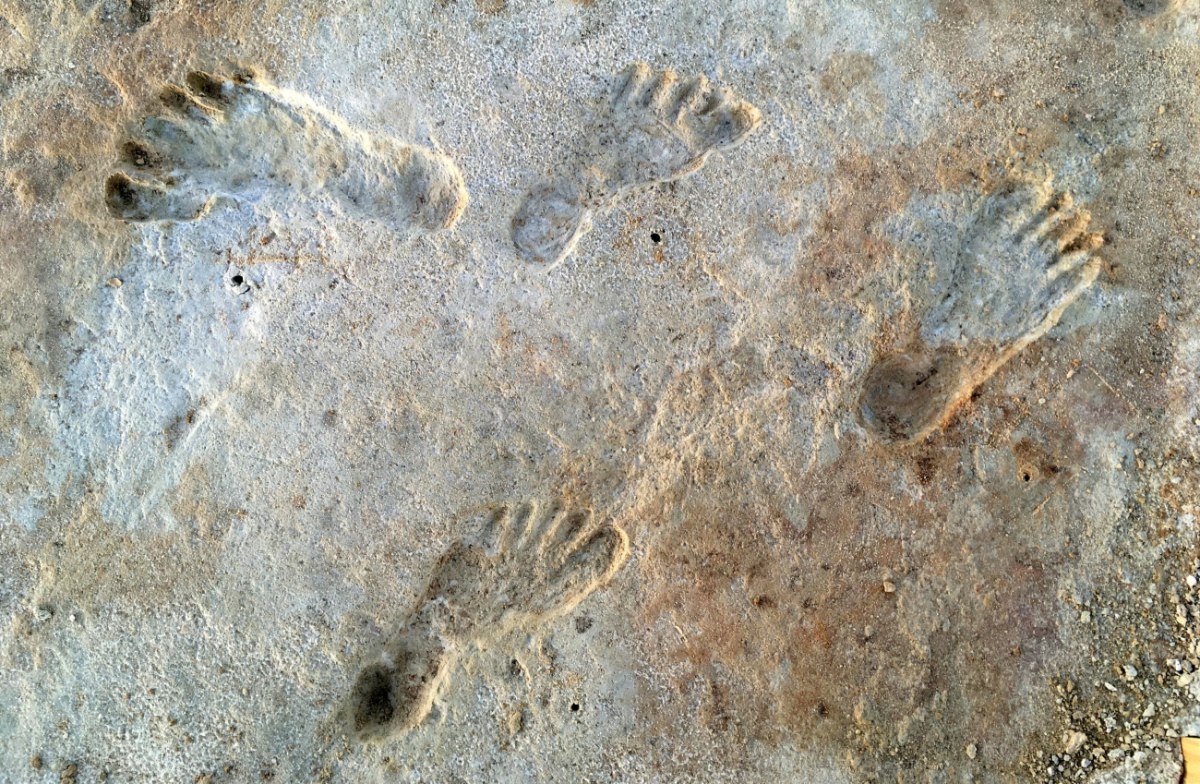
A new radiocarbon-dating study offers further confirmation of the antiquity of a series of fossilized footprints in New Mexico that are rewriting the history of human settlement in the Americas.

The analysis, published in Science Advances, confirms that the footprints first revealed in 2021 and widely discussed among anthropologists are between 20,700 and 22,400 years old.

These findings align with two earlier studies that concluded the fossil tracks are around 22,000 years old placing them at the height of the last Ice Age.

The footprints are at least 7,000 years older than the next earliest accepted evidence of human presence in the Americas.

The prevailing theory has long held that the first settlers reached the continent via a land bridge that once connected Asia and Alaska.

Dozens of human footprints at White Sands, New Mexico, were found in a layer of dried mud near a river that once flowed into ancient Lake Otero.

The tracks tell the story of a group of people who collected water from the lake, hunted giant ground sloths and other prehistoric animals, and let their children play along the shore.

Evidence in the Mud

The first study on the footprints, published in Science in 2021, used radiocarbon dating on tiny seeds of an aquatic plant found embedded in the dried mud.

The study caused a sensation but also skepticism, as the seeds could theoretically have absorbed carbon-14 from ancient sediments that somehow washed into the lake.

The same research team returned in 2023 with a new study, this time dating pollen grains from conifer trees found in the same layer as the aquatic plant seeds.

Again, independent experts challenged the findings, arguing that conifer seeds are unreliable indicators.

The latest study now provides support for the two previous efforts by applying carbon-14 dating to other organic materials that were trapped in the mud.

“Three independent sources of carbon pollen grains, seeds, and organic sediments have now been dated by different laboratories,” and they all point to roughly the same age, Jason Windingstad of the University of Arizona, a member of the team behind the new study, told Reuters.

The new findings suggest that Homo sapiens, which emerged in Africa about 300,000 years ago, reached the Americas thousands of years earlier than previously believed.

They do not, however, offer new information about the route they followed.

The prevailing view is that the first settlers arrived via a land bridge that appeared between Asia and Alaska when sea levels dropped in the Pacific during the Ice Age.

An alternative theory proposes that they reached the west coast of the United States from Asia by sea.

Million-Year-Old Proteins Promise a Revolution in Paleontology

Proteins dating back 23 million years have been isolated from a prehistoric rhinoceros species in the Arctic.

Traces of preserved proteins have been detected in fossils up to 23 million years old an impressive technical achievement that promises to shed light on the evolution, diet, and behavior of species from the distant past.

The analysis of ancient proteins, a field known as paleoproteomics, now joins modern techniques for extracting prehistoric DNA, which in some cases can survive for at least two million years (with the current record held by samples from Greenland’s permanently frozen ground).

Proteins, being slightly more resilient than DNA molecules, have the potential to persist even longer, though the issue remains controversial.

In the 2000s, two teams of paleontologists claimed to have isolated dinosaur proteins dating back 68–80 million years, but their findings were met with strong skepticism. The most widely accepted record until now involved proteins from Arctic camels dating back 3.8 million years.

Proteins From Teeth

Two new studies published in Nature push the boundaries further by examining proteins preserved in tooth enamel the hardest material in the bodies of mammals, which helps protect biomolecules.

The first and more persuasive of the two studies detected proteins in fossils of an extinct rhinoceros species discovered in 1986 on an Arctic island in Canada (pictured) and now housed in a museum in Ottawa. According to earlier research, the fossils are 23 million years old. The cold Canadian climate is believed to have played a major role in preserving the ancient molecules, which break down far more easily at high temperatures.

The second, more controversial study identified traces of proteins from five species of rhinoceros, elephants, and hippopotamuses that lived between 1.5 and 18 million years ago in Turkana, Kenya one of the hottest regions on Earth. Although the researchers report finding chemical alterations that indicate the proteins are ancient, independent experts have expressed caution in interpreting the results.

Proteins are long chains of smaller molecules called amino acids. Because amino acid sequences differ even among closely related species, paleoproteomics can reveal information about where extinct species fit on the tree of life.

“Proteins are encoded by DNA, so protein sequences can reveal details about relatedness between different individuals,” said David Green of Harvard University, lead author of the study on the Kenyan fossils.

In the Arctic rhinoceros study, comparing the ancient sequences with those of modern rhinoceros species showed that the prehistoric species diverged from its living relatives far earlier than previously thought between 25 and 41 million years ago.

Future research examining carbon and nitrogen isotopes in preserved proteins could provide insights into the diet and environment of extinct species. Even an animal’s sex, researchers noted, can be determined from small differences in protein sequences.

And as technology advances, the record for the oldest preserved proteins will eventually be broken again potentially taking us back to the age of the dinosaurs.

Why Artificial Intelligence “Breaks Its Teeth” in Archaeology

Why Artificial Intelligence “Breaks Its Teeth” in Archaeology

Artificial intelligence is now considered a powerful tool in many fields, but in one area it still falls behind: archaeology.

Despite advanced technologies that allow “remote” underground exploration and the impressive breakthroughs of modern DNA analysis, the classification and reconstruction of archaeological finds remains a demanding challenge.

Ayelet Tal, a computer scientist and AI specialist at the Technion Israel Institute of Technology, recently shared her experiences at the Visual Computing Trends conference held by the Vrvis research center in Vienna.

Tal explained that when she first began collaborating with the Archaeology Department at the University of Haifa, she expected AI algorithms to quickly solve many of the field’s problems.

“I thought it would be easy: publish a few scientific papers and everyone would be happy,” she says, laughing today 15 years into the research.

The greatest obstacle, she admits, was not a lack of technological tools, but the nature of the field itself.

Most archaeological databases are small and closed to the public, making access difficult, while training a model to recognize specific artifacts requires expertise that is simply not always available.

Moreover, it is still extremely difficult for AI to identify and reassemble broken objects that have deteriorated over time.

The example of thousands of seals

Tal’s team, however, has achieved tangible results through innovative tools.

With support from universities in Switzerland and Israel, they developed image-recognition software that compares the patterns on seal stones found in southern Israel. This allows researchers to upload an image of a new find and receive suggestions for similar examples within seconds something that previously required hours of painstaking searching in libraries and catalogues.

“What may sound simple to most people is revolutionary for the archaeological community,” says Stefan Munger of the University of Bern.

The motifs on the seals from animals and spirals to deities and symbols reveal crucial clues about the sociopolitical structures of periods for which we have almost no written sources.

Of course, the results are not always perfect. But as Munger notes, even one correct match among the first twenty suggestions can make a meaningful difference.

Tal stresses that artificial intelligence will not replace human expertise in archaeology, but it can become a valuable tool. As Munger adds: “AI will lack intuition for a long time to come. Archaeology is a game of impressions sight, touch, and experience guide the expert toward the right conclusion.”

DNA Study Reveals the Central Role of Women in the Neolithic Settlement of Çatalhöyük

Comparisons of genetic material showed that maternal lineages played a more significant role than paternal ones in linking members of Çatalhöyük households. Women were the “anchors” of each household.

A recent genomic discovery in the Neolithic settlement of Çatalhöyük, in central Turkey, revealed that society was organized around female genealogical lines an impressive finding that highlights the central role of women in early agricultural communities. The scientific research also identified changing kinship structures over time and shed light on how social norms evolved through the centuries.

Today, Çatalhöyük is recognized as the world’s first known city, as it was the earliest site where surrounding villages merged to form a central hub marking the beginning of urban civilization that shapes the modern world.

Çatalhöyük is listed as a UNESCO World Heritage Site and is located in the present-day province of Konya. It is also known for its distinctive burials beneath building floors—a tradition in which individuals were interred beneath their own homes.

A study recently published in Science—completed after 12 years of collaboration among 47 geneticists, archaeologists, and biological anthropology specialists from Turkey and ten other countries revealed striking findings regarding kinship and gender dynamics in the area through the analysis of these burials. The researchers examined skeletal remains from 395 individuals who lived between 8000 and 5800 BCE and successfully sequenced DNA from 131 people buried in 35 houses.

Genetic comparisons showed that maternal lineages played a more important role than paternal ones in connecting members within Çatalhöyük households. Women acted as the “anchors” of each family unit. The graves of girls who died before reaching adulthood also contained more grave goods than those of boys. This demonstrated that the male-dominated systems familiar from Neolithic sites in Europe—whose populations partly originated in Anatolia were not inherent characteristics of early farming societies.

The same study found that kinship patterns in Çatalhöyük changed over time. In earlier periods, people buried in the same building often shared similar genetic profiles, suggesting that the house was used by biological family members. However, this genetic relatedness became rare in later periods, indicating that blood ties gradually lost their central role in social organization. Researchers suggest that this transformation may be attributed to cultural factors such as widespread fostering and adoption-like social mechanisms.

Çatalhöyük: The Neolithic Ancestor of Urban Settlements

Çatalhöyük: The Neolithic Ancestor of Urban Settlements

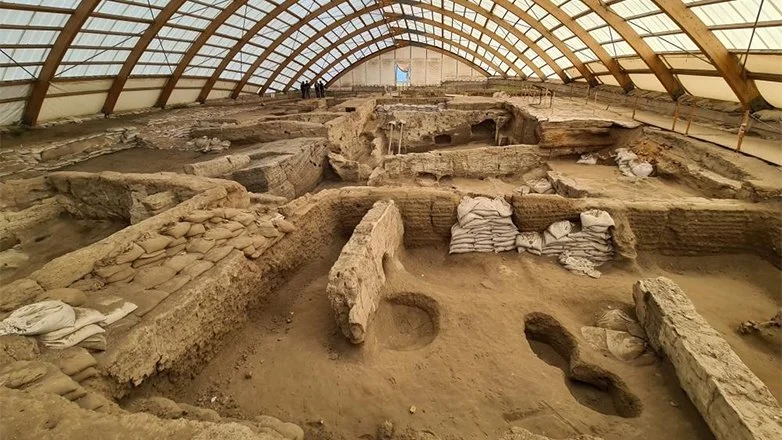
Çatalhöyük reveals a society that flourished 9,000 years ago. Visitors can journey back in time to the dawn of human history through various remains that clearly illustrate the complexity of this ancient community. The site is remarkable for its significant size, the long duration of its occupation, its clusters of tightly packed houses accessed through their roofs, as well as its murals and reliefs. Together, these discoveries point to an early form of urban planning, sustainable living, social organization, and cultural practice.

Among the most iconic finds are numerous female figurines, widely interpreted as possible representations of a “Mother Goddess” cult and as indications of a matrifocal society. Although a rich collection of artifacts from Çatalhöyük including female figurines is housed in the Museum of Anatolian Civilizations in Ankara, the excavation site itself is captivating, allowing visitors to wander through spaces that once held some of the earliest signs of organized human life.

Visitors can also learn about Çatalhöyük’s society at the state-of-the-art information center located within the archaeological site, featuring interactive screens and multimedia exhibits.

As part of the “Heritage for the Future” program, Turkey supports excavations and restoration work at many ancient sites. The country designated 2024 as the “Golden Age of Archaeology,” increasing the number of archaeological projects to 765. This number is expected to rise, reaching 800 by 2026.

The Role of Pharaohs in Ancient Egyptian Society

In ancient Egyptian civilization, the pharaoh was far more than a political leader—he was viewed as a divine figure. Egyptians believed that the pharaoh was a living god on earth, often associated with gods like Horus during life and Osiris after death. This divine status gave the pharaoh ultimate authority and placed him at the center of both religious and state affairs. His presence was considered essential for maintaining ma’at, the universal balance, justice, and harmony that sustained Egypt.

The responsibilities of a pharaoh extended across many areas. He was the supreme military commander, responsible for protecting Egypt’s borders and expanding its influence through warfare when needed. He oversaw major building projects, including temples, tombs, and monuments, which not only honored the gods but also reinforced his own divine legacy. The pharaoh also played a crucial role in religious ceremonies, acting as the intermediary between the gods and the people. Additionally, he managed agricultural systems, taxation, and the distribution of resources to ensure prosperity throughout the kingdom.

Among the many rulers of ancient Egypt, several pharaohs stand out for their achievements and historical impact. Ramses II, also known as Ramses the Great, is one of the most famous. His long reign was marked by military victories, immense construction projects—including the temples at Abu Simbel—and a period of great stability. He is often remembered as one of Egypt’s most powerful and accomplished rulers.

Another well-known pharaoh is Tutankhamun, who became king at a very young age. Although his reign was relatively short and less politically influential, he is world-famous due to the discovery of his nearly intact tomb in 1922. The treasures found within revealed invaluable information about Egyptian art, culture, and burial practices.

Overall, pharaohs were central to the structure and success of ancient Egyptian society. Their divine status, extensive responsibilities, and lasting monuments demonstrate the unique and powerful role they played in shaping one of history’s most remarkable civilizations.
The Lighthouse of Alexandria Returns in Digital Form

An archaeological surprise and a journey into the past

A major archaeological achievement has been announced by a team of French archaeologists: the recovery of 22 stone blocks from the seabed of Alexandria, remnants of the legendary Lighthouse — one of the Seven Wonders of the Ancient World. Among the finds came an unexpected discovery: an Egyptian pylon, a feature never mentioned in any description of the monument, suggesting that the lighthouse combined Greek engineering with Egyptian decorative elements.

This excavation marks a key step in Project Pharos, an international initiative coordinated by the Center for Alexandrian Studies and the French Institute of Eastern Archaeology, with support from Egypt’s Ministry of Tourism and Antiquities.

Their goal is to create a digital twin of the Lighthouse — a detailed 3D reconstruction allowing visitors to “visit” it as though it had never collapsed.

This technology will bring back to life one of the most astonishing ancient lighthouses — a 100-meter tower whose flame burned day and night for 1,600 years, guiding ships entering the port of Alexandria, then a major hub of commerce and culture in the Mediterranean. The lighthouse was built in the 3rd century BC, during the reign of Ptolemy II, and was designed by the architect Sostratos of Knidos. There, on the small island of Pharos, it stood as a symbol of power, commercial might, and — both literally and metaphorically — enlightenment, alongside the famed Library of Alexandria.

Remarkably, many of the stones from the ancient Lighthouse were reused in the 15th century to build the Qaitbay Fortress, which still stands on its original site. So when someone walks through the castle today, they are in fact touching the original stones of the Ptolemaic Lighthouse.

A team of scientists and engineers from Dassault Systèmes is now undertaking the digital scanning and reconstruction of the stones. The end result will offer not only a “digital tour” of the monument but also the chance to study ancient building techniques and the causes of its collapse after the devastating earthquakes of the 10th and 14th centuries.

As Isabelle Hairy, head of the mission, says: “Our goal is to create a digital twin of the Lighthouse so that people can visit it again, as if time had never passed.”

With this new virtual reality technology, perhaps one day the other Wonders of the Ancient World will be brought back to life as well — even the Colossus of Rhodes!

At last, the Lighthouse of Alexandria is no longer just a legend — it returns, even digitally, to remind us of the power of human imagination and creativity.