Near Lincoln, archaeologists have uncovered a 5,000-year-old axe head along with the remains of Roman buildings.
While excavating along the planned route of the North Hykeham Relief Road, the team discovered evidence of a previously unknown Roman dwelling near Bracebridge Heath.
Chris Clay of Allen Archaeologist Ltd, overseeing the project, said, “We expected this to be a Roman site, and that’s what we found, but there are also indications of much earlier activity dating back to around 3,000 BC.”
The excavation began in October 2025 and is scheduled to finish in early 2026, in an area set to be developed for the new £208m bypass.

Roman walls and a fragment of a Roman column have also been uncovered in several pits in a farmer’s field near the A607.
Mr. Clay said the team had found thousands of pieces of Roman pottery, along with dozens of personal items such as brooches, bracelets, and hairpins.
He added that the discoveries suggest the presence of Roman homes outside the city, “much like the large houses we see in affluent suburbs today.”
“We’re only a mile or two from Lincoln, one of the most important towns in Roman Britain, and the site offers amazing views over the Witham Valley. This could well have been a country residence for a wealthy, high-status Roman family,” he said.
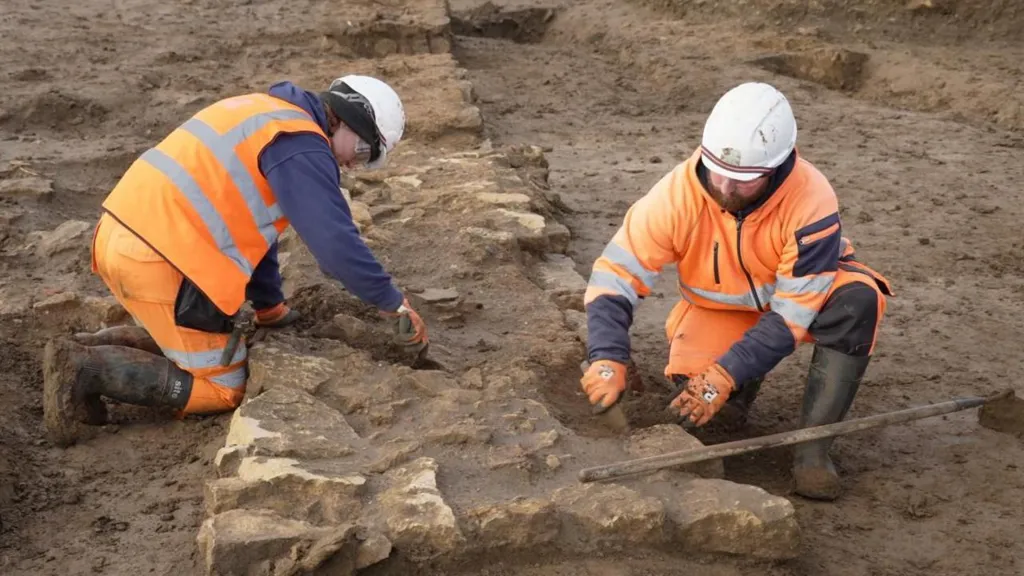
Archaeologists believe the building remains are from a house belonging to a wealthy Roman family
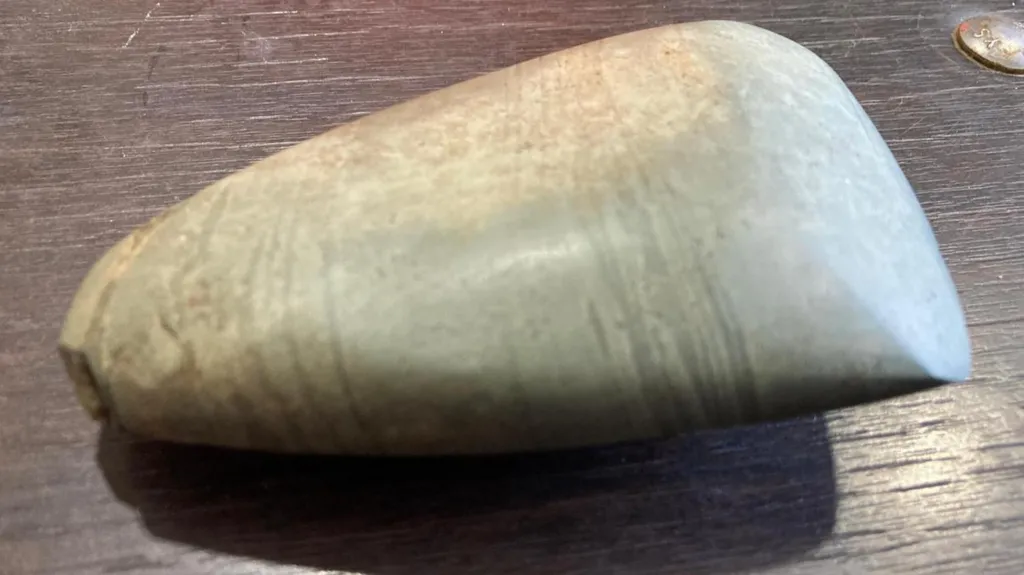
One of the most remarkable discoveries at the site, he said, was a highly polished Neolithic stone axe head, still retaining its razor-sharp edge, dating back around 3,000 years before Roman Britain.
“This is a high-status object and wouldn’t have been used for chopping trees; it was far too valuable,” he explained.
“Perhaps the site served as a gathering place for communities during special events. It’s also very likely that the axe head was exchanged or traded as a prized item.”
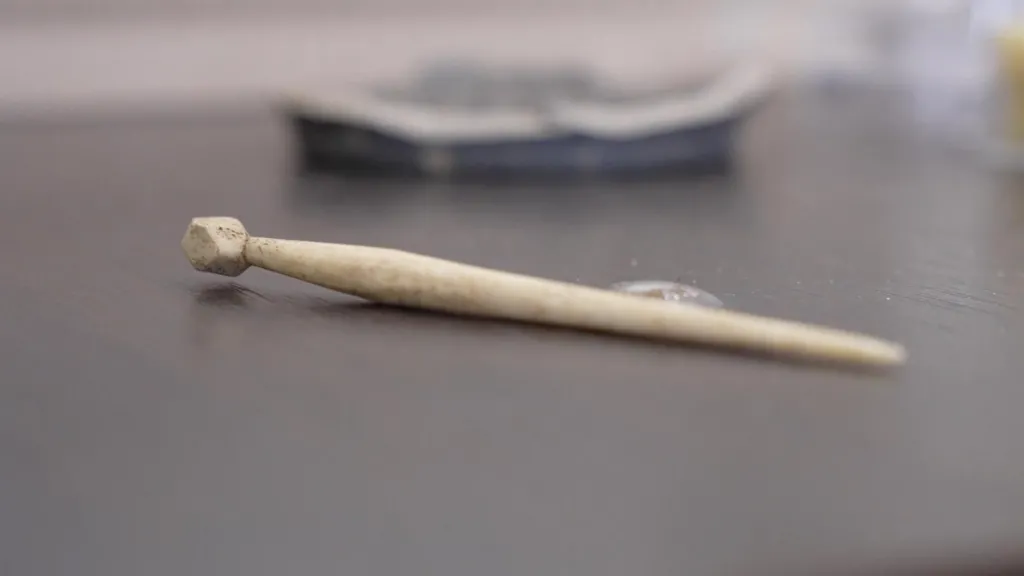
A Roman hair pin made of bone is one of the many artefacts that have been uncovered
Ian George, from Lincolnshire County Council, said the Roman remains are providing new insights into life beyond the town.
“We know a lot about Roman Lincoln, but very little about the surrounding landscape and how people used it. This is helping to fill in that picture,” he explained.
He added that the survival of the axe head was “remarkable,” noting, “We know so little about Neolithic Lincolnshire.”
Construction of the road is expected to begin in early 2026. The artefacts will be given to Lincoln Museum, and the building remains will be covered by the new road after the evidence has been recorded, the council said.