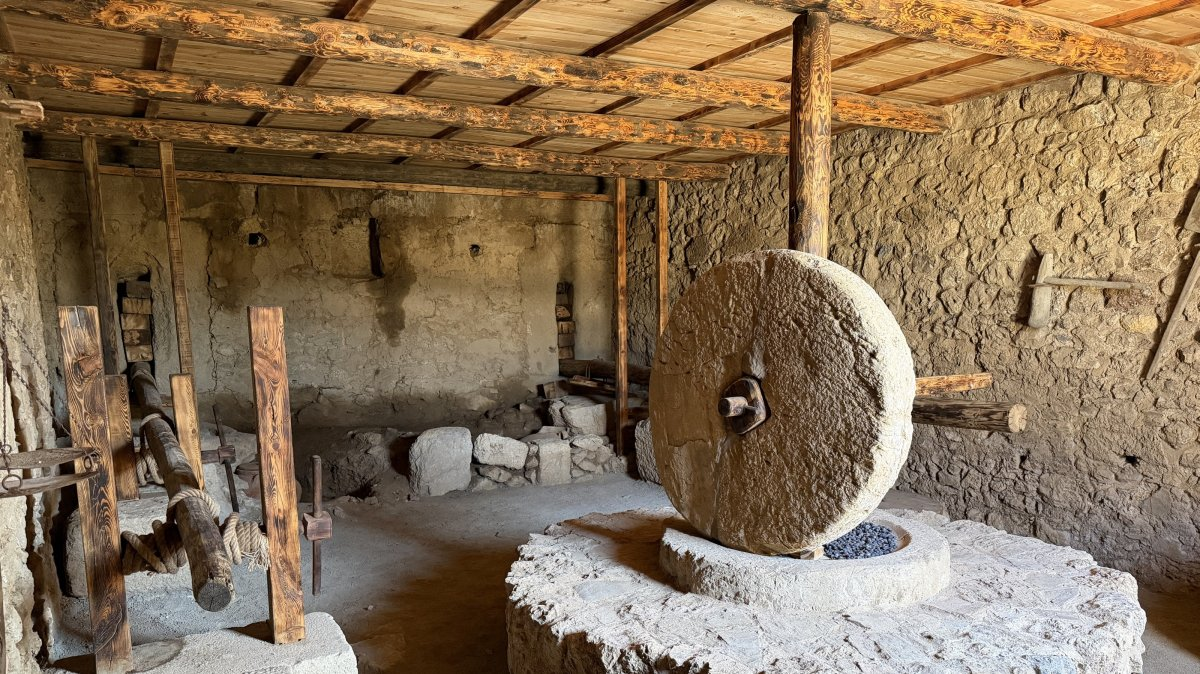
Archaeological digs at Syedra, an ancient city in Antalya’s Alanya district on Türkiye’s southern Mediterranean coast, have uncovered significant evidence of large-scale olive oil production, shedding light on the city’s economic importance in antiquity.
Excavations have identified over 100 olive oil workshops across the nearly 3,000-year-old settlement, suggesting that Syedra was a major production center rather than producing oil solely for local use. The work is part of the Ministry of Culture and Tourism’s “Heritage for the Future Project,” led by Associate Professor Ertuğ Ergürer of Alanya Alaaddin Keykubat University.
Speaking to Anadolu Agency on Monday, Ergürer noted that the findings point to intensive production activity. “Through excavation, we have uncovered nearly 20 workshops and identified more than 100 throughout the city. This indicates that olive oil production in Syedra operated on a very large scale,” he said.
Syedra shows traces of Hellenistic, Roman, Byzantine, and Anatolian Seljuk periods and features a developed urban plan with structures such as a stadium, theater, baths, council building, water systems, cisterns, and colonnaded streets. Interestingly, olive oil workshops are often found within the city, frequently beneath residential buildings.
“This is unusual, as production facilities are typically outside city walls,” Ergürer explained. “Here, nearly every building has a workshop below it, showing how central olive oil production was to urban life in Syedra.”
In 2024, archaeologists uncovered a well-preserved olive oil workshop on the southwestern street of the city, with most architectural features and storage vessels remaining in their original positions. After documentation and conservation, the site was partially restored to illustrate ancient olive oil production methods to visitors.
Experts believe the city’s production exceeded local demand. According to Ergürer, olive oil was likely exported through nearby Mediterranean ports. “The number of workshops far surpasses what the local population would need, indicating production was intended for external markets,” he said.