• MAIN PAGE
  • LATEST NEWS
    • Lost Cities
    • Archaeology's Greatest Finds
    • Underwater Discoveries
    • Greatest Inventions
    • Studies
    • Blog
  • PHILOSOPHY
  • HISTORY
  • RELIGIONS
    • Africa
    • Anatolia
    • Arabian Peninsula
    • Balkan Region
    • China - East Asia
    • Europe
    • Eurasian Steppe
    • Levant
    • Mesopotamia
    • Oceania - SE Asia
    • Pre-Columbian Civilizations of America
    • Iranian Plateau - Central Asia
    • Indus Valley - South Asia
    • Japan
    • The Archaeologist Editor Group
    • Scientific Studies
    • Aegean Prehistory
    • Historical Period
    • Byzantine Middle Ages
    • Predynastic Period
    • Dynastic Period
    • Greco-Roman Egypt
  • Rome
  • PALEONTOLOGY
  • About us
Menu

The Archaeologist

  • MAIN PAGE
  • LATEST NEWS
  • DISCOVERIES
    • Lost Cities
    • Archaeology's Greatest Finds
    • Underwater Discoveries
    • Greatest Inventions
    • Studies
    • Blog
  • PHILOSOPHY
  • HISTORY
  • RELIGIONS
  • World Civilizations
    • Africa
    • Anatolia
    • Arabian Peninsula
    • Balkan Region
    • China - East Asia
    • Europe
    • Eurasian Steppe
    • Levant
    • Mesopotamia
    • Oceania - SE Asia
    • Pre-Columbian Civilizations of America
    • Iranian Plateau - Central Asia
    • Indus Valley - South Asia
    • Japan
    • The Archaeologist Editor Group
    • Scientific Studies
  • GREECE
    • Aegean Prehistory
    • Historical Period
    • Byzantine Middle Ages
  • Egypt
    • Predynastic Period
    • Dynastic Period
    • Greco-Roman Egypt
  • Rome
  • PALEONTOLOGY
  • About us

The Mystery of the Shroud of Turin

November 28, 2025

The Shroud of Turin is one of Christianity’s most debated relics, believed by some to be the burial cloth of Jesus Christ. Its faint image and historical journey have inspired fascination, devotion, and controversy.

Physical Description and Discovery

The linen cloth measures roughly 4.4 by 1.1 meters and bears the faint image of a man’s front and back. First recorded in the 14th century, it has passed through royal and ecclesiastical hands, ultimately residing in Turin Cathedral.

Scientific Analyses

Carbon dating conducted in 1988 suggested a medieval origin, though debates over sample contamination and methodology persist. Imaging and forensic studies analyze the anatomy, wounds, and bloodstains, providing insight into historical crucifixion practices.

Religious and Cultural Significance

The Shroud serves as an object of devotion and reflection, influencing Christian art and iconography. Pilgrimages and exhibitions attract millions annually, merging faith and curiosity.

Conclusion

Whether authentic or not, the Shroud of Turin exemplifies humanity’s desire to connect with sacred history, blending science, faith, and legend.

The Sacred Geometry of Ancient Temples

November 28, 2025

Sacred geometry refers to the use of mathematical principles and symbolic proportions in architecture to reflect cosmic and spiritual order. Across civilizations, temples were constructed to embody harmony, balance, and divine symbolism.

Ancient Egypt

Pyramids and temples employed precise geometric ratios, reflecting cosmology and alignment with celestial bodies. The Great Pyramid’s dimensions encode mathematical and astronomical relationships.

Greek and Roman Applications

Temples like the Parthenon used the Golden Ratio, creating structures pleasing to the eye and spiritually resonant. Geometry governed layout, column spacing, and proportions.

Hindu and Buddhist Temples

Mandala designs structured temple layouts, reflecting spiritual order and pathways to enlightenment. Symmetry and proportionality guided worshippers through sacred spaces.

Conclusion

Sacred geometry reveals the universality of mathematical principles in connecting humans to the divine, showing how ancient builders encoded meaning in stone.

The Architecture of Machu Picchu: Engineering Marvels of the Incas

November 28, 2025

Perched in the Andes of Peru, Machu Picchu remains a testament to Inca ingenuity. Its precise stonework, terraces, and water management reflect advanced engineering and deep understanding of the mountainous environment.

Construction Techniques

Incas used ashlar masonry, cutting stones to fit perfectly without mortar. This allowed structures to withstand earthquakes while maintaining aesthetic harmony with the natural landscape.

Urban Planning

Machu Picchu integrates religious, residential, and agricultural zones. Terraces prevent soil erosion, while sophisticated drainage systems control rainwater, demonstrating holistic planning.

Cultural and Spiritual Significance

Structures like the Intihuatana stone align with solstices, reflecting Inca cosmology. The site functioned as a royal estate, religious center, and agricultural experiment.

Conclusion

Machu Picchu exemplifies how architecture, environment, and spirituality were intertwined in Inca society, offering lasting insights into pre-Columbian engineering brilliance.

The History of the Roman Gladiators

November 28, 2025

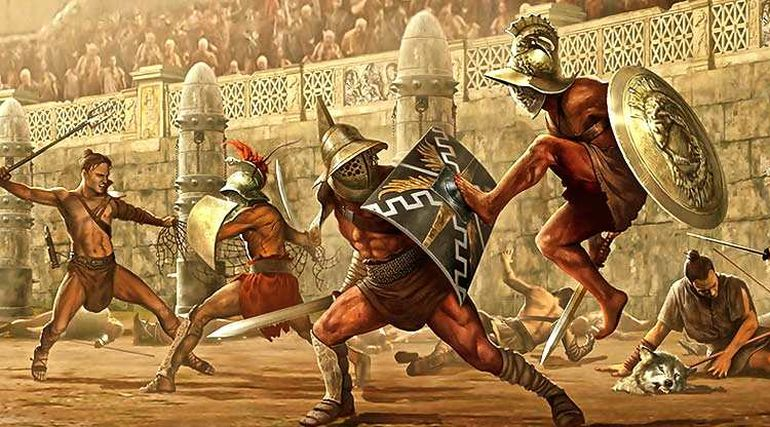
Gladiators were combatants who entertained audiences in ancient Rome through staged battles. Far from mere spectacle, they embodied social, political, and cultural narratives central to Roman identity.

Origins and Purpose

Gladiatorial games likely originated as funerary rites to honor the dead, evolving into public spectacles held in amphitheaters. They reflected Roman ideals of bravery, endurance, and martial skill.

Training and Types

Gladiators trained in specialized schools, known as ludi, learning techniques with swords, nets, or tridents. Varieties included murmillo, retiarius, and thraex, each with distinct armor and fighting style.

Social and Political Dimensions

Games served political purposes, demonstrating the generosity of emperors or magistrates and reinforcing Roman power. Gladiators could gain fame, patronage, and occasionally freedom, though most faced grueling conditions.

Cultural Legacy

From literature to modern films, gladiators continue to symbolize courage, spectacle, and the tension between life and death in human society.

The Role of Women in Viking Society

November 28, 2025

Viking-age Scandinavia (c. 800–1100 CE) is often associated with raiding warriors, but women played essential roles in Viking society, influencing family, economy, and culture.

Social Status and Rights

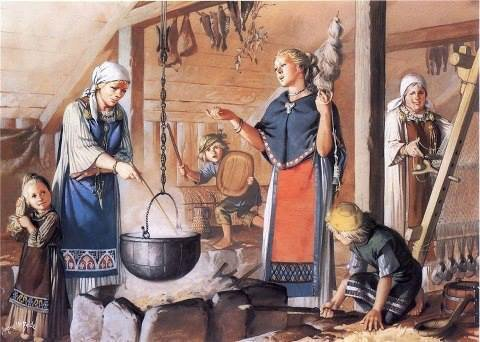
Viking women had more rights than many contemporaries in Europe. They could inherit property, manage farms, and oversee household affairs in men’s absence. Elite women exercised political influence, while some traveled or engaged in trade.

Roles and Responsibilities

Women oversaw domestic production, including textile work, food preparation, and livestock management. They also participated in religious practices and could become seeresses, advising on spiritual and political matters.

Representation in Myth and Literature

Norse mythology depicts powerful goddesses like Freyja and Frigg, reflecting societal acknowledgment of women’s influence. Saga literature recounts women negotiating settlements, leading defense, or making crucial decisions during crises.

Conclusion

Viking women were central to both household and societal stability, shaping culture and sustaining daily life. Their legacy challenges modern assumptions about gender in early medieval Europe.

The Mysterious Dogū Statues of Japan

November 28, 2025

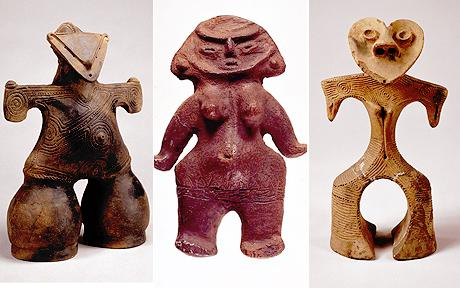
Dogū are small clay figurines created during Japan’s Jomon period (14,000–300 BCE). Characterized by exaggerated features and intricate designs, these artifacts provide a window into prehistoric Japanese spirituality, art, and social life.

Design and Characteristics

Dogū typically depict humanoid forms with large eyes, exaggerated body parts, and ornate patterns. Many appear to wear masks or elaborate clothing, suggesting ritual significance. Some may represent deities, ancestors, or symbolic representations of fertility and protection.

Function and Purpose

Archaeologists speculate that Dogū were used in rituals for healing, protection, or agricultural fertility. Some were intentionally broken, perhaps symbolizing the transfer of illness or misfortune away from the community. Their widespread presence suggests a common spiritual framework across the Jomon period.

Material and Craftsmanship

Made from clay, Dogū were often fired at low temperatures. The intricate decoration reflects advanced craftsmanship and attention to detail, indicating a strong cultural emphasis on art as a spiritual conduit.

Modern Interpretations

Dogū continue to inspire contemporary Japanese art and scholarship. Their symbolic ambiguity fascinates researchers and collectors, and they remain emblematic of Japan’s prehistoric ingenuity and ritual imagination.

Conclusion

Dogū stand as silent witnesses to the beliefs and creativity of Jomon Japan. While their exact purpose may never be fully understood, their artistry and mystique endure across millennia.

The Lost Civilization of Tartessos

November 28, 2025

Tartessos, an ancient civilization in the southern Iberian Peninsula, remains one of history’s great enigmas. Known through Greek and Roman texts, Tartessos flourished between the 9th and 6th centuries BCE and is thought to have had extensive trade networks, rich mineral resources, and a sophisticated culture.

Historical Accounts

Greek writers, such as Herodotus and Strabo, described Tartessos as wealthy, largely due to its silver, gold, and tin mines. The civilization’s capital, often associated with modern-day Andalusia, was portrayed as a thriving hub of commerce, connecting Mediterranean traders with inland resources.

Archaeological Evidence

Despite literary mentions, physical evidence of Tartessos remains scarce. Excavations along the Guadalquivir River have revealed settlements and artifacts, including jewelry, ceramics, and coins, suggesting a highly organized society. However, no definitive city or monumental architecture has been located, fueling speculation.

Decline and Disappearance

The reasons for Tartessos’ decline are debated. Hypotheses include environmental changes such as river silting, invasion or assimilation by neighboring cultures, or the depletion of mineral resources. Some scholars suggest Tartessos may have gradually integrated into other Iberian societies.

Legacy and Myth

Tartessos is often linked to Atlantis in popular speculation, due to its reported wealth and sudden disappearance. While there’s no archaeological evidence supporting this claim, the myth reflects Tartessos’ enduring influence on imagination and historical narrative.

Conclusion

Though much about Tartessos remains shrouded in mystery, the civilization’s wealth, trade networks, and cultural sophistication illustrate a complex Iberian society whose echoes persist in historical accounts and modern exploration.

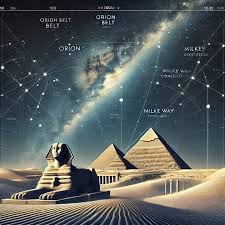
The Connection Between the Sphinx and Orion’s Belt

November 28, 2025

Some researchers propose that the Great Sphinx of Giza aligns with astronomical patterns, especially the constellation Orion.

The Orion Correlation Theory

This idea suggests that:

  • The pyramids reflect the positions of Orion’s Belt

  • The Sphinx represents Leo the Lion

  • The structures encode celestial knowledge

Proponents argue the alignment matches the sky around 10,500 BCE, indicating ancient Egyptians possessed advanced astronomy.

Mainstream Scholarship

Most Egyptologists disagree, citing:

  • Lack of direct textual evidence

  • Known construction dates (c. 2500 BCE)

  • Symbolism related to kingship rather than astrology

Enduring Appeal

Despite debate, the theory remains popular in alternative archaeology circles. It reflects humanity’s fascination with aligning earth and sky.

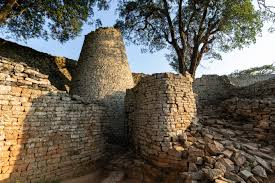
The Mystery of the Great Zimbabwe Ruins

November 28, 2025

Great Zimbabwe, a massive stone city in southern Africa, stands as one of the continent’s greatest archaeological achievements.

A City of Stone

Constructed between the 11th and 15th centuries, the site features:

  • The Great Enclosure

  • The Hill Complex

  • Walls reaching up to 36 feet high

The architecture used no mortar, relying on masterful stone-fitting.

Center of Trade and Power

Great Zimbabwe controlled trade routes linking inland regions to the Swahili coast. Goods such as gold, ivory, and ceramics flowed through the city.

Colonial Myths vs. Reality

Early European explorers refused to believe Africans built the site. Today, archaeologists confirm it was the capital of the Shona-speaking ancestors of modern Zimbabweans.

Purpose and Decline

Scholars suggest it served as a royal residence and ceremonial center. Its decline may have resulted from overpopulation, drought, or shifting trade routes.

The Curse of King Tutankhamun’s Tomb: Myth or Reality?

November 28, 2025

Since the tomb’s discovery in 1922, stories have circulated about a deadly curse that targets anyone who disturbs King Tut’s resting place.

Origins of the Curse Legend

When several individuals connected to the excavation died unexpectedly, newspapers sensationalized the story. The phrase “death shall come on swift wings” (never actually found in the tomb) became popularized.

Scientific Explanations

Modern scholars attribute the deaths to:

  • Infections from ancient mold spores

  • Stress and illness unrelated to the tomb

  • Coincidence

Howard Carter himself the discoverer lived many years after the excavation, undermining the curse theory.

Why the Legend Endures

The idea of ancient Egyptian curses appeals to the imagination. It reinforces the mystery surrounding mummies, tombs, and the afterlife.

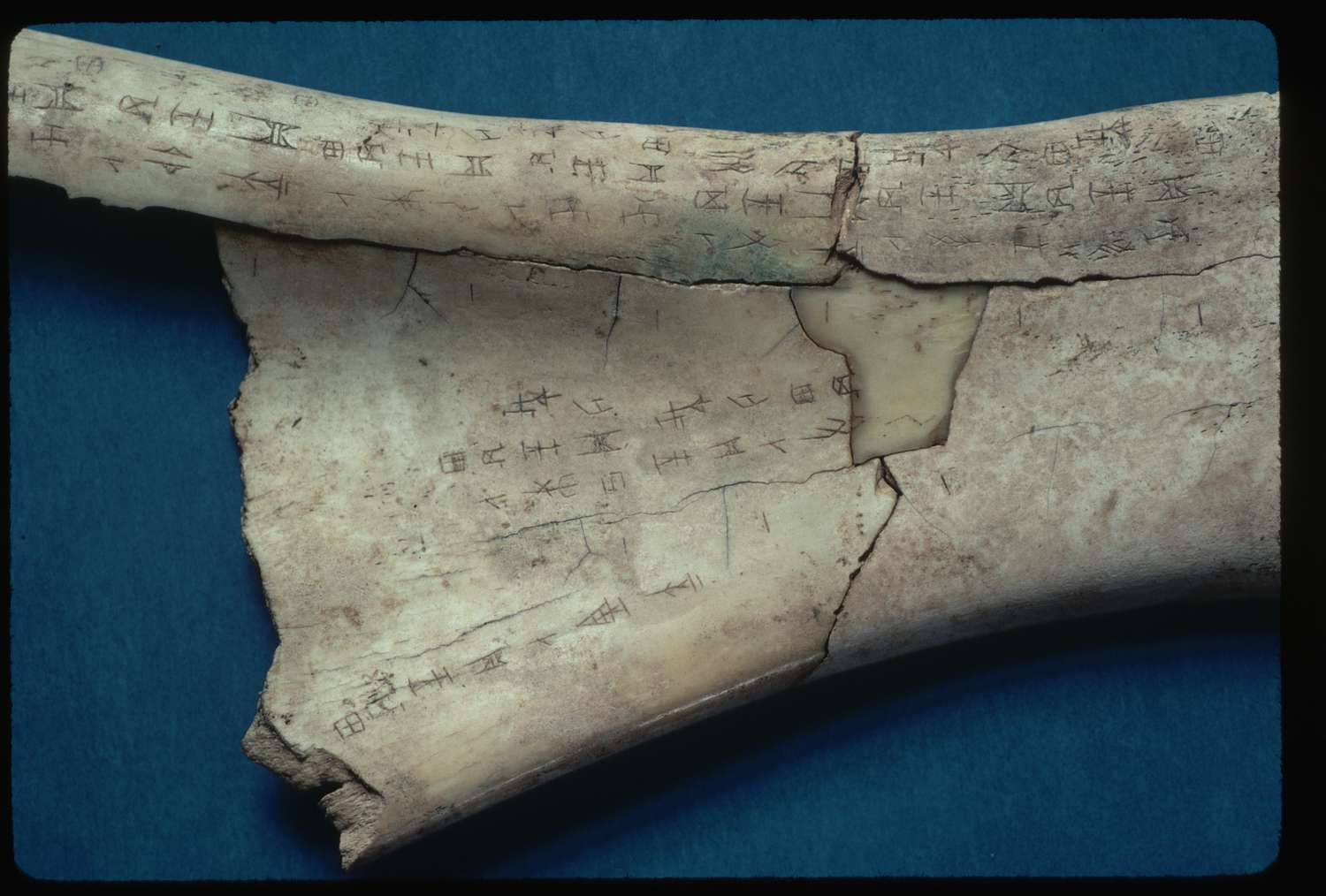
The Role of the Oracle Bones in Chinese Divination

November 28, 2025

Oracle bones usually ox scapulae or turtle shells represent the earliest known form of Chinese writing and a crucial tool for Shang dynasty divination.

How Divination Worked

Diviners carved questions on topics such as warfare, harvests, and royal births. They then applied heat until cracks formed, interpreting the patterns as messages from ancestral spirits.

Political and Religious Importance

For Shang rulers, divination was essential for decision-making. Oracle bones validated royal authority by reinforcing the ruler’s connection to the ancestors.

Linguistic Legacy

The inscriptions offer the earliest snapshots of Chinese characters, many of which evolved directly into modern forms.

Archaeological Significance

Discovered in the late 1800s, oracle bones have become invaluable in reconstructing early Chinese history.

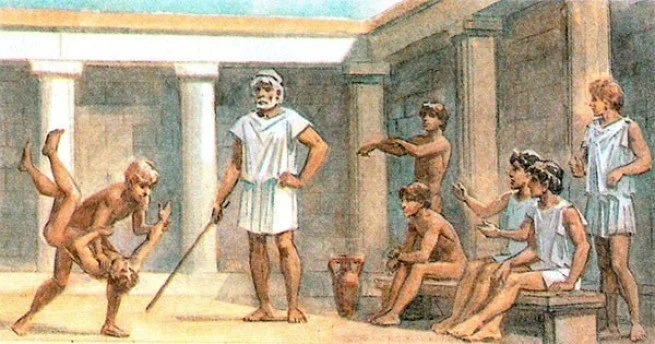
The Ancient Greek Gymnasium: More Than Just Exercise

November 28, 2025

In ancient Greece, the gymnasium was not merely a place for athletic training it was a center of education, philosophy, and civic life.

Origins and Purpose

Young men trained nude (from gymnos, “naked”) to prepare for warfare and competition. However, gymnasiums evolved into cultural hubs where citizens studied literature, music, mathematics, and ethics.

Philosophical Importance

Philosophers like Plato, Aristotle, and Socrates taught or conversed within gymnasium grounds. The blending of physical and intellectual training reflected the Greek ideal of a balanced mind and body.

Social and Political Role

Gymnasiums also functioned as meeting places where political ideas spread. Citizens debated local issues, exchanged information, and reinforced communal identity.

Lasting Influence

The modern word “gym” reflects this legacy. Today’s educational philosophies emphasizing holistic development trace their roots to these ancient institutions.

The Secrets of the Nazca Mummies

November 28, 2025

The Nazca civilization of Peru, known for its desert geoglyphs, also left behind mummies that reveal fascinating details about their rituals, society, and beliefs.

Natural Preservation in the Desert

The coastal desert’s dry climate naturally preserved bodies buried in pit tombs. Many were found wrapped in elaborate textiles, suggesting that weaving was a central art form.

Mummification Practices

Nazca mummification involved:

  • Removing internal organs

  • Packing the body with cotton or plant fibers

  • Dehydrating the remains

  • Wrapping them in ornate textiles

Some mummies show signs of cranial modification, a practice symbolizing identity or status.

Ritual Significance

Nazca tombs often included offerings such as pottery, food, and tools. The dead were believed to maintain influence over the living, making ancestor worship a vital cultural practice.

Recent Discoveries

Modern analyses reveal:

  • Evidence of anemia, malnutrition, and disease

  • Tattoos preserved on skin

  • Ritual decapitation in some cases, likely symbolizing spiritual power

Controversies

Recent claims about “alien-like” mummies in Peru have been debunked by experts. Genuine Nazca mummies reflect human traditions, not extraterrestrial origins.

The Influence of Egyptian Hieroglyphs on Writing Systems

November 28, 2025

Egyptian hieroglyphs, developed around 3200 BCE, represent one of the earliest writing systems in human history. Their artistic beauty and complexity influenced neighboring cultures and left a lasting mark on global writing traditions.

Origins and Structure

Hieroglyphs combined logograms (pictures representing words), phonetic signs (sounds), and determinatives (clarifying meaning). Scribes mastered hundreds of symbols and wrote on temple walls, tombs, and papyrus.

Influence on the Sinai and Proto-Alphabetic Scripts

Workers and traders in the Sinai region adapted simplified hieroglyphic symbols into a writing system that eventually evolved into the Proto-Sinaitic alphabet around 1800 BCE. This alphabet is widely considered the ancestor of:

  • Phoenician script

  • Greek alphabet

  • Latin alphabet

In a sense, modern writing systems including English owe their origins to adaptations of Egyptian signs.

Impact on Art and Religious Texts

Hieroglyphs shaped how Egyptians expressed sacred ideas. Their use in funerary texts, like the Book of the Dead, influenced how other cultures viewed writing as a spiritual tool.

Rediscovery and Modern Influence

When hieroglyphs were deciphered in 1822 by Jean-François Champollion using the Rosetta Stone, the world gained access to thousands of years of Egyptian literature, records, and religious texts. Today, hieroglyphic motifs appear in art, design, and pop culture.

The Story of the Trojan Horse: Strategy or Myth?

November 28, 2025

The Trojan Horse remains one of history’s most iconic legends a tale of deception, strategy, and downfall. But was it a real military tactic or a literary invention?

The Myth as Told in Ancient Literature

Homer does not describe the horse in the Iliad, but later works such as Virgil’s Aeneid and various Greek epics give a vivid account. After ten years of siege, the Greeks pretended to sail away, leaving behind a massive wooden horse as an offering to Athena. Hidden inside were elite warriors.

The Trojans, persuaded by the deceitful Greek agent Sinon, brought the horse inside their city walls. That night, Greek soldiers emerged, opened the gates, and allowed their army—who had returned under cover of darkness—to destroy Troy.

Historical Interpretations

Scholars have proposed several theories:

  1. Siege Engine Theory – The “horse” may have been a battering ram or siege tower decorated with imagery of horses.

  2. Symbolic Earthquake Theory – Poseidon, god of horses and earthquakes, was associated with destruction. The “horse” may represent an earthquake that ruined Troy.

  3. Mythologized Gift Theory – Many ancient cultures used deceptive gifts in warfare; the horse story may symbolize a real infiltration tactic.

Archaeological Evidence

Excavations at Troy show multiple layers of destruction, including fires and warfare dating roughly to 1200 BCE. No physical “horse” has been found, but the city’s fall aligns with Late Bronze Age collapse events.

The Trojan Horse in Modern Culture

The story inspires terms like “Trojan virus,” symbolizing hidden threats. The moral endures: great dangers often arrive disguised as gifts.

The Role of Fire in Ancient Religious Rituals

November 28, 2025

Throughout human history, fire has been one of the most sacred and transformative elements. Ancient societies viewed it not merely as a physical force but as a spiritual medium capable of purifying, illuminating, destroying, and connecting the human world with the divine.

Zoroastrianism: The Eternal Flame

In Zoroastrianism, one of the world’s oldest religions, fire symbolizes asha—truth, purity, and divine order. Temples maintain eternal flames tended by priests, representing the presence of Ahura Mazda. Fire rituals serve as acts of spiritual cleansing, reminding followers of the cosmic struggle between good and evil.

Vedic Traditions: Agni as the Messenger of the Gods

In ancient India, Agni—the fire god—played an essential role in daily and ceremonial life. Vedic rituals involved offerings placed into fire so Agni could carry them to the gods. These rites weren’t merely symbolic; they reinforced social order, royal authority, and cosmic harmony.

Fire in Greek and Roman Rituals

Both Greeks and Romans used fire to honor gods, purify spaces, and mark significant transitions. Votive fires burned in temples, including the sacred flame of Hestia/Vesta, which represented the heart of the household and the state.

Funeral pyres also held symbolic weight, releasing the soul from the body and guiding it toward the afterlife.

Celtic Fire Festivals

The Celts held seasonal fire festivals such as Samhain and Beltane. Bonfires were believed to protect communities, bless livestock, and open pathways to the spirit world. People leapt over flames for purification and good fortune.

Universal Symbolism

Across cultures, fire represented:

  • Renewal

  • Transformation

  • Divine presence

  • Purification

  • Light overcoming darkness

Even today, candles in churches, temples, and ceremonies continue this ancient tradition.

The Goddess Hecate: Keeper of Magic and Witchcraft

November 28, 2025

Hecate stands among the most enigmatic and powerful figures in Greek mythology a goddess associated with magic, crossroads, the night, ghosts, and hidden knowledge. Her worship stretches from the archaic Greek world all the way to modern pagan and Wiccan traditions, where she continues to be revered as a guardian of liminal spaces and a guide through transitions.

Origins and Divine Lineage

Ancient sources describe Hecate as the daughter of the Titan Perses and the goddess Asteria, giving her a cosmic and mystical heritage. Unlike other deities who lost influence after the Olympian gods took power, Hecate retained her authority because Zeus honored her and granted her dominion over earth, sea, and sky.

This unique status elevated her beyond a typical goddess of magic—she was a universal protector, invoked by both kings and everyday people.

Goddess of Crossroads and Thresholds

Hecate is best known as the guardian of crossroads, where offerings were left at night to gain her favor. These “Hecate’s suppers” typically included cakes, incense, garlic, and fish. Crossroads symbolized moments of choice, uncertainty, and transition. For the ancients, such spaces were spiritually charged and potentially dangerous.

As a liminal deity, Hecate could guide souls between realms, illuminate hidden pathways, and protect travelers from malevolent spirits.

Keeper of Magic and the Night

Her connection to magic runs deep through ancient literature. In the Homeric Hymn to Demeter, Hecate plays a key role in helping Demeter learn the truth about Persephone’s abduction. In later traditions, she becomes the patroness of witches, necromancers, and sorcerers.

Her iconography often shows her holding torches, keys, or serpents—symbols of illumination, access, and transformation.

Ghosts, Spirits, and the Underworld

Hecate’s role as a psychopomp (guide of souls) strengthened her association with the dead. She was believed to roam with restless spirits and dogs, whose howls were said to announce her arrival. Ancient magicians invoked her in rituals seeking communication with the dead or protection from spectral forces.

Legacy and Modern Influence

Today, Hecate remains a central figure in neo-pagan practices. She symbolizes empowerment, intuition, personal transformation, and the courage to face the unknown. As a goddess of thresholds, she represents the idea that endings and beginnings are deeply connected.

The Giant Statues of Easter Island: Who Built Them and Why?

November 27, 2025

The Moai statues of Easter Island known locally as Rapa Nui are among the most iconic and mysterious monuments in the world. Carved between 1100 and 1600 CE, these massive stone figures reach up to 33 feet tall and weigh as much as 80 tons.

Created by the Polynesian settlers of the island, the Moai were carved from volcanic tuff and transported across the island using methods that still inspire debate. Some researchers argue they were rolled on logs, while others propose that teams “walked” the statues upright using ropes.

The purpose of the Moai is closely tied to Rapa Nui’s ancestor worship. The statues likely represented important leaders or chiefs whose protective spirits watched over the island’s communities. Many Moai originally stood on ceremonial platforms called ahu, overlooking villages.

The island’s eventual ecological struggles such as deforestation led to the decline of statue construction. Yet the Moai remain a powerful symbol of Polynesian ingenuity, cultural identity, and spiritual connection to ancestors.

The Myth of the Philosopher’s Stone: Alchemy and Immortality

November 27, 2025

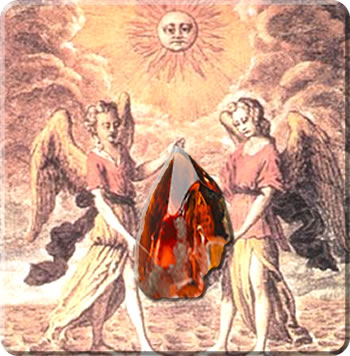
The Philosopher’s Stone is one of the most legendary objects in alchemical tradition. Believed to have the power to transform base metals into gold and grant immortality through the Elixir of Life, it occupied the dreams of countless alchemists across Europe, the Middle East, and Asia.

Its origins trace back to ancient Greek and Egyptian texts, but it became especially prominent in medieval alchemy. Figures such as Nicolas Flamel, Jabir ibn Hayyan (Geber), and Isaac Newton studied alchemical writings in pursuit of its secrets.

The Philosopher’s Stone symbolized more than material wealth—it represented spiritual transformation, the purification of the soul, and the quest for ultimate knowledge. Alchemists viewed their experiments as both scientific and mystical journeys.

While the stone was never found, its legend laid early foundations for modern chemistry. Alchemists’ experiments with substances, metals, and purification techniques paved the way for real scientific discoveries in later centuries.

The Etruscans: The Civilization That Influenced Rome

November 27, 2025

Before Rome rose to dominate the Mediterranean, the Etruscans a powerful civilization in central Italy shaped the region’s culture and politics. Flourishing between 800 and 300 BCE, the Etruscans developed advanced cities, complex religious systems, and vibrant artistic traditions.

Their art stands out for its lively pottery, bronze sculptures, jewelry, and detailed tomb paintings depicting banquets, sports, and celebrations. Etruscan artisans were skilled metalworkers whose techniques influenced later Roman craftsmanship.

The Etruscans had a profound impact on early Rome. Several Roman kings were of Etruscan origin, and many Roman institutions such as gladiatorial games, religious rituals, and architectural styles traced their roots to Etruscan customs. Even the Roman alphabet is derived from an Etruscan adaptation of the Greek script.

Although the Etruscans were eventually absorbed into the expanding Roman Republic, their legacy lived on, shaping the foundations of Roman culture, engineering, and governance.

← Newer Posts Older Posts →
Featured
image_2026-02-16_202620014.png
Feb 16, 2026
First Solid Evidence of Hannibal's Infamous War Elephants Discovered in Spain
Feb 16, 2026
Read More →
Feb 16, 2026
image_2026-02-16_202346199.png
Feb 16, 2026
A 7,500-Year-Old Neolithic Clay Figurine Discovered in Transylvania
Feb 16, 2026
Read More →
Feb 16, 2026
image_2026-02-16_202255460.png
Feb 16, 2026
Public space to be created beneath water tower
Feb 16, 2026
Read More →
Feb 16, 2026
image_2026-02-16_185054776.png
Feb 16, 2026
Israel is trying to rewrite history – and British institutions risk helping them do it
Feb 16, 2026
Read More →
Feb 16, 2026
image_2026-02-16_184952865.png
Feb 16, 2026
Archaeologists Found a 5,000-Year-Old Fortress That Nature Had Hidden for Centuries
Feb 16, 2026
Read More →
Feb 16, 2026
image_2026-02-16_184823467.png
Feb 16, 2026
Illegal structure found near Naneghat caves in Pune’s Junnar, FIR registered by ASI
Feb 16, 2026
Read More →
Feb 16, 2026
read more

Powered by The archaeologist