Learn how growth patterns in tooth enamel and residues trapped in dental plaque were used to reconstruct childhood development and adult diets in an Iron Age Italian community.
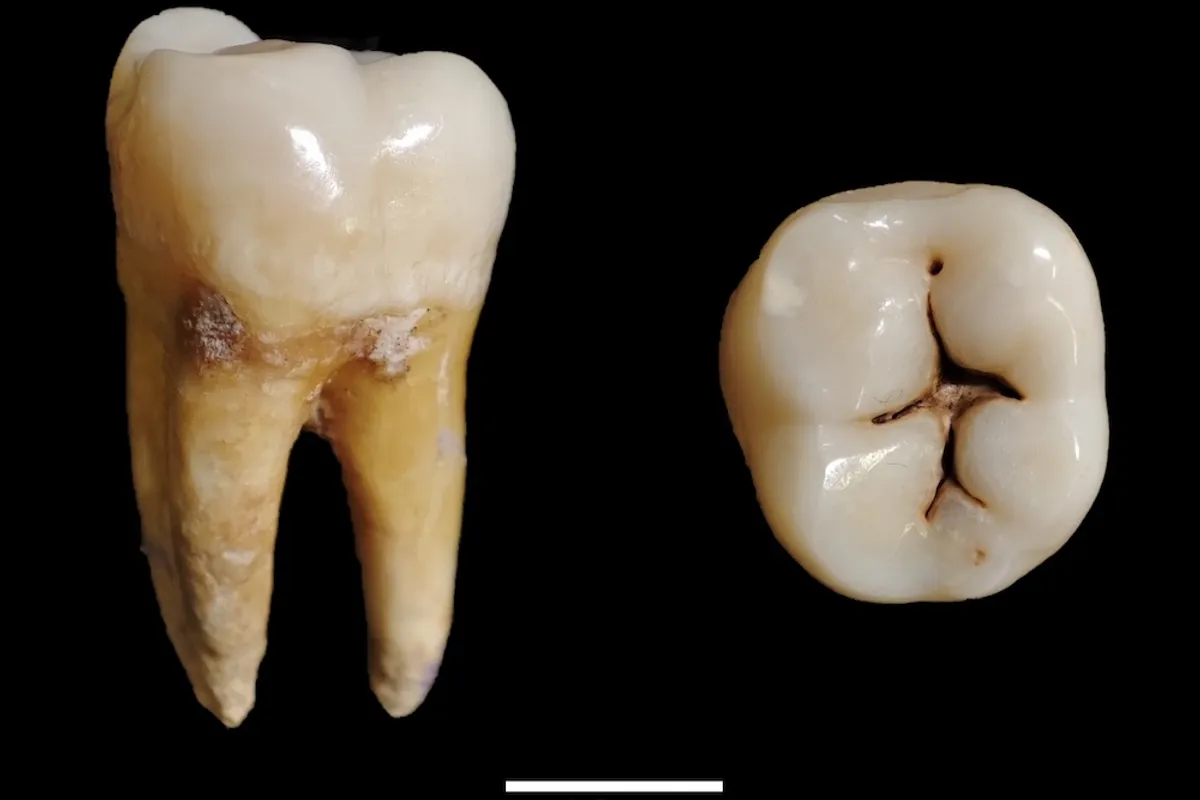
Iron Age sampled teeth.
More than 2,500 years after their burial, the teeth of Iron Age Italians are still preserving detailed records of their lives. Microscopic markers embedded in dental enamel and plaque reveal periods of physical stress during childhood, changes in diet over time, and the foods adults commonly consumed—including fermented staples that continue to shape Mediterranean cuisine today.
In an in-depth study of teeth from the Iron Age site of Pontecagnano in southern Italy, researchers used multiple dental analysis methods to reconstruct individual life histories from early childhood into adulthood. By identifying growth interruptions in enamel and food residues trapped in dental calculus, the research—published in PLOS One—provides a close-up view of everyday life in the 7th and 6th centuries BC, capturing childhood experiences as well as sophisticated food practices influenced by broader Mediterranean connections.
“Teeth act like a kind of time machine, preserving minute yet remarkably powerful traces of daily life,” said Roberto Germano, an archaeologist at Sapienza University of Rome and the study’s lead author. “Through them, we can see how people grew up, what they ate, and how they responded to the challenges of their world. Perhaps most striking is how familiar their lives seem—these Iron Age individuals also went through sensitive stages of childhood and ate fermented foods that are still fundamental to Mediterranean culture today.”