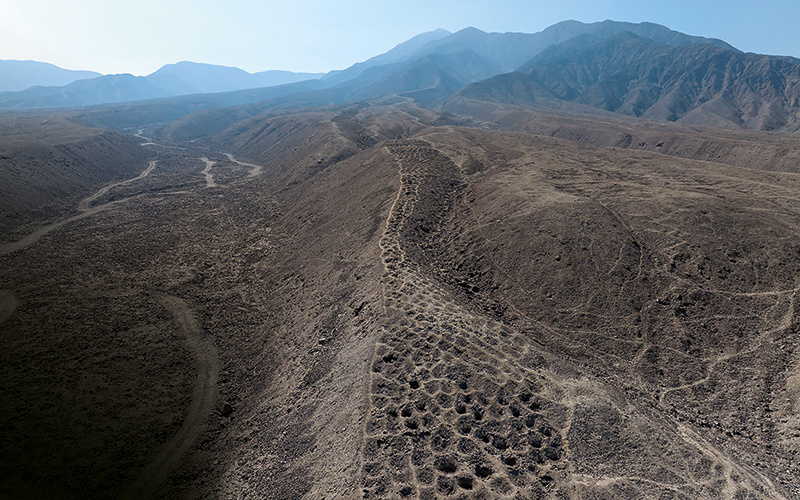
This 1.5-kilometre, winding strip of more than 5,000 human-made pits—each roughly three feet across and two feet deep—on Monte Sierpe (Snake Mountain) in Peru resembles a vast, enigmatic puzzle.
For almost a century, it has baffled archaeologists. Proposed explanations for its Inca-era function have ranged from a burial ground to a system for storing water. Now, researchers from the University of Sydney believe they have identified its true purpose, arguing that it served as an early accounting system and centre for exchange.
Using aerial imagery, the team mapped the site and identified numerical arrangements that mirror Inca knotted-cord counting techniques. They also examined sediment samples and found traces of crops traditionally used for basket-making—plants that would not have grown there naturally—suggesting they were intentionally brought to the site.