Dinosaur Skin and the Bird Connection: A Paleontological Journey
What did dinosaur skin actually look like? How did scientists come to a consensus that modern birds are descended from dinosaurs? These are questions that have fascinated researchers and the public alike — and the answers lie in both fossil evidence and careful scientific interpretation.
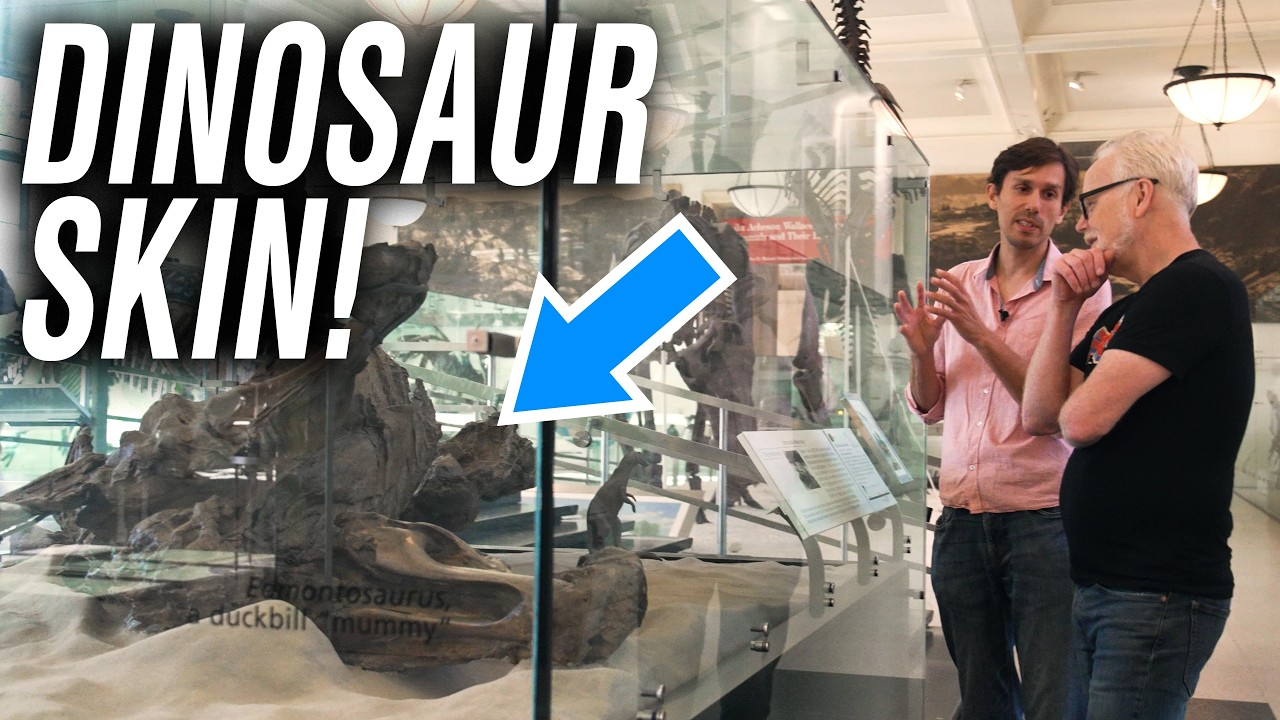
At the American Museum of Natural History (AMNH), Roger Benson, Macaulay Curator in the Division of Paleontology, gives a firsthand look at one of the museum’s most remarkable specimens: a dinosaur “mummy.” This hadrosaur fossil is extraordinarily well-preserved, including impressions of skin, muscle, and other soft tissues, making it one of the greatest discoveries in the history of paleontology.
By studying fossils like this, paleontologists can reconstruct not just the skeleton of a dinosaur, but also the texture, scale patterns, and possible coloration of its skin. Combined with skeletal and anatomical studies, these discoveries have helped scientists confirm that many features we associate with birds — feathers, hollow bones, and certain respiratory structures — first evolved in dinosaurs.
This evidence bridges the ancient past with the present: when you see a modern bird, you are glimpsing the distant descendants of creatures that once roamed the Earth millions of years ago. The research at AMNH highlights not just what dinosaurs looked like, but also how science reconstructs the story of life on our planet through meticulous observation, experimentation, and curiosity.
🎥 Watch the video below to see the hadrosaur “mummy” at AMNH, explore dinosaur skin, and learn how scientists traced the evolutionary connection between dinosaurs and modern birds: