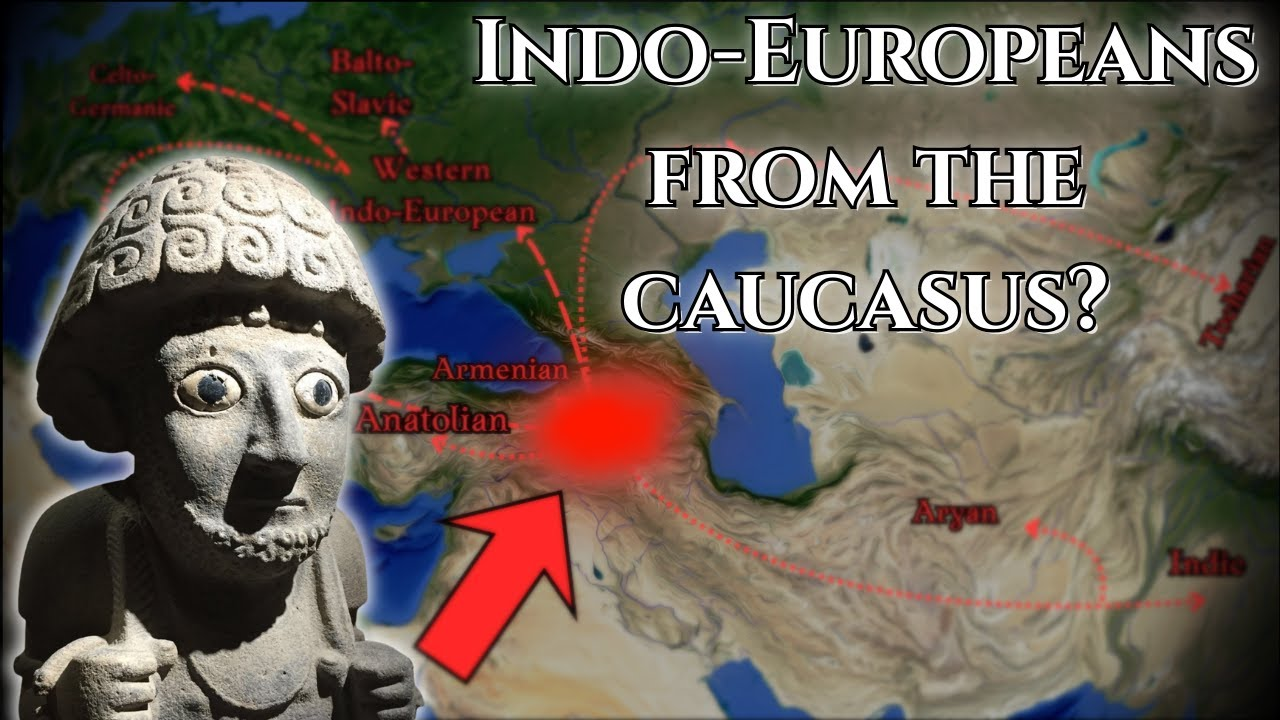
The Origins of the Indo-Europeans: Tracing Language and Homeland
Where did the Indo-Europeans come from, and how did their language spread across Europe and Asia? These questions have fascinated linguists, archaeologists, and historians for centuries, leading to multiple theories about the origins of one of the world’s most influential language families.
In this video, we explore the two most widely accepted theories:
The Steppe Hypothesis – Proposes that the Indo-Europeans originated in the Pontic-Caspian Steppe around 4500–2500 BCE, spreading their language and culture through migrations into Europe and parts of Asia.
The Anatolian Hypothesis – Suggests that the Indo-European languages began in Anatolia (modern-day Turkey) much earlier, spreading alongside the advent of agriculture.
Beyond these long-standing ideas, a newer theory has emerged. This hypothesis traces the ultimate homeland of the Indo-Europeans to in or around the Caucasus, potentially offering a solution to one of the biggest linguistic puzzles: the relationship of the Anatolian branch to the other Indo-European languages.
By examining linguistic evidence, archaeological findings, and genetic research, this investigation brings us closer to understanding how one group of ancient people influenced the languages, cultures, and histories of millions of descendants. The origins of the Indo-Europeans are more than a question of geography—they touch on the roots of modern civilization itself.
🎥 Watch the video below to explore the theories about the Indo-European homeland and uncover the latest research on this enduring historical mystery: