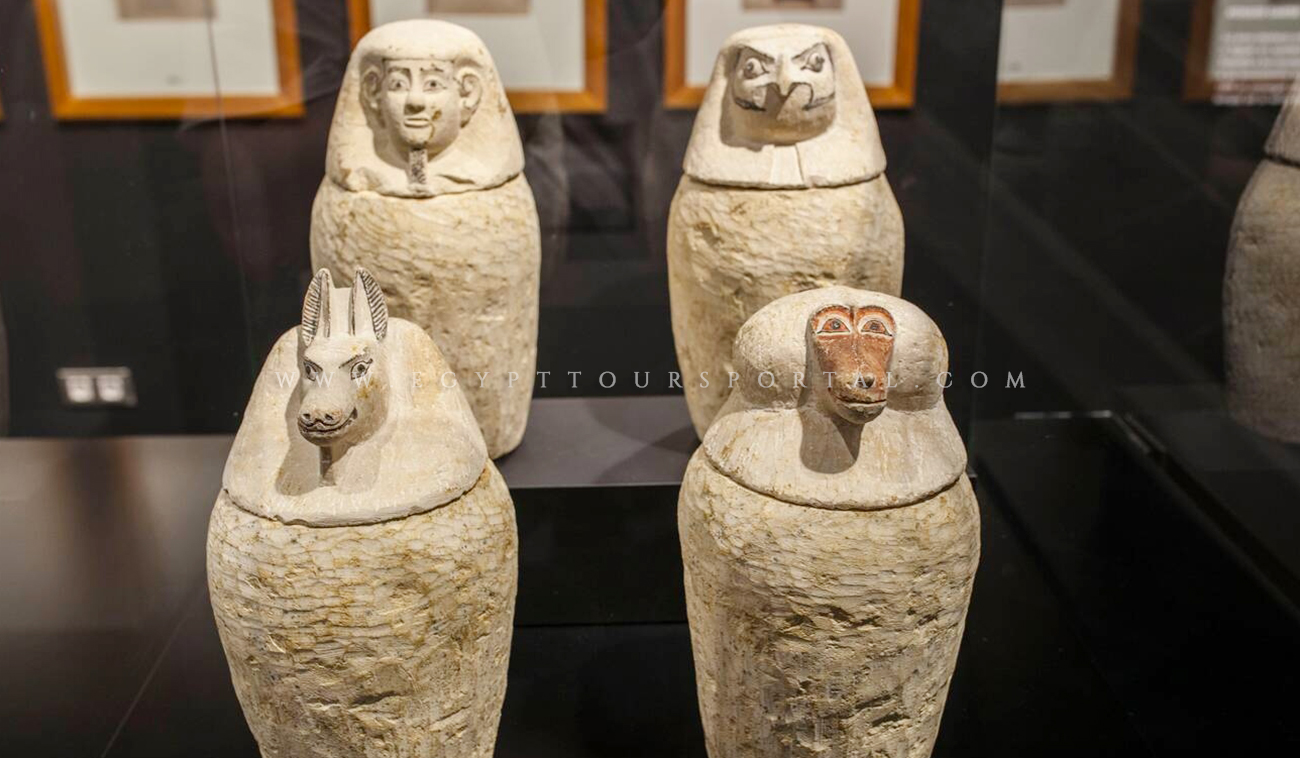
In the "Old Style" of Egyptian mummification, the preservation of the physical body was a prerequisite for the soul’s survival in the afterlife. While the body was treated with natron (a natural salt), the internal organs—which were prone to rapid decay due to their high moisture content—required a specialized, separate scientific process. This led to the development of Canopic Jars.
1. The Desiccation Process
The preservation of organs was a exercise in applied chemistry.
Removal: The lungs, liver, stomach, and intestines were carefully extracted through a small incision in the left side of the abdomen.
Natron Treatment: Like the body, the organs were packed in dry natron. This mineral, a mixture of sodium carbonate and sodium bicarbonate, acted as a powerful desiccant. It drew out every molecule of water, stopping the cellular breakdown and preventing bacterial growth.
Resin and Linen: Once dried, the organs were washed, anointed with cedar oil and liquid resins, and wrapped in fine linen bandages before being placed into the jars.
2. The Four Sons of Horus
By the New Kingdom (c. 1550–1070 BC), the jars were no longer simple stone vessels. They were standardized into a set of four, each protected by a specific deity known as the Sons of Horus. The design of the lids served as a "visual label" for the contents.
3. Materials and Engineering
Canopic jars were engineered to be "Old Style" time capsules, designed to last for eternity.
Stone and Ceramic: Early jars were carved from alabaster (calcite), which was prized for its luminous, "heavenly" appearance and its ability to stay cool. Later, glazed composition (faience) and clay were used for more mass-produced sets.
Airtight Seals: The lids were often sealed with a heavy layer of resin or plaster. This created an anaerobic (oxygen-free) environment, further protecting the organic material from oxidation or insect damage.
4. The Heart and the Brain: The Exceptions
Ancient Egyptian "Old Style" biology placed different values on different organs:
The Heart: Unlike the other organs, the heart was almost always left inside the body. The Egyptians believed it was the seat of the mind and the soul, necessary for the "Weighting of the Heart" ceremony in the hall of Ma'at.
The Brain: Ironically, the brain was considered useless "stuffing." It was liquefied with a bronze hook through the nose and discarded, as they believed the heart—not the brain—was the center of intelligence.
5. The Evolution: From Jars to "Dummy" Bundles
During the Third Intermediate Period (c. 1070–664 BC), mummification techniques changed.
Internal Replacement: Embalmers began to wrap the desiccated organs in linen and place them back inside the body cavity.
Dummy Jars: Despite this change in "Old Style" practice, the tradition of the Canopic jars was so strong that families often still placed a set of "dummy" jars (solid stone vessels with no hollow interior) in the tomb to ensure the symbolic protection of the Sons of Horus.
6. Archaeological Significance
For modern science, Canopic jars are "Old Style" biological archives. Because the organs were preserved individually, they provide paleopathologists with a unique opportunity to study ancient diseases, diets, and DNA. Analysis of liver tissue from these jars has revealed evidence of parasites like Schistosomiasis, helping us map the health of the Nile Valley thousands of years ago.