Ancient Sumerian Cylinder Seals: The Tiny Masterpieces of Mesopotamia
Invented in the late 4th millennium BCE in ancient Mesopotamia (primarily at sites like Uruk and Susa), the cylinder seal is one of the most distinctive and important artifacts of the Sumerian civilization. Ranging from one to two inches in height, these tiny, finely carved stone cylinders were used to roll an impression onto a two-dimensional surface, generally wet clay.
They are widely regarded by art historians as the most characteristic object of the era, functioning as miniature works of art, signatures, and administrative tools.
1. Materials and Craftsmanship
The creation of a cylinder seal was a highly specialized craft. The stones used had to be carefully shaped, drilled through the center to be worn on a necklace or cord, and intricately carved.
Materials: Because Mesopotamia lacked an abundance of good stone, raw materials were imported from distant regions. Seals were carved from a variety of stones, including lapis lazuli (imported from modern-day Afghanistan and highly prized for its vibrant blue color), hematite, serpentine, and carnelian.
Technique: Seal carvers worked in intaglio, meaning the design was cut into the hard stone in reverse and in the negative. When the cylinder was rolled across wet clay, it produced a raised, positive relief image.
2. Purpose and Function
Sumerian cylinder seals served several vital roles in both daily economic life and the spiritual world:
Administrative Signatures: As bureaucracy and trade expanded, the seals acted as an individual's personal signature to authenticate clay tablets, contracts, and receipts.
Security and Property Protection: They were impressed upon lumps of clay (sealings) used to secure the knots of storage room doors or the lids of jars, ensuring that goods were not tampered with.
Jewelry and Amulets: Because of their beauty and the prestige of the materials, they were worn as high-status jewelry or protective amulets to ward off evil spirits. Many have been discovered as grave goods in elite burials.
3. Artistic Themes and Iconography
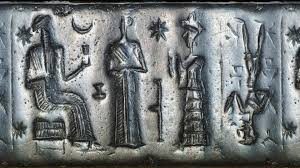
The tiny surfaces of the seals feature an astonishing level of detail. The designs provide historians with an unparalleled look into the mythology, daily life, and religious concepts of ancient Sumer.
Mythological and Religious Scenes: Common subjects include deities, priests, or mythological heroes, such as the legendary King Gilgamesh.
Banquet Scenes: Depictions of elite individuals seated together, drinking, and being served by attendants.
Contest Scenes: Stylized depictions of heroes and animals—such as lions and bulls—battling mythical beasts.