The Maya Blue Pigment: The Chemistry of an Ancient Artistic Miracle
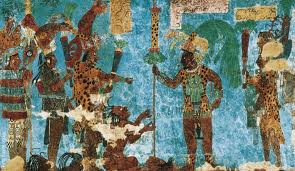
For centuries, Mesoamerican ruins and artworks have retained their vivid turquoise hue, baffling conservators and historians. Known as Maya Blue, this unique colorant is an artificial nano-structured hybrid pigment created well before the advent of modern materials science.
Unlike conventional ancient pigments that rely purely on inorganic minerals (like azurite) or organic plant dyes (like plain indigo), Maya Blue combines both, creating a highly stable and luminous color.
1. The Ingredients: Clay and Plant Dye
The pigment is composed of two primary natural components found in the Mesoamerican region:
Palygorskite: A fibrous, needle-like clay mineral (often called sak lu'um or "white earth") characterized by its unique hollow microchannels and lattice structure.
Indigo: An organic dye extracted from the leaves of the Indigofera suffruticosa plant (locally known in Mayan as ch'oj).
2. The Chemical Structure: How the Hybrid Works
The secret to the pigment's vibrancy and extreme durability lies in the interaction between the organic dye and the inorganic clay matrix when heated.
Intercalation: Upon heating, the indigo molecules enter the internal channels and microscopic pores of the palygorskite clay.
Hydrogen Bonding: The carbonyl oxygen or nitrogen-hydrogen groups of the indigo molecules form strong hydrogen bonds with the clay's structural water and surface metal ions ($Al^{3+}$ and $Mg^{2+}$).
Oxidation: A portion of the indigo oxidizes into dehydroindigo during the heating process. This mixture of indigo and dehydroindigo produces the distinctive bluish-green spectrum and locks the colorant securely within the mineral framework.
3. The Manufacturing Process
Archaeological and chemical studies have uncovered multiple ways the ancient Maya manufactured this pigment:
The Copal Resin Method: The mixture of palygorskite, indigo, and ceremonial copal incense was heated to approximately 100 to 150 °C. The resin acted as a heat-activated catalyst and binder, helping anchor the pigment molecules.
The Wet-Milling and Firing Method: Recent excavations at Chichén Itzá show that artisans ground the wet clay with indigo and heated the mixture from below inside ceramic bowls, entirely bypassing the need for copal.
4. The Miracle of Stability
What makes Maya Blue so extraordinary is its near-total resistance to environmental and chemical agents that would normally destroy ancient organic dyes:
Acid and Solvent Resistance: The pigment is impervious to boiling nitric acid, alkalis, and exposure to strong chemicals.
Environmental Endurance: It survives the harsh tropical humidity, rain, and sunlight of the Mesoamerican rainforests without fading.
Biocorrosion Resistance: It resists bacteria and fungi that typically break down organic materials.