Roman Military Camps: Life on the Limes of the Danube River
The Danube Limes (Donaulimes) formed a crucial defensive and cultural frontier of the Roman Empire, spanning over 2,000 kilometers from Bavaria to the Black Sea. Far from being just a defensive barrier, the Danube border was a bustling, interconnected economic zone where soldiers, merchants, and local populations interacted daily.
1. The Danube Frontier Network
The term limes originally referred to a border path before evolving to describe a comprehensive network of pathways, fortifications, and river barriers securing the empire. On the Danube, this was known as the "Wet Limes."
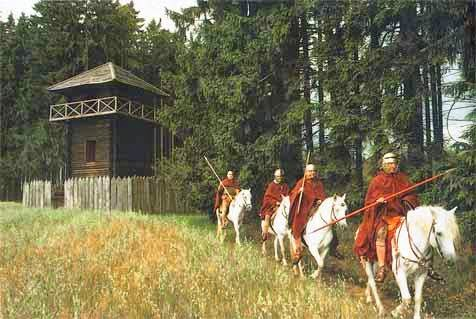
The Defense System: The frontier was composed of legionary camps (castra), smaller auxiliary forts (castella), and watchtowers placed 10 to 30 kilometers apart to maintain visual communication and rapid signaling.
The Infrastructure: A major military road, the Via Istrum, ran alongside the river, linking the military outposts and allowing for rapid deployment and resupply.
Major Bases: Key outposts included Carnuntum and Vindobona (modern-day Vienna) in Austria, as well as Lauriacum (Enns) and Castra Regina (Regensburg).
2. Architecture and Layout of the Camps
Roman military camps were engineered with strict geometric precision, establishing order in the wilderness:
Standardized Layout: Modeled after a playing-card shape with rounded corners, the camp was divided by two main intersecting roads: the via principalis and the via praetoria.
Key Facilities: The interior included the commander’s residence (praetorium), the administrative center (principia), the granaries (horrea), and the military hospital (valetudinarium).
Construction Evolution: The camps began as wood-and-earth ramparts. Under Emperor Trajan and his successors, they were reinforced with solid stone walls to withstand sieges and harsh winters.
3. Life and Duties on the Limes
Life in these frontier fortresses was highly organized and demanding, shaped by rigorous military routine and the realities of the borderlands:
Daily Routines: Soldiers alternated between building infrastructure, gathering supplies, rigorous training, and standing watch at the border outposts.
The Living Quarters: A standard infantry century consisted of 80 men living in a barrack block, divided into ten units of eight men (contubernium). Each unit shared a pair of rooms—one for sleeping and cooking, and another for equipment storage.
Auxiliary Troops: Alongside Roman legionaries, auxilia (non-citizen troops) were stationed on the border. After 25 years of service, these soldiers were granted Roman citizenship.
4. Trade, Coexistence, and the Civilian Population
The frontier was not an impenetrable wall, but rather a zone of heavy interaction with the territories across the river:
Canabae and Vici: Large civilian settlements—known as canabae near the legionary camps and vici near smaller forts—grew up around the military installations. Traders, craftsmen, families, and retired veterans created bustling, cosmopolitan communities.
Cultural Exchange: Soldiers brought Mediterranean culture, wine-growing techniques, and thermal baths to Central Europe. The markets hosted peaceful trade with neighboring Germanic tribes, exchanging Roman manufactured goods for raw resources such as amber and furs.