Viking Trade Routes: From the Fjords of Norway to the Markets of Baghdad
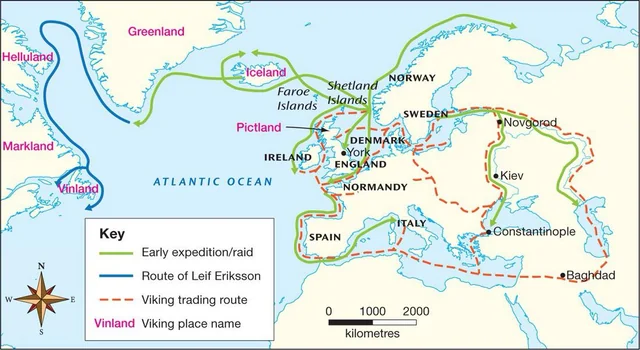
While the popular image of the Viking Age often centers on maritime raids across Western Europe, the Scandinavian expansion to the East was defined by extensive networks of trade, diplomacy, and exploration. The Volga trade route connected the fjords of Norway and the trading hubs of the Baltic directly to the wealthy markets of the Abbasid Caliphate in Baghdad, creating an economic pipeline that brought thousands of Islamic silver coins (dirhams) into the Scandinavian economy.
1. The Eastern Network: The Volga Trade Route
The journey to the East was pioneered by the Rus'—predominantly Swedish and Norwegian Norsemen who ventured into the river systems of Eastern Europe.
The Gateway: Traders started from Scandinavian ports such as Birka (Sweden), Hedeby (Denmark), and Kaupang (Norway), crossing the Baltic Sea to reach Staraya Ladoga (Aldeigjuborg) in present-day Russia.
River Navigation: From Ladoga, the Rus navigated the Volkhov River, crossing Lake Ilmen, and following the Lovat River.
Portages: Because the ships (the knarr or karvi) were shallow-drafted, they could be hauled overland—a process called portage—across the short distances separating river basins to reach the headwaters of the Volga River.
2. The Journey Down the Volga
The passage down the Volga brought travelers into contact with distinct cultures and major trading powers of the 9th and 10th centuries:
Volga Bulgaria: A booming semi-nomadic confederation situated at the confluence of the Kama and Volga rivers. Here, the Vikings encountered the westernmost terminal of the overland Silk Road caravans coming from Central Asia and China.
The Khazar Khaganate: The Rus' traders passed through the Khazar capital of Atil at the mouth of the Volga. The Khazars controlled the trade moving from the Caspian Sea to the Black Sea and the Caucasus.
The Caspian Sea and Baghdad: From Atil, the Vikings sailed across the Caspian Sea (Sea of Jurjan) to the southern shores. From there, goods were carried inland on camelback to Baghdad, the capital of the Abbasid Caliphate—which the Norse called Særkland (the "Land of Silk").
3. The Economy of Exchange: Silver and Slaves
The trade along this route was dictated by supply and demand. Northern Europe had an abundance of raw materials highly valued in the East, while the Islamic world offered manufactured goods and bullion.
Northern Exports: The Rus traded animal furs (marten, beaver, and fox), amber, honey, wax, falcons, and enslaved people captured or purchased in neighboring European territories.
Southern Imports: In return, they acquired enormous quantities of silver coins (Samanid dirhams), high-quality crucible steel, glass beads, and silk fabrics.
The Arab Accounts: The Arab geographer Ibn Khordadbeh wrote in 885–886 about Rus merchants taking their goods via the Caspian Sea and camels to Baghdad, sometimes presenting themselves as Christians to gain access to the city.
4. The Decline of the Route
The trade route peaked during the 9th and 10th centuries, when silver was the lifeblood of the Viking economy. By the late 10th century, the flow of dirhams began to wane due to the exhaustion of mines and political changes in the Islamic world. The focus of the Eastern Vikings then increasingly turned toward the Dnieper trade route (the route from the Varangians to the Greeks) connecting them to Constantinople.