Recently released research has identified a “mysterious mass burial” dating back around 3,300 years in southern Scotland.
The discovery was made during excavations carried out in 2020 and 2021 by Guard Archaeology, ahead of construction work for an access road to the Twentyshilling Wind Farm near Sanquhar in Dumfries and Galloway.
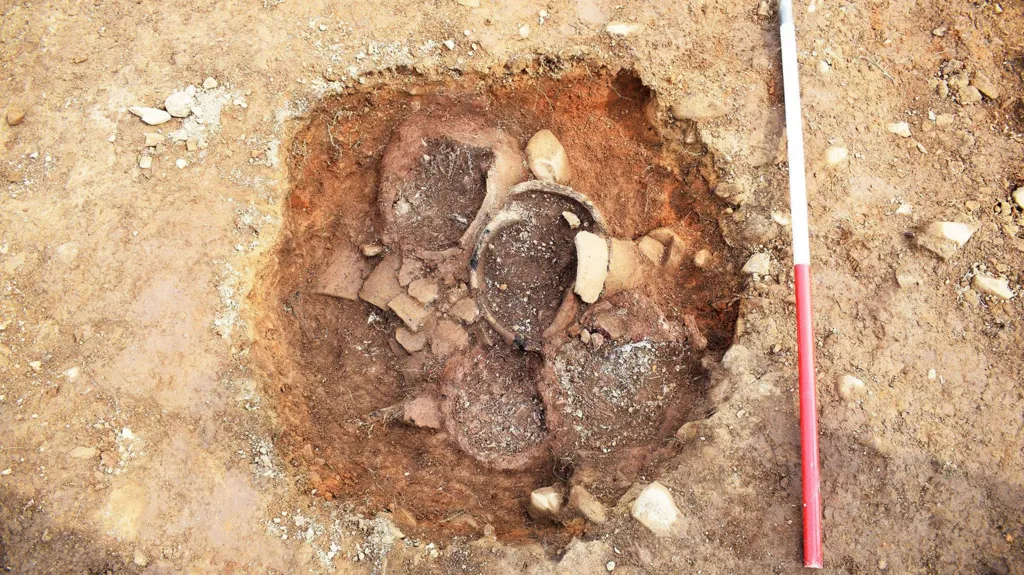
Archaeologists uncovered a Bronze Age barrow, or burial mound, containing cremated human remains placed inside five tightly grouped urns.
Thomas Muir, the archaeologist who led the dig, suggested that the clustering of burials points to a single catastrophic episode, possibly a famine or another severe crisis, that resulted in multiple deaths occurring around the same time.
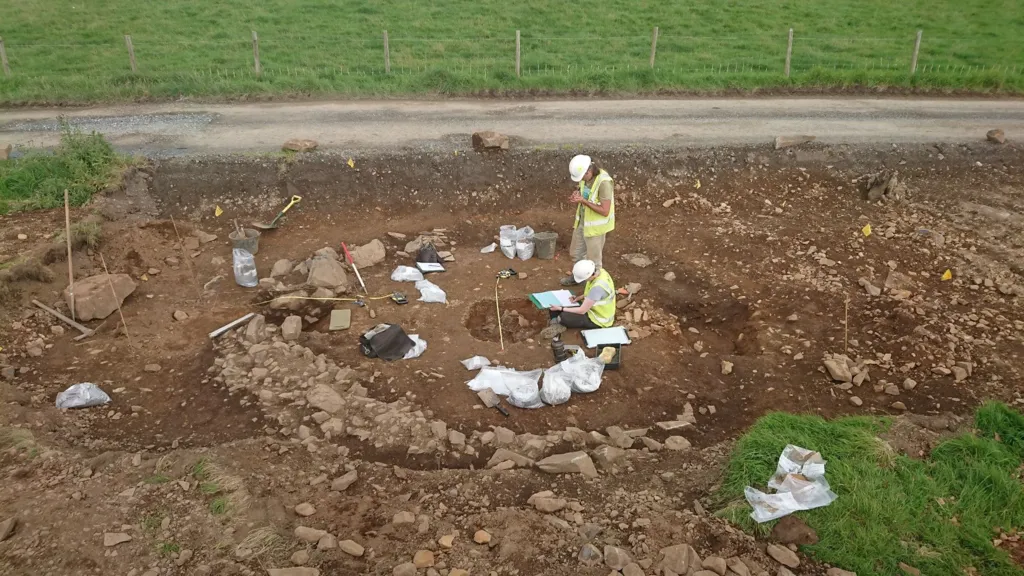
The site was examined in 2020 and 2021 before the wind farm became operational
The wind farm sits about three miles (4.8km) south of Sanquhar on open rough upland terrain.
During their work, Guard Archaeology found the urns with the cremated bones of at least eight individuals all placed there in one mass burial event some time between 1439 and 1287 BC.
A small group of pits some distance north was also excavated, revealing late Neolithic activity between 2867 and 2504 BC.
"The five urns in the Twentyshilling Barrow contained at least eight individuals," said Mr Muir.
"The urns were deposited at the same time as they were packed tightly within the pit and adhered to the same 15th to 13th Century BC date range."
He said that indicated that it was a single mass burial, "possibly of the same family or group".
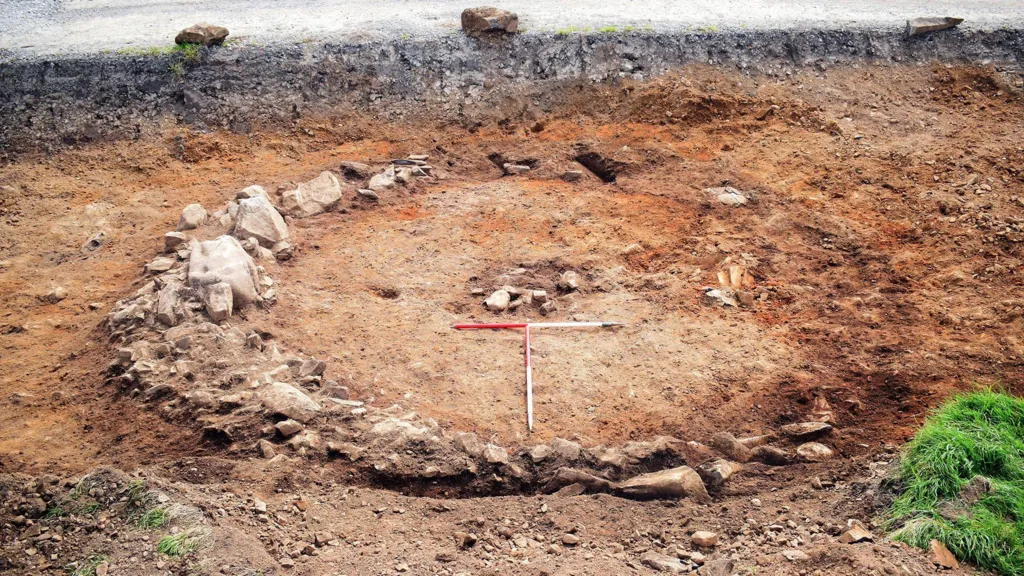
A number of people died in a short space of time in the area
Researchers have published new findings describing a “mysterious mass burial event” that took place in southern Scotland around 3,300 years ago.
The discovery was made during archaeological excavations carried out in 2020 and 2021 by Guard Archaeology ahead of the construction of an access road for the Twentyshilling Wind Farm near Sanquhar in Dumfries and Galloway.
The team uncovered a Bronze Age barrow, or burial mound, containing cremated human remains placed inside five urns set very close together. In total, the urns held the remains of at least eight people.
Archaeologist Thomas Muir, who led the excavation, said the clustering of burials suggests a sudden and severe event, such as famine, that caused multiple deaths within a short period.
The wind farm is located about three miles (4.8 kilometers) south of Sanquhar on open, rugged upland terrain. Radiocarbon dating shows that the mass burial occurred between 1439 and 1287 BC, with all five urns deposited at the same time.
“The five urns in the Twentyshilling Barrow contained at least eight individuals,” Muir said, noting that their tight arrangement and shared date range indicate a single burial episode, possibly involving members of the same family or community.
Muir added that what makes the site particularly unusual is that the bodies were cremated and buried almost immediately. During the Bronze Age, it was more common for remains to be exposed for some time before burial, as seen at other sites such as Broughton in the Scottish Borders, which was reused over generations.
“In contrast, the Twentyshilling site suggests something catastrophic happened,” he explained. “A large number of people appear to have died within a very short space of time.”
Other burial sites in the region point to evidence of famine and settlement abandonment, indicating that this period of the Bronze Age may have been especially difficult for local communities.
The archaeological investigation was carried out as a condition of planning approval for the wind farm, which is now fully operational.