Archaeological evidence shows that the 12 astronomical signs at one point entered China, a journey that would eventually include them in religious art and beyond.
However, by the time images of the 12 astronomical zodiac signs appeared, China had already developed its own distinct tradition of measuring astral phenomena, which used the 28 lunar mansions — segments of the equator that measured the paths of the sun, moon, and five planets traveling across the night sky. Unlike practices in Europe and Central and West Asia, China’s system divided the 28 lunar mansions into four groups for the cardinal directions, each corresponding to a divine animal: the Azure Dragon of the East, the Vermilion Bird of the South, the White Tiger of the West, and the Black Tortoise of the North.
The difference between the systems is significant. In the Chinese constellation system, the 28 lunar mansions vary greatly in width, while the zodiac constellations were equally divided into the 12 signs, each occupying exactly 30 degrees. Even though some of the 28 lunar mansions such as Fang (Room), Xin (Heart), Wei (Tail) overlapped with portions of Scorpio, they were ultimately distinct systems of celestial knowledge, belonging to different cultural traditions.
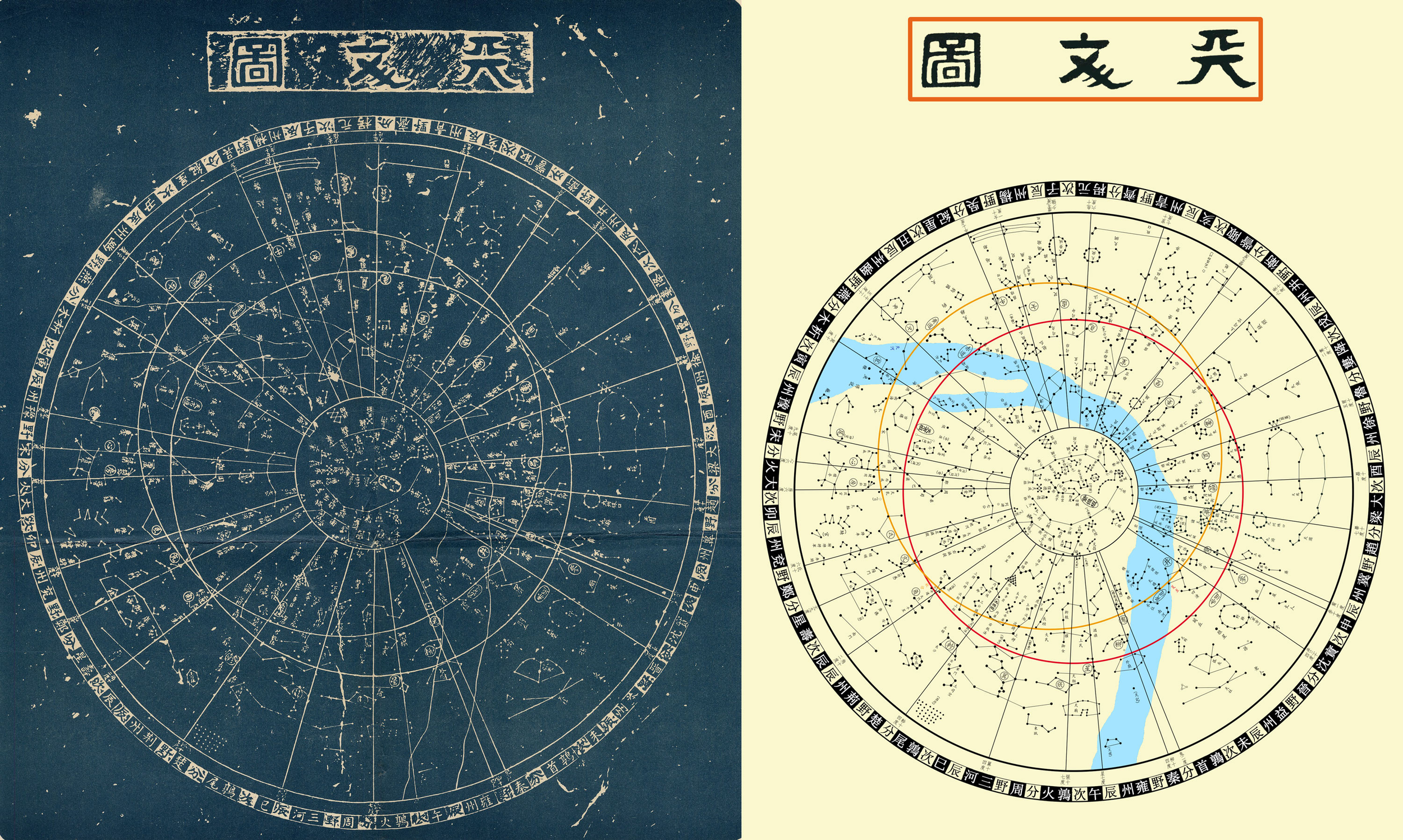
Left: A rubbing of “Astronomical Chart,” drawn 1190, engraved 1247, Suzhou, Jiangsu province. From the public domain; Right: A digital facsimile by Chen Zhihui, 2022.
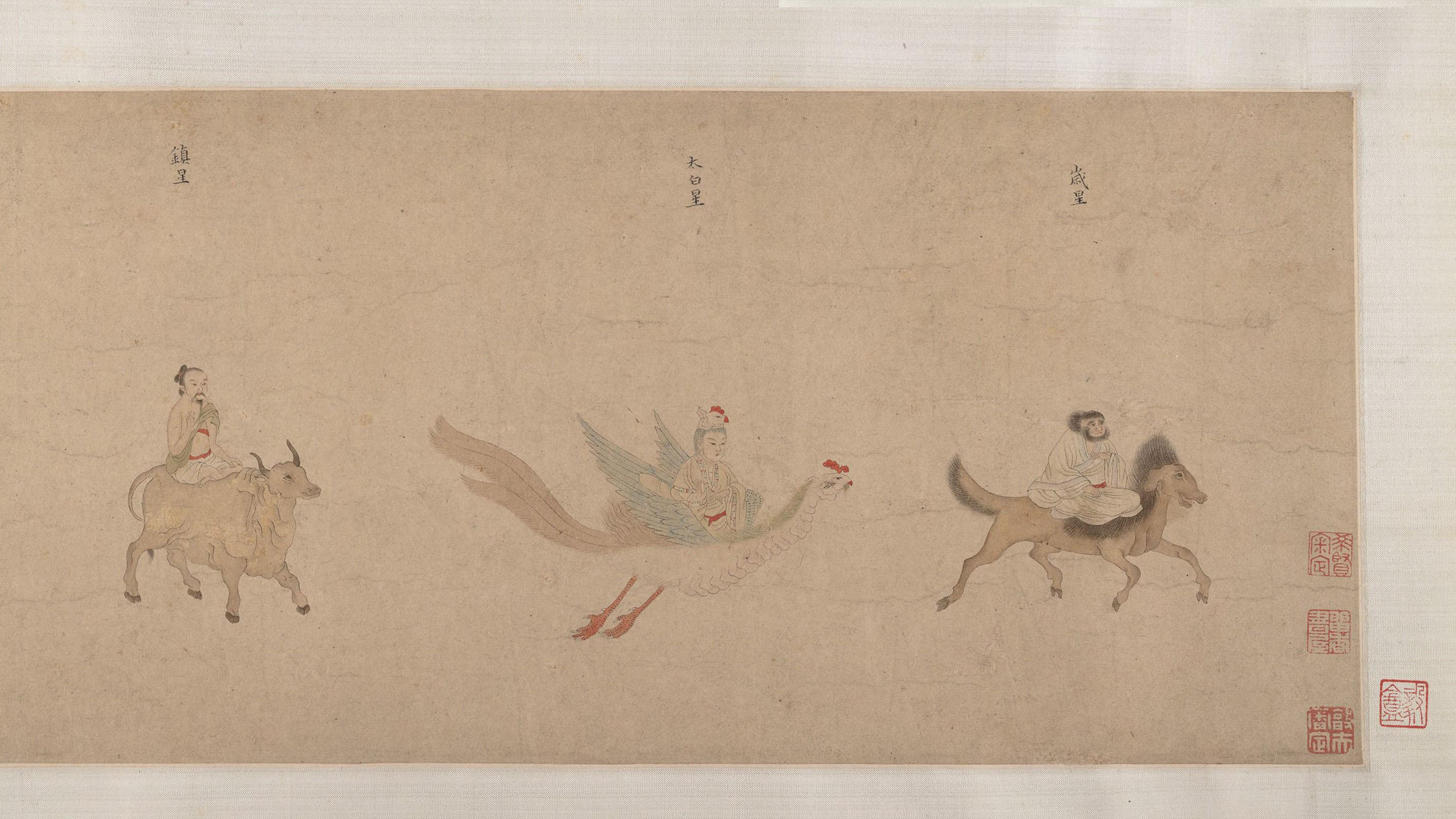
“Divinities of the Planets and Constellations,” also known as “The Five Planets and Twenty-Eight Constellations,” attributed to Ming dynasty painter Qiu Ying (1494–1552).
Even so, once zodiac imagery entered China, it continued to interact with local culture for centuries. By the late 6th century, during the Northern Qi dynasty, the Hindu monk Narêndrayaśas had transliterated all 12 zodiac signs from Sanskrit into Chinese, allowing their influence to spread widely across the country.
The zodiac reached its height of popularity during the Tang dynasty (618–907). This rise did not replace the importance of the 28 lunar mansions
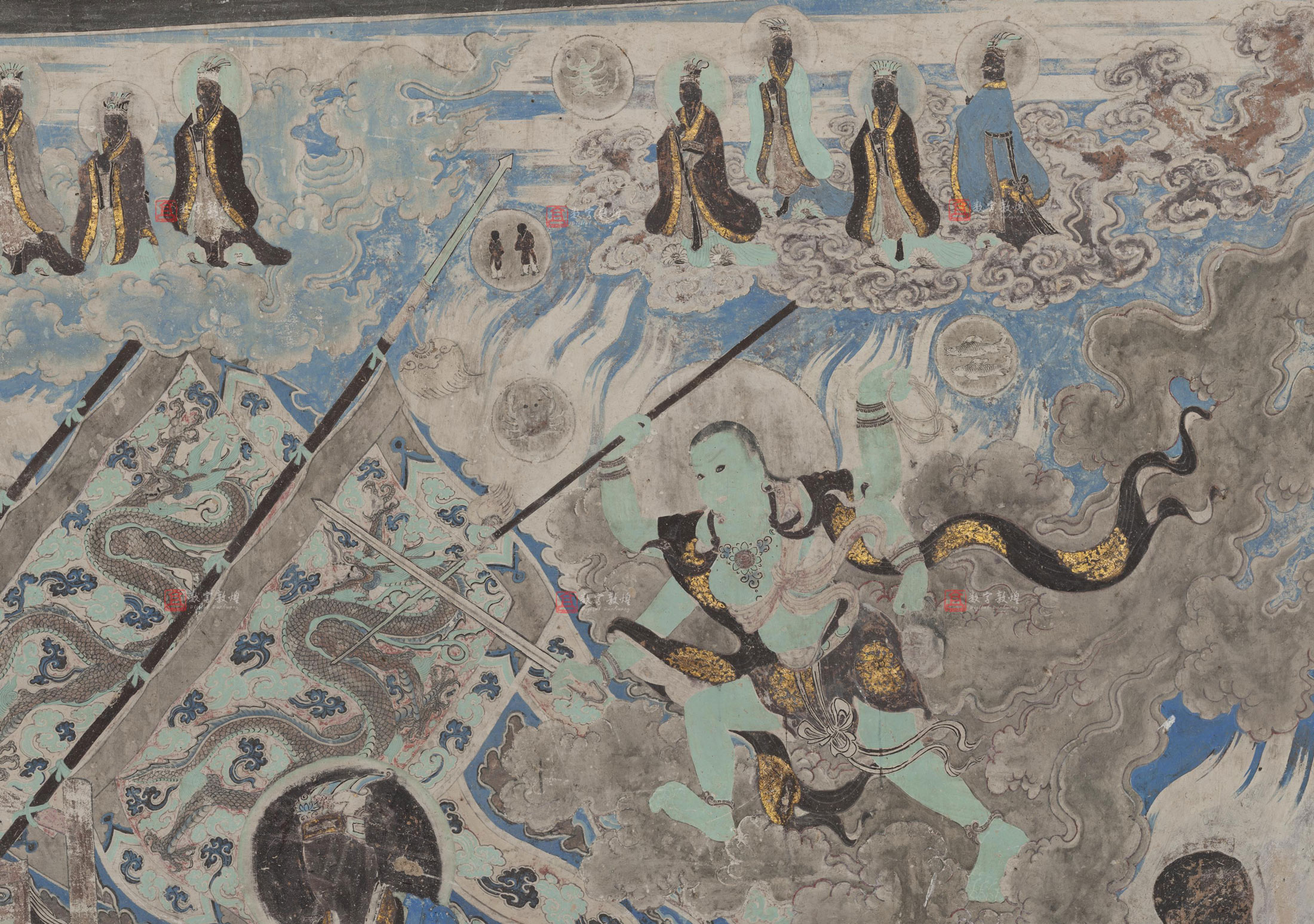
Details of the mural in Cave 61 of the Mogao Grottoes, Five Dynasties (907-960). The zodiac signs of Gemini, Cancer, Pisces, and Scorpio can be seen in the mural.
The scene suddenly blends familiar Buddhist imagery with unmistakable zodiac figures: the lion symbolizing Leo, the ram of Aries, and the horned bull representing Taurus. One detail that may seem unusual at first is a vase decorated with flowers, but this is in fact Aquarius. In Chinese sources, Aquarius is often called the “precious vase” and is typically shown holding flowers rather than water, or depicted as a simple, undecorated jar.
Another image shows two young women standing side by side and facing forward, a visual representation of Virgo. In Chinese texts, this sign is consistently translated as shuang nü gong (double maiden palace), a term that remained in use through the Qing dynasty (1644–1911).
Likewise, Gemini is portrayed as a pair consisting of one larger and one smaller monk. In Buddhist art, especially in scenes featuring the Tejaprabhā Buddha, Gemini is often shown as a man and a woman. This reflects the Chinese names for the sign, such as fu qi gong (husband and wife palace) or nan nü gong (male-female palace).
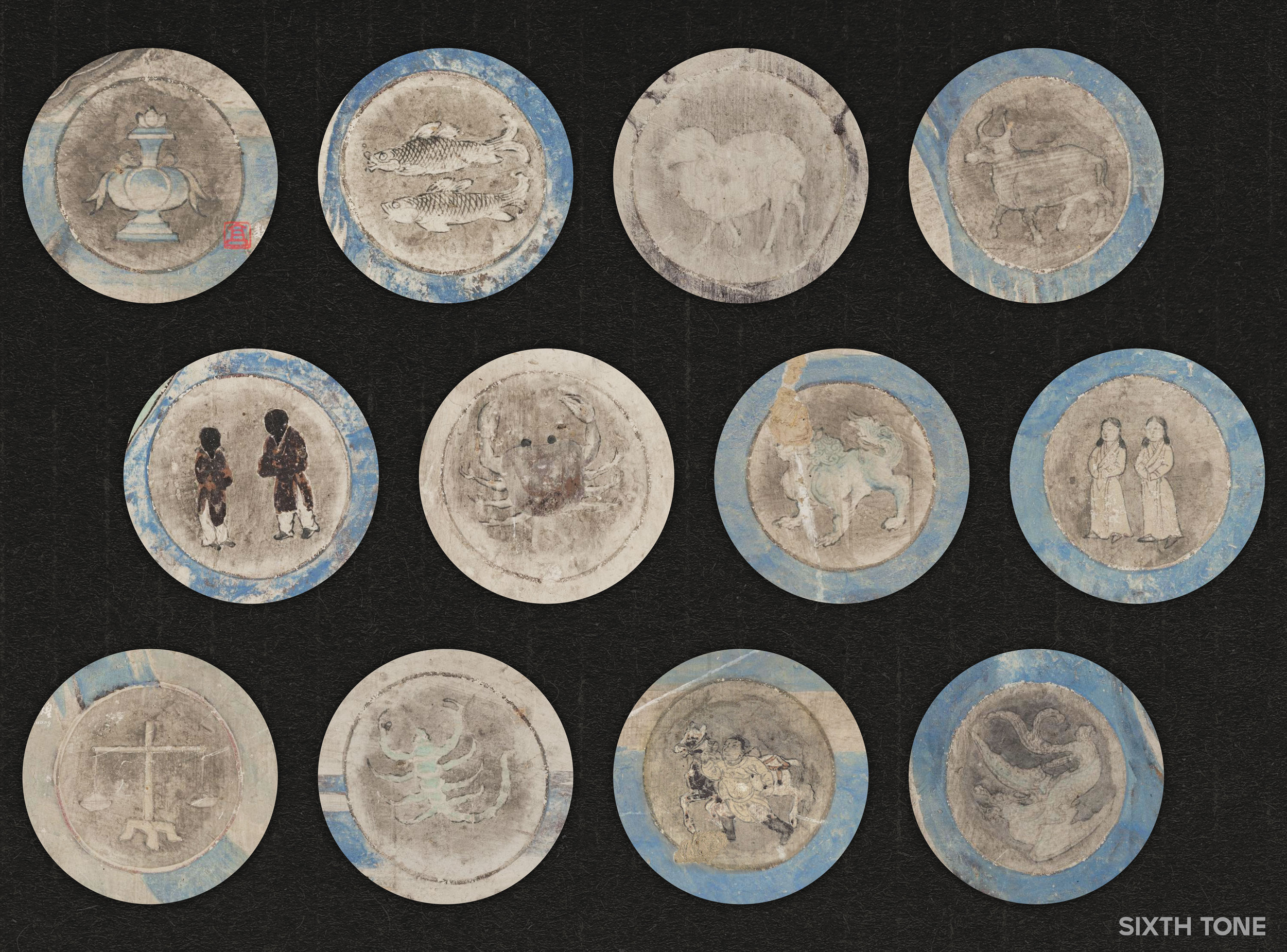
The zodiac signs cropped from a scanned copy of the mural in Cave 61 of the Mogao Grottoes, which dates back to the 10th century.
Finally, the figure of a person guiding a horse represents Sagittarius. In Chinese imagery, the Western centaur was reinterpreted as a human paired with a horse rather than a hybrid creature. This adaptation illustrates how foreign zodiac imagery was absorbed into Chinese visual traditions, blending Western astronomical ideas with local artistic conventions and symbolism to form a distinctive fusion of star lore.
Images of the 12 zodiac signs were often placed among astral deities, such as those surrounding the Tejaprabhā Buddha, and became figures to whom people prayed for blessings or protection from misfortune in both Buddhist and Daoist traditions.
Over time, however, the meaning of the zodiac signs extended beyond religious contexts and entered everyday life. The idea of star gods linked to a person’s birth year, month, or date became part of popular belief, with individuals seeking guidance, protection, or good fortune from these celestial forces. In this way, the zodiac signs became woven into society’s cultural fabric, influencing both spiritual practice and popular culture.
After traveling across seas and mountains, the 12 zodiac signs ultimately became integrated into Chinese culture. Combining astrological symbolism with spiritual meaning, they continue to serve as enduring representations of personal fate, divine influence, and humanity’s connection to the heavens.