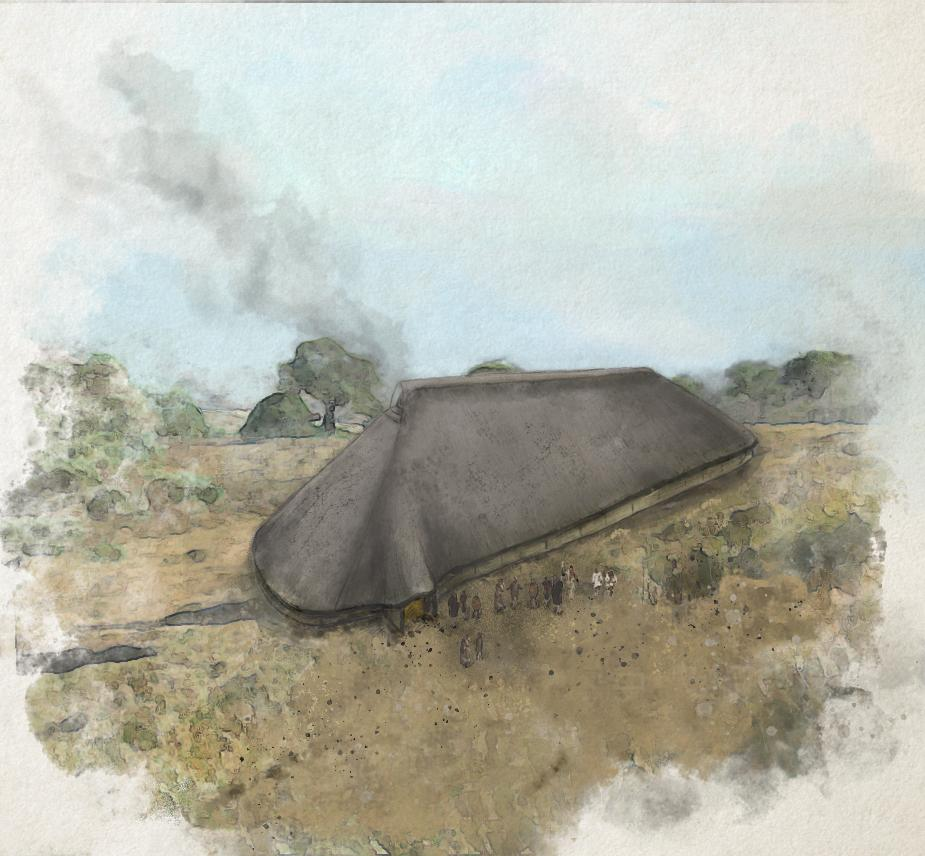
The find drew worldwide attention and may have altered ideas about the sophistication and abilities of Scotland’s ancient communities.
Last year, archaeologists announced the discovery of one of the largest prehistoric structures ever uncovered in Scotland: a 35-metre-long meeting hall that predates Stonehenge.
Erected by some of the earliest Stone Age farming groups around 6,000 years ago, the vast timber structure was described as a “monumental” discovery of international importance.
Nothing of comparable scale from this early period has previously been identified, and researchers noted that its form and construction seemed entirely unfamiliar when compared with assumptions about the people living there at the time.
The archaeologists who uncovered it have since shared further reflections on the site, offering new insight into a society otherwise lost to history.
The building was found during excavations carried out by GUARD Archaeology on behalf of Angus Council, ahead of work to construct new football pitches near Carnoustie High School.
A sword and spear from the much later Iron Age were also recovered at the site, suggesting that knowledge or memory of the hall may have persisted for generations.
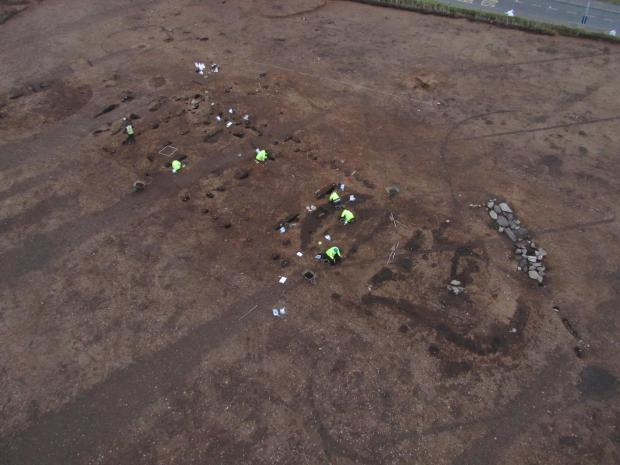
The scale of the dig amazed archaeologists
Archaeologist Warren Bailie described the excavation as the “find of a lifetime.”
He said, “While we were uncovering prehistoric structures at the Carnoustie site, I’ll never forget the morning I got the call about a sword and spear decorated with gold. The team immediately recovered the hoard in a block and transported it to our Glasgow lab that same day. This is the sort of discovery archaeologists dream about—truly once in a lifetime. Another unforgettable moment was when Alan Hunter Blair, our Fieldwork Director, shared aerial images taken with his kite-cam.”
Bailie continued, “I couldn’t believe what I was seeing—a rectangular structure so massive that it seemed impossible for it to be a Neolithic hall. But it turned out to be the largest of its kind ever found in Scotland.”
Dating to around 4,000 BC, the hall was constructed in a woodland clearing. Its walls were made from thick oak panels, and the roof was supported by enormous beams, making it an impressive structure.
Evidence suggests the hall may have been used for rituals, as tool “offerings” were discovered within its walls, and it remained in use for several centuries.
In addition to its extraordinary size, the site featured a smaller attached building, possibly serving as a preparation area, adding to its uniqueness.
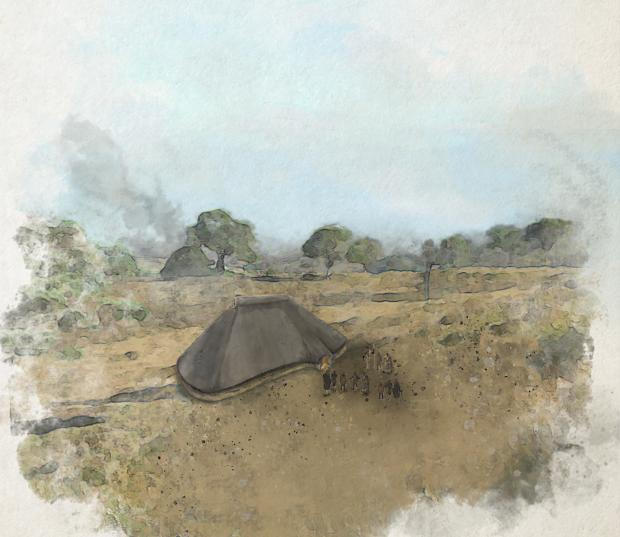
An artist's impression of the site
Archaeologist Beverley Ballin Smith, co-author of a report on the find, explained: “What makes the Carnoustie halls unique in Scotland is the presence of a second hall built nearby at the same time. Later, part of its footprint was reused for a smaller hall, which is extremely rare. This shows continuity not only in architectural design but also in the ideas and meanings held by the community that built and used these structures.”
She noted another remarkable feature of the main hall: it seems to have been constructed without any earlier, simpler buildings leading up to it. “The long timber hall appears, at this time, as a fully formed monumental structure with no precursors in the Scottish landscape from the earlier Mesolithic period,” she said.
Ballin Smith added that the discovery challenges previous assumptions about these ancient communities, suggesting they were more sophisticated than the simple hunter-gatherer societies they are often portrayed as.
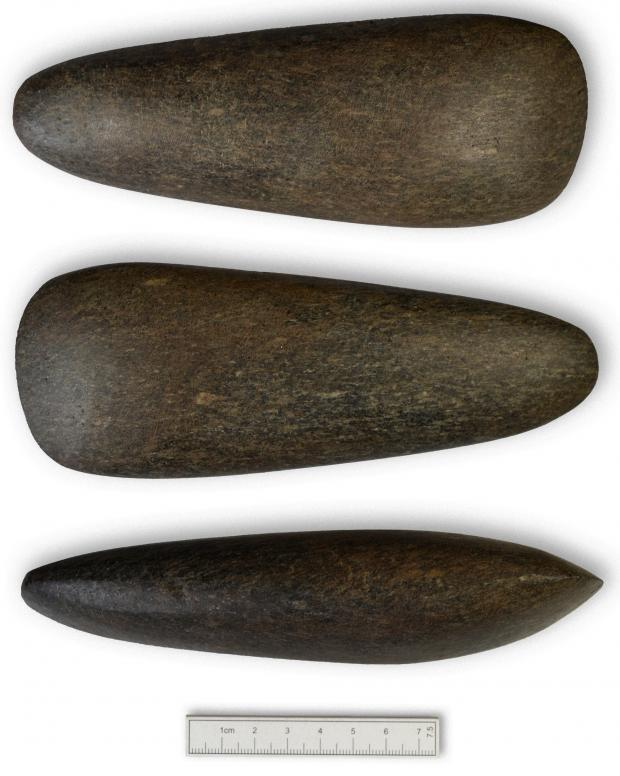
Some of the artefacts found at the site
Ms Ballin Smith explained: “The construction of these halls must have involved a community, including skilled woodworkers. They had the expertise to plan, design, and carry out the building, showing cognitive and practical abilities as sophisticated as our own.”
She added: “This challenges the typical view of hunter-gatherer societies. We often underestimate our ancestors’ skills and environmental knowledge. It’s also possible that the builders of the Carnoustie halls came from elsewhere, bringing with them ideas, knowledge, and beliefs developed in other places. We are only beginning to understand that our Neolithic heritage is far more complex than previously thought.”
She emphasized that the halls would have held great significance for those who built them: “To people of that time, the long timber hall was monumental—truly ‘out of this world.’”