Introduction
Chernigov, known today as Chernihiv, was one of the most important political and cultural centers of medieval Rus'. Located in northern Ukraine, it developed into a major princely center during the medieval period and became particularly prominent between the tenth and twelfth centuries.
The city's archaeological remains reveal a complex urban society containing fortifications, churches, elite residences, craft areas, cemeteries, and trading connections.
Chernigov's importance was closely connected with the political development of Kyivan Rus', the medieval East Slavic polity centered initially on Kyiv.
The Strategic Location
Chernigov occupied a strategically important position near the Desna River.
Rivers were essential transportation routes in medieval Eastern Europe.
They provided:
transportation;
communication;
fishing;
access to agricultural territories;
military mobility;
connections to other settlements.
Chernigov could therefore participate in networks linking northern and southern parts of Rus'.
The Rise of a Princely Center
During the tenth century, Chernigov emerged as one of the major centers of the expanding Rus' political system.
Its ruling elites were connected with the princely dynasty associated with Kyiv.
The city eventually became particularly associated with the Chernihiv branch of the Rurikid dynasty.
Political authority was expressed through fortifications, monumental architecture, elite burials, and control of economic resources.
The Detinets
The fortified central area, traditionally described as the detinets, formed the political heart of the city.
Such fortified centers typically contained important buildings and provided protection during periods of conflict.
Chernigov's defensive landscape consisted of earthworks, wooden structures, and natural terrain.
The scale of these defenses indicates the city's significance.
Monumental Architecture
Chernigov became famous for its medieval churches.
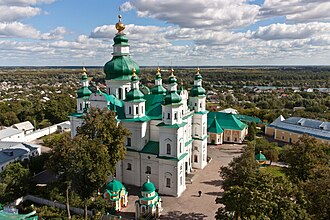
Among the most important surviving monuments is the Transfiguration Cathedral, traditionally dated to the eleventh century.
Its construction reflects the profound transformation of Rus' following the Christianization associated with Prince Vladimir in 988.
Christian architecture became an important expression of political legitimacy.
Religion and Political Authority
Churches were not merely places of worship.
They could serve as:
burial locations;
centers of administration;
symbols of princely authority;
repositories of sacred objects;
architectural statements of wealth.
The construction of monumental churches required skilled masons, labor, imported materials, and organizational capacity.
Trade and Craft Production
Archaeological discoveries from Chernigov demonstrate extensive craft activity.
Objects associated with:
metalworking;
pottery;
jewelry production;
bone carving;
glass;
textile production
have contributed to the reconstruction of urban life.
The city was connected to broader trade routes, allowing goods and technologies to circulate over considerable distances.
Burial Archaeology
Chernigov's burial evidence is especially important.
Large burial mounds and elite graves provide evidence of social hierarchy and cultural interaction.
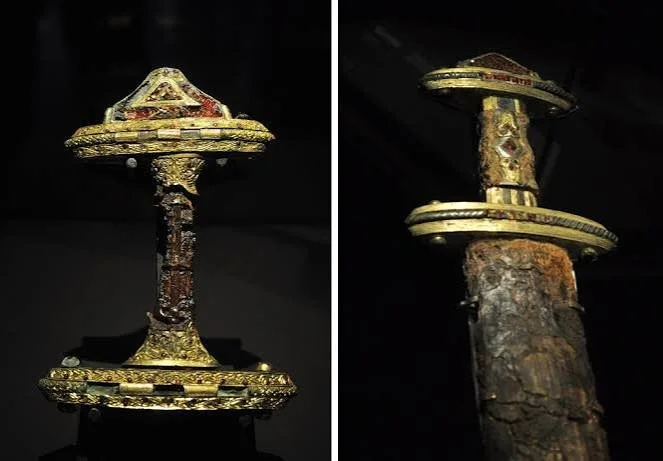
Some early medieval burials contain weapons, ornaments, and other objects reflecting connections with Scandinavian, steppe, and East European traditions.
These discoveries demonstrate that medieval Rus' was not culturally isolated.
The Wider Political World
Chernigov existed within a competitive political environment.
Kyiv, Novgorod, Pereyaslav, and other centers possessed their own political importance.
Princely succession frequently generated rivalry.
The struggle for control of major cities was therefore central to medieval Rus' politics.
The Mongol Invasion
Chernigov suffered catastrophic destruction during the Mongol invasions of the thirteenth century.
The devastation transformed the political geography of the region.
Although the city survived, its earlier position within the political system was permanently altered.
Conclusion
Chernigov's archaeological remains provide an exceptional window into medieval Eastern Europe.
Its fortifications, churches, burials, crafts, and urban structures reveal a sophisticated princely center that participated in religious transformation, long-distance commerce, dynastic politics, and warfare.
Its history demonstrates that medieval Rus' consisted of multiple powerful centers rather than a single undifferentiated state.