• MAIN PAGE
  • LATEST NEWS
    • Lost Cities
    • Archaeology's Greatest Finds
    • Underwater Discoveries
    • Greatest Inventions
    • Studies
    • Blog
  • PHILOSOPHY
  • HISTORY
  • RELIGIONS
    • Africa
    • Anatolia
    • Arabian Peninsula
    • Balkan Region
    • China - East Asia
    • Europe
    • Eurasian Steppe
    • Levant
    • Mesopotamia
    • Oceania - SE Asia
    • Pre-Columbian Civilizations of America
    • Iranian Plateau - Central Asia
    • Indus Valley - South Asia
    • Japan
    • The Archaeologist Editor Group
    • Scientific Studies
    • Aegean Prehistory
    • Historical Period
    • Byzantine Middle Ages
    • Predynastic Period
    • Dynastic Period
    • Greco-Roman Egypt
  • Rome
  • PALEONTOLOGY
  • About us
Menu

The Archaeologist

  • MAIN PAGE
  • LATEST NEWS
  • DISCOVERIES
    • Lost Cities
    • Archaeology's Greatest Finds
    • Underwater Discoveries
    • Greatest Inventions
    • Studies
    • Blog
  • PHILOSOPHY
  • HISTORY
  • RELIGIONS
  • World Civilizations
    • Africa
    • Anatolia
    • Arabian Peninsula
    • Balkan Region
    • China - East Asia
    • Europe
    • Eurasian Steppe
    • Levant
    • Mesopotamia
    • Oceania - SE Asia
    • Pre-Columbian Civilizations of America
    • Iranian Plateau - Central Asia
    • Indus Valley - South Asia
    • Japan
    • The Archaeologist Editor Group
    • Scientific Studies
  • GREECE
    • Aegean Prehistory
    • Historical Period
    • Byzantine Middle Ages
  • Egypt
    • Predynastic Period
    • Dynastic Period
    • Greco-Roman Egypt
  • Rome
  • PALEONTOLOGY
  • About us
No results found

Devil's Lair: Australia's 48,000-Year Ochre Use

June 24, 2026

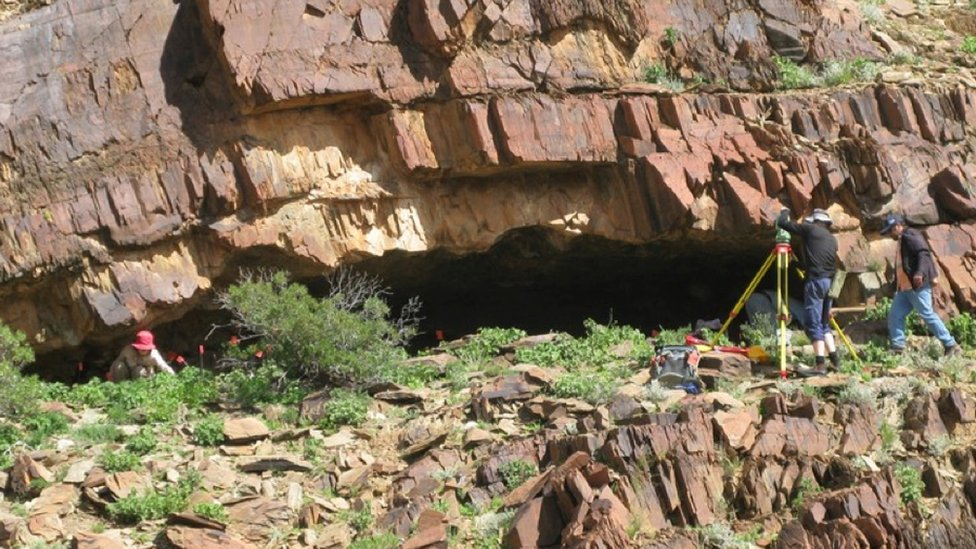
Situated in the temperate jarrah forest of southwestern Australia, Devil's Lair is a deep, limestone cave that contains a critical record of early Aboriginal occupation and symbolic behavior at the western edge of the continent. Excavations revealed a remarkably stable, deep stratigraphic sequence extending back nearly 50,000 years, providing a clear timeline of early human behavior on the changing Australian landscape.

Among the most revolutionary findings at the site is the intensive and continuous presence of processed red and yellow mineral ochre dating to 48,000 years ago. These ochre fragments display clear macroscopic signs of human manipulation, including heavy grinding striations, scraping facets, and pounding marks. This mineral was not native to the cave's immediate interior, indicating intentional collection and transport.

The early presence of ochre proves that the first human colonizers of southwestern Australia did not merely focus on basic survival technologies; they brought with them a complex, deeply ingrained symbolic toolkit. The ochre was ground into fine powder to be used as body paint, a preservative for organic cloaks, or for rock shelter stencil art, establishing the absolute antiquity of spiritual and symbolic traditions on the Australian continent from the very dawn of settlement.
← Nauwalabila: Australia's 50,000-Year Stone ToolsLaili Cave: East Timor's 44,000-Year Colonizers →
Featured
image_2026-06-22_223748063.png
June 24, 2026
Lake Mungo: Australia's 42,000-Year Cremation Rites
June 24, 2026
Read more →
June 24, 2026
image_2026-06-22_223711115.png
June 24, 2026
Wyrie Swamp: Australia's 20,000-Year Boomerangs
June 24, 2026
Read more →
June 24, 2026
image_2026-06-22_223638840.png
June 24, 2026
Madjedbebe: World's Oldest Ochre Processing Site
June 24, 2026
Read more →
June 24, 2026
image_2026-06-22_223602824.png
June 24, 2026
Nauwalabila: Australia's 50,000-Year Stone Tools
June 24, 2026
Read more →
June 24, 2026
image_2026-06-22_223518130.png
June 24, 2026
Devil's Lair: Australia's 48,000-Year Ochre Use
June 24, 2026
Read more →
June 24, 2026
image_2026-06-22_223408714.png
June 24, 2026
Laili Cave: East Timor's 44,000-Year Colonizers
June 24, 2026
Read more →
June 24, 2026
read more

Powered by The archaeologist