• MAIN PAGE
  • LATEST NEWS
    • Lost Cities
    • Archaeology's Greatest Finds
    • Underwater Discoveries
    • Greatest Inventions
    • Studies
    • Blog
  • PHILOSOPHY
  • HISTORY
  • RELIGIONS
    • Africa
    • Anatolia
    • Arabian Peninsula
    • Balkan Region
    • China - East Asia
    • Europe
    • Eurasian Steppe
    • Levant
    • Mesopotamia
    • Oceania - SE Asia
    • Pre-Columbian Civilizations of America
    • Iranian Plateau - Central Asia
    • Indus Valley - South Asia
    • Japan
    • The Archaeologist Editor Group
    • Scientific Studies
    • Aegean Prehistory
    • Historical Period
    • Byzantine Middle Ages
    • Predynastic Period
    • Dynastic Period
    • Greco-Roman Egypt
  • Rome
  • PALEONTOLOGY
  • About us
Menu

The Archaeologist

  • MAIN PAGE
  • LATEST NEWS
  • DISCOVERIES
    • Lost Cities
    • Archaeology's Greatest Finds
    • Underwater Discoveries
    • Greatest Inventions
    • Studies
    • Blog
  • PHILOSOPHY
  • HISTORY
  • RELIGIONS
  • World Civilizations
    • Africa
    • Anatolia
    • Arabian Peninsula
    • Balkan Region
    • China - East Asia
    • Europe
    • Eurasian Steppe
    • Levant
    • Mesopotamia
    • Oceania - SE Asia
    • Pre-Columbian Civilizations of America
    • Iranian Plateau - Central Asia
    • Indus Valley - South Asia
    • Japan
    • The Archaeologist Editor Group
    • Scientific Studies
  • GREECE
    • Aegean Prehistory
    • Historical Period
    • Byzantine Middle Ages
  • Egypt
    • Predynastic Period
    • Dynastic Period
    • Greco-Roman Egypt
  • Rome
  • PALEONTOLOGY
  • About us
No results found

Laili Cave: East Timor's 44,000-Year Colonizers

June 24, 2026

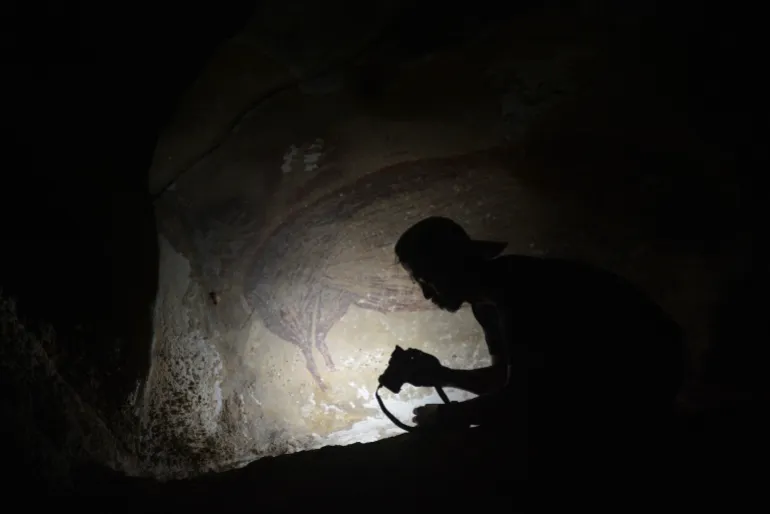
Laili Cave, situated on the northern coast of East Timor, provides some of the earliest and most definitive evidence of anatomically modern Homo sapiens maritime colonization through the Wallacean archipelago en route to Australia. Excavations at the site uncovered an incredibly dense, stratified sequence of human occupation beginning abruptly between 43,000 and 44,000 years ago, chronicling the rapid expansion of modern humans across island landscapes.

The sudden appearance of these colonizers is marked by an explosion of micro-lithic stone tools, intense hearth ash layers, and vast quantities of processed faunal remains. Unlike mainland sites where large game dominated the archaeological layers, the diet of the Laili Cave inhabitants was heavily adapted to island ecology, characterized by the intensive consumption of small birds, bats, giant rats, and marine resources like sea turtles and marine mollusks.

The site is particularly significant because it lacks any older, archaic hominin presence, demonstrating that modern humans were the first to master the complex maritime technologies and deep-water crossings necessary to colonize the Wallacean stepping-stones. Laili Cave stands as a critical benchmark proving that early modern humans possessed the advanced cognitive planning and seafaring capabilities required to establish a rapid, organized maritime network toward the southern continent of Sahul.
← Devil's Lair: Australia's 48,000-Year Ochre UseCallao Cave: Philippines' 67,000-Year Footprints →
Featured
image_2026-06-22_223748063.png
June 24, 2026
Lake Mungo: Australia's 42,000-Year Cremation Rites
June 24, 2026
Read more →
June 24, 2026
image_2026-06-22_223711115.png
June 24, 2026
Wyrie Swamp: Australia's 20,000-Year Boomerangs
June 24, 2026
Read more →
June 24, 2026
image_2026-06-22_223638840.png
June 24, 2026
Madjedbebe: World's Oldest Ochre Processing Site
June 24, 2026
Read more →
June 24, 2026
image_2026-06-22_223602824.png
June 24, 2026
Nauwalabila: Australia's 50,000-Year Stone Tools
June 24, 2026
Read more →
June 24, 2026
image_2026-06-22_223518130.png
June 24, 2026
Devil's Lair: Australia's 48,000-Year Ochre Use
June 24, 2026
Read more →
June 24, 2026
image_2026-06-22_223408714.png
June 24, 2026
Laili Cave: East Timor's 44,000-Year Colonizers
June 24, 2026
Read more →
June 24, 2026
read more

Powered by The archaeologist