Introduction
Bread production has played an important role in the development of settled communities. As agriculture expanded and populations became more concentrated, preparing food required increasingly organized systems of cultivation, processing, storage, and cooking.
Although many households maintained their own cooking facilities, some communities developed shared baking areas. These communal hearths could serve several families or larger groups, creating spaces where food production became a collective activity.
The archaeology of early community bakeries provides insight into how people organized labor, distributed food, and maintained social relationships through everyday cooking.
The Development of Communal Baking
Early bread production involved several stages.
Grain had to be harvested, cleaned, ground into flour, mixed with water, and cooked.
These activities required equipment and labor. Grinding stones, storage containers, mixing vessels, and heating installations became important components of food preparation.
In some settlements, individual households carried out all these tasks.
In others, certain stages may have been organized collectively.
Shared baking facilities could reduce the need for every household to maintain a separate oven and provide a convenient place for preparing food in larger quantities.
Archaeological Evidence for Communal Hearths
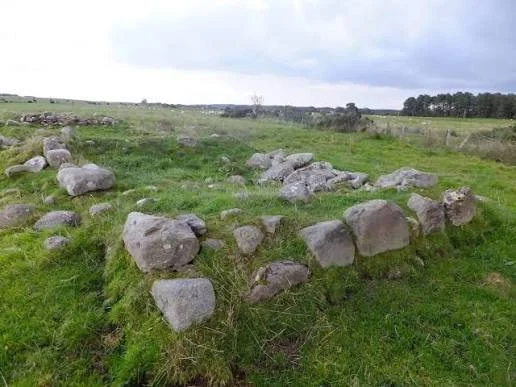
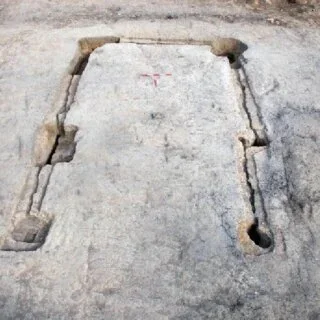
A communal bakery may contain one or more substantial ovens or hearths.
Researchers examine their dimensions, construction materials, heat-altered surfaces, and relationship with nearby work areas.
Large installations may include prepared floors, fuel-storage spaces, ash deposits, and areas for handling dough.
Repeated use can create thick layers of ash, charcoal, burnt soil, and discarded cooking equipment.
However, a large oven is not automatically a community bakery. It may have served a wealthy household, a specialized workshop, or another institution.
The interpretation depends on the size of the installation, its location, and evidence for repeated production.
Bread Production Technology
Ancient bread-making techniques varied considerably.
Some communities cooked flatbreads on heated stones or simple hearth surfaces.
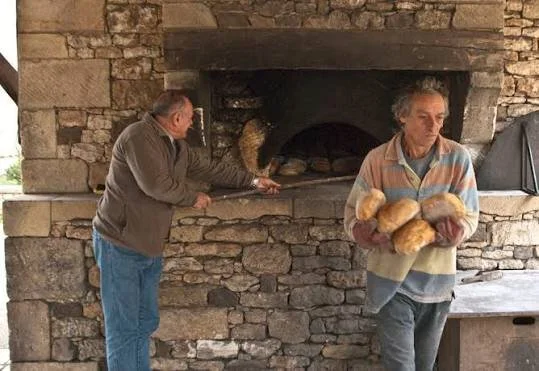
Others used enclosed ovens that retained heat and allowed more controlled baking.
Grain could be ground using hand-operated querns or larger milling installations.
The type of grain also mattered. Wheat, barley, and other cereals had different processing and cooking characteristics.
Archaeologists study charred bread remains, cereal grains, grinding stones, and oven structures to reconstruct ancient production methods.
Food Preparation and Labor Organization
Communal baking required coordination.
Someone had to obtain fuel, prepare grain, grind flour, mix dough, maintain the fire, and distribute the finished food.
These tasks could be divided among households or carried out by designated specialists.
A shared oven might operate according to an agreed schedule.
Families could bring prepared dough and take turns using the installation.
In larger settlements, baking could become a specialized occupation rather than a purely household responsibility.
Social Interaction Around Hearths
Communal hearths were not simply technical installations.
They could become gathering places where people exchanged information, maintained relationships, and coordinated daily activities.
Food preparation often involves cooperation.
People may share equipment, fuel, ingredients, and labor.
A communal bakery could therefore strengthen neighborhood relationships and create a sense of collective responsibility.
The social importance of these spaces may have extended beyond the food they produced.
Food Distribution and Economic Organization
A community bakery could support different forms of food distribution.
Bread might be prepared for household consumption, public gatherings, workers, religious ceremonies, or other collective activities.
In some settings, organized baking could indicate the existence of institutions responsible for supplying food.
Researchers may investigate whether production was connected with storage facilities, administrative buildings, or public spaces.
However, the presence of a communal oven does not automatically prove centralized control.
It could represent cooperation among independent households.
Identifying Production Scale
The scale of baking can be investigated through the size and number of ovens, fuel consumption, grain-processing equipment, and the volume of archaeological food remains.
Repeated use may leave substantial deposits of ash and burnt sediment.
Cereal remains can sometimes reveal which grains were processed.
Residue analysis may identify fats or other substances associated with food preparation.
Comparing household ovens with larger shared installations can help researchers estimate differences in production capacity.
Health and Environmental Considerations
Communal baking required large quantities of fuel.
Wood, charcoal, agricultural waste, or other combustible materials could be used depending on local availability.
Repeated fuel collection may have affected surrounding vegetation.
Smoke and heat also influenced the design and location of baking facilities.
Some installations may have been positioned away from residential rooms to reduce smoke exposure and fire risks.
Conclusion
Early community bakeries reveal how food production could become an organized social activity beyond the boundaries of individual households.
Communal hearths brought together labor, technology, fuel, and ingredients while creating opportunities for cooperation and exchange.
Their archaeological remains can help researchers understand the development of shared infrastructure and the social relationships that supported settled life.
A bakery was not simply a place where bread was made. It could also be a central space where communities organized their daily routines and maintained collective identities.