Introduction
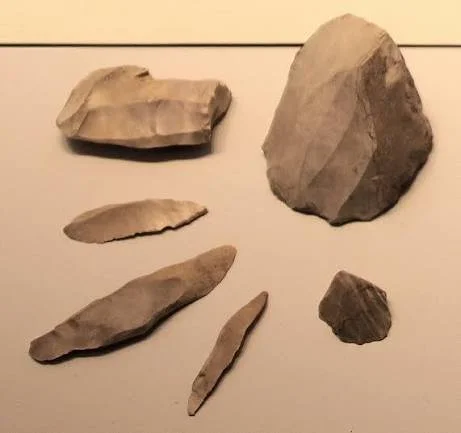
Stone-tool technology is often associated with large hand axes, blades, scrapers, and other objects that are easily recognizable in archaeological collections. However, prehistoric communities also produced very small stone tools and flakes using specialized techniques.
Microcore technology involves the production of small flakes or bladelets from carefully prepared stone cores. These tiny pieces could be used directly or modified into specialized tools suited to particular activities.
Although small artifacts can be overlooked during excavation, they provide important evidence of technological planning, resource efficiency, and changes in human behavior.
This article examines microcore production, the functions of tiny flakes, archaeological identification, and the significance of miniature stone-tool technologies.
1. What Is a Microcore?
A core is a piece of stone from which flakes or blades are deliberately removed. A microcore is a relatively small core used to produce correspondingly small stone pieces.
The exact size considered a microcore varies according to archaeological tradition and research methodology. It is therefore important not to treat every small stone fragment as evidence of microcore technology.
The identification depends on the presence of deliberate flake-removal patterns, prepared striking surfaces, and other technological characteristics.
Microcores demonstrate that small tools were not necessarily accidental by-products. They could result from deliberate production strategies.
2. Preparing the Core
Producing small flakes requires control over the shape and structure of the core.
Knappers may prepare striking platforms and modify the core's surface to guide the direction of fracture. The objective is to remove flakes with predictable dimensions and useful edges.
Depending on the technological tradition, a core may be shaped to produce repeated bladelets, narrow flakes, or other standardized pieces.
The process requires an understanding of stone properties, fracture mechanics, and the relationship between striking force and flake formation.
3. Raw Materials and Resource Selection
Microcore technologies could use several types of knappable stone, including flint, chert, obsidian, and other fine-grained materials.
The choice of raw material depended on availability, quality, transport networks, and the intended use of the finished tools.
Obsidian, for example, can produce extremely sharp edges but may be geographically restricted to volcanic sources. Flint and chert were more widely available in many regions, although their quality varied.
Archaeologists use geological sourcing and microscopic analysis to investigate where stone materials originated and how they moved between communities.
4. Tiny Flakes as Specialized Tools
Small flakes can perform a variety of tasks. They may be used for cutting, scraping, engraving, piercing, or working organic materials.
Some pieces were retouched to create particular edge shapes. Others may have been inserted into wooden or bone handles to form composite tools.
The use of small stone inserts could allow communities to create lightweight equipment that was repairable and adaptable.
However, not every microflake represents a finished tool. Some are manufacturing waste, and their function must be established through technological analysis and use-wear evidence.
5. Composite Tool Construction
One important advantage of small stone pieces is their suitability for composite tools.
Several tiny stone inserts could be placed into a prepared groove in a wooden or bone handle. The resulting implement might have a cutting edge made from multiple pieces.
If one insert became damaged, it could potentially be replaced without discarding the entire tool.
Composite technology required planning and coordination between the production of stone components and the preparation of handles or binding materials.
Because organic components often decay, archaeologists may identify composite tools primarily through the surviving stone inserts and traces of adhesives or hafting materials.
6. Microscopic Evidence of Tool Use
Microwear analysis can help researchers investigate how tiny flakes were used.
Under magnification, stone surfaces may preserve microscopic polish, striations, edge rounding, and other traces associated with contact against different materials.
Residue analysis can sometimes identify substances such as plant fibers, animal materials, or adhesives.
These methods can help distinguish tools used for cutting meat, processing plants, scraping hides, or working other materials.
However, post-depositional damage and contamination can create misleading traces, so multiple lines of evidence are necessary.
7. Why Tiny Artifacts Require Specialized Excavation
Small flakes are easily missed during conventional excavation, particularly when deposits are screened using large mesh sizes.
Archaeologists may use fine-mesh sieving and flotation methods where appropriate to recover small artifacts and associated organic remains.
Careful recording of artifact locations can also reveal whether microcores and tiny flakes were produced in particular activity areas.
The spatial distribution of these materials may help identify workshops, domestic workspaces, hunting equipment production zones, or temporary camps.
8. Microcore Technology and Human Adaptation
The production of miniature stone tools may reflect changing economic and environmental conditions.
Small standardized components could reduce raw-material waste, make tools easier to transport, and allow specialized equipment to be assembled from locally available materials.
In some contexts, microblade production is associated with mobile communities that needed lightweight and maintainable toolkits. In others, it formed part of more settled technological traditions.
The significance of microcore technology therefore depends on the archaeological period and region rather than a single universal explanation.
9. Dating and Interpreting Microcore Assemblages
Microcore technology occurred in different regions and periods, and similar techniques could develop independently.
Archaeologists date microcore assemblages through their stratigraphic position, associated artifacts, radiocarbon-dated organic materials, and other chronological evidence.
Typological comparisons can help identify technological traditions, but similarities in shape do not automatically establish direct cultural contact.
Researchers also examine production sequences, known as chaîne opératoire, to reconstruct how raw stone was selected, prepared, reduced, used, and discarded.
This approach provides a more complete understanding of technology than studying finished tools alone.
Conclusion
Microcore technology demonstrates that prehistoric stone-tool production involved sophisticated methods of preparing and reducing even very small pieces of stone. Tiny flakes could serve as cutting edges, specialized implements, or components of composite tools.
Although their size makes them difficult to recover and interpret, these artifacts offer valuable evidence of technical skill, resource management, and adaptation.
By combining fine-scale excavation, technological analysis, microwear studies, and raw-material sourcing, archaeologists can reconstruct the specialized toolkits that supported everyday activities in ancient communities.