Introduction
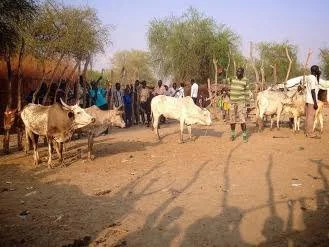
Pastoral settlements were organized around the management of domesticated animals. Sheep, goats, cattle, and other livestock required grazing areas, water sources, shelters, and spaces for handling and protection.
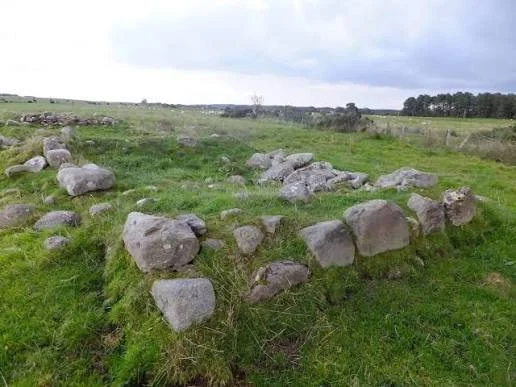
Animal pens were essential parts of these settlements, but their remains are not always easy to identify. Many were constructed from perishable materials such as branches, timber, reeds, and packed earth.
Even when the physical structures disappear, repeated animal occupation can leave distinct layers in the ground.
Micro-stratigraphy—the study of very small-scale sediment layers and their formation—allows archaeologists to investigate how animal pens were used, cleaned, repaired, and abandoned.
What Is Micro-stratigraphy?
Stratigraphy examines the sequence of deposits formed over time.
Micro-stratigraphy applies this approach to small-scale layers that may not be visible during ordinary excavation.
Thin sediment deposits can reveal repeated activities within a limited space.
In an animal pen, these layers may represent trampling, dung accumulation, bedding, cleaning, burning, and the introduction of fresh soil.
Each activity can produce a different microscopic signature.
Identifying Ancient Animal Pens
Animal pens may leave several kinds of evidence.
These include compacted floors, postholes, fence lines, dung-rich layers, drainage features, and concentrations of animal remains.
A pen may be positioned beside a house, at the edge of a settlement, or within a larger enclosure.
Some pastoral settlements used temporary pens that were moved as animals grazed different areas.
Others maintained more permanent enclosures.
Archaeologists must distinguish pens from courtyards, rubbish areas, workshops, and ordinary outdoor activity spaces.
Dung and Organic Accumulation
Animal dung is one of the most important indicators of pen use.
Repeated accumulation can create dark, organic-rich deposits.
Microscopic examination may reveal plant fibers, pollen, parasite remains, and other biological materials.
Dung can also contain undigested seeds and plant fragments, providing information about animal diets.
Chemical analysis may identify elevated nutrient levels associated with animal waste.
However, the composition of a deposit depends on the species, diet, environmental conditions, and the frequency with which the pen was cleaned.
Trampling and Floor Compaction
Animals moving repeatedly over the same surface compact soil and organic material.
This can create dense layers with distinctive microscopic structures.
Trampling may crush plant remains and redistribute dung and sediment.
The pattern of compaction can sometimes help identify high-traffic areas near entrances, feeding locations, or water points.
Experimental studies with modern animals can help researchers understand how repeated movement affects different soils.
Such experiments provide comparisons rather than exact reconstructions of ancient behavior.
Bedding and Cleaning Practices
Some communities may have placed plant material inside pens to absorb moisture and provide bedding.
Straw, leaves, grasses, and other vegetation could be used.
Over time, bedding would mix with dung and soil, creating layered organic deposits.
Pens might be cleaned periodically, with accumulated waste removed for use as fertilizer or fuel.
These practices could leave alternating layers of dung-rich material and cleaner sediment.
Repeated cleaning may therefore be visible as interruptions in the accumulation sequence.
Reconstructing Animal Diets
Micro-stratigraphic evidence can contribute to the reconstruction of animal feeding practices.
Plant fragments, phytoliths, pollen, and parasite remains may reveal which vegetation animals consumed or encountered.
Isotopic analysis of animal bones and teeth can provide additional information about diet and grazing environments.
The combination of these methods may reveal whether animals relied on local pasture, stored fodder, crop residues, or a mixture of resources.
However, plant remains in a pen can come from bedding or other human activities, not only from animal feeding.
Seasonal Use of Pens
Some pastoral settlements were occupied throughout the year, while others were used seasonally.
The sequence of deposits in animal pens may help identify periods of intensive occupation.
Changes in dung composition, plant remains, and sediment accumulation can indicate shifts in animal populations or feeding practices.
A pen with several distinct occupation layers may have been used repeatedly over many years.
Seasonal interpretation requires additional chronological and environmental evidence.
Livestock Management and Social Organization
Animal pens can reveal how pastoral communities organized their herds.
Separate enclosures may have been used for different species, age groups, or purposes.
Young animals might have required protection.
Milking animals could have been kept near households.
Larger communal pens may indicate cooperation between families or the management of shared livestock.
Differences in enclosure size and construction can therefore contribute to understanding household organization and social relationships.
Scientific Methods
Researchers use several techniques to study pen deposits.
Thin-section micromorphology allows intact sediment samples to be examined under a microscope.
Phosphate and other chemical analyses can identify areas affected by organic waste.
Pollen and phytolith studies reveal plant materials.
Parasite analysis can provide evidence of animal presence and sometimes help identify the species involved.
Radiocarbon dating may establish the age of organic deposits, while stratigraphic relationships help determine the sequence of activities.
Conclusion
The micro-stratigraphy of animal pens provides a detailed record of everyday pastoral management.
Small sediment layers can reveal repeated occupation, trampling, bedding, cleaning, feeding, and changes in herd organization.
These deposits are especially valuable because the fences and shelters that once enclosed animals were often made from materials that rarely survive.
By combining microscopic soil analysis with botanical, chemical, and faunal evidence, archaeologists can reconstruct how pastoral communities organized their settlements and maintained the animals on which their livelihoods depended.