Introduction
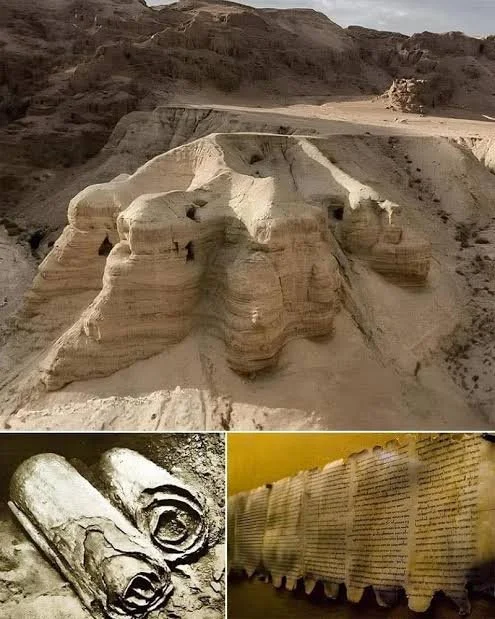
Desert caves can preserve fragile archaeological materials that would otherwise disappear in more humid environments. Among the potentially significant discoveries are fragments of parchment, an animal-skin writing material used for manuscripts, documents, and religious texts.
In some environments, mineral salts accumulate on cave walls, floors, and archaeological objects. Salt deposits can influence preservation by reducing the availability of moisture under certain conditions. However, salts can also damage organic materials through crystallization, chemical reactions, and repeated changes in humidity.
The relationship between salt crusts and parchment preservation is therefore complex. A salt-covered fragment is not necessarily a perfectly preserved manuscript, and the presence of salt does not prove that the material survived because of it.
This article examines how parchment may survive in desert caves, the possible role of mineral salts, and the scientific methods used to investigate these fragile remains.
1. Understanding Parchment
Parchment is made from prepared animal skin, commonly from sheep, goats, or calves.
The skin is cleaned, soaked, stretched, scraped, and dried under tension. This process produces a durable writing surface with a distinctive fibrous structure.
Unlike paper, which is generally made from plant fibers, parchment is primarily composed of collagen, a structural protein found in animal connective tissue.
Its preservation depends on environmental conditions, manufacturing techniques, burial history, and exposure to microorganisms and chemical agents.
2. Desert Caves as Preservation Environments
Desert caves can provide relatively stable conditions compared with exposed landscapes.
Limited rainfall may reduce the frequency of water exposure, while cave interiors can protect objects from direct sunlight, wind, and rapid surface erosion.
Some caves also contain dry sediment deposits that restrict microbial activity.
However, cave environments are not automatically stable. Seasonal humidity, groundwater movement, condensation, temperature changes, and human disturbance can affect archaeological materials.
The preservation potential of each cave must therefore be evaluated through environmental monitoring and sediment analysis.
3. How Mineral Salt Crusts Form
Salt crusts develop when dissolved minerals accumulate and crystallize as water evaporates.
In desert environments, salts may originate from groundwater, surrounding rock, soil deposits, or wind-blown particles.
Common salts include chlorides, sulfates, and carbonates, although their distribution varies with local geology.
When moisture moves through a cave wall or sediment layer, dissolved minerals may be transported toward exposed surfaces. Evaporation can then leave visible crystalline deposits.
These processes can create coatings on rocks, artifacts, and organic materials.
4. Potential Protective Effects of Salt
Certain salt-rich environments can reduce biological activity by limiting the availability of water.
Microorganisms require suitable moisture conditions to grow, and highly saline environments can create osmotic stress that restricts some forms of microbial activity.
A dry mineral crust may also reduce direct contact between an object and external environmental conditions.
However, these effects are not universal. Different microorganisms tolerate different salinity levels, and salt accumulation can produce damaging chemical and physical changes.
Salt should therefore be understood as a possible influence on preservation rather than a guaranteed protective coating.
5. How Salt Can Damage Parchment
Parchment is particularly sensitive to changes in moisture.
When humidity rises, collagen fibers absorb water and may swell. When conditions become dry, the material can contract.
Repeated cycles can cause distortion, cracking, and weakening.
Salt crystals can also grow within pores and spaces in the material. Crystallization pressure may damage the surface or disrupt the structure of the parchment.
Some salts absorb moisture from the atmosphere, while others undergo changes in hydration as environmental conditions fluctuate.
Consequently, a salt-covered parchment fragment may have survived despite the salt rather than because of it.
6. Identifying Parchment in Archaeological Deposits
Parchment fragments may be difficult to recognize when they are heavily mineralized, fragmented, or discolored.
Researchers examine surface texture, thickness, fiber structure, and microscopic characteristics to distinguish animal skin from paper, leather, plant material, or other organic remains.
Protein analysis may help identify the animal species from which the parchment was produced. Specialized methods such as peptide mass fingerprinting can sometimes identify collagen signatures.
These techniques can provide valuable information even when the fragment is too small or damaged for conventional visual identification.
7. Investigating Salt Composition
Laboratory analysis is essential for understanding the relationship between mineral salts and parchment preservation.
Techniques such as X-ray diffraction can identify crystalline mineral phases. Ion chromatography can measure soluble ions, while scanning electron microscopy can reveal crystal structures and their relationship to the parchment surface.
Researchers may also examine the distribution of salts through the material to determine whether they formed a surface coating or penetrated the object.
Combining mineralogical and organic analysis helps establish whether the salt deposits are ancient, recent, or the result of changing environmental conditions.
8. Dating and Historical Interpretation
The date of a parchment fragment can be investigated through radiocarbon analysis when sufficient material is available and sampling is ethically and scientifically justified.
The writing style, language, script, ink composition, and textual content may provide additional chronological information.
However, the age of the parchment does not necessarily establish when it entered the cave or became covered by salt.
Researchers must also consider the possibility of later reuse, movement, or disturbance of the archaeological deposit.
9. Conservation of Salt-Affected Parchment
Conserving salt-contaminated parchment requires careful environmental control.
Sudden changes in humidity can cause salt crystals to dissolve or recrystallize, potentially worsening damage.
Conservators assess the material before attempting desalination or other treatments. In some cases, removing salts may be more harmful than leaving them in place.
Stable storage conditions, detailed imaging, minimal handling, and controlled conservation procedures are essential.
Digital photography and multispectral imaging may also help reveal faded writing without requiring invasive physical treatment.
Conclusion
Salt crusts in desert caves can provide important evidence about the environmental history of archaeological deposits and the preservation of fragile parchment fragments. Dry conditions and high salinity may restrict certain biological processes, but salt crystallization and humidity changes can also damage collagen-based materials.
Understanding these opposing effects requires detailed mineralogical, chemical, and conservation research. By combining environmental analysis with manuscript studies and scientific dating, archaeologists can better reconstruct how parchment survived in challenging desert environments.