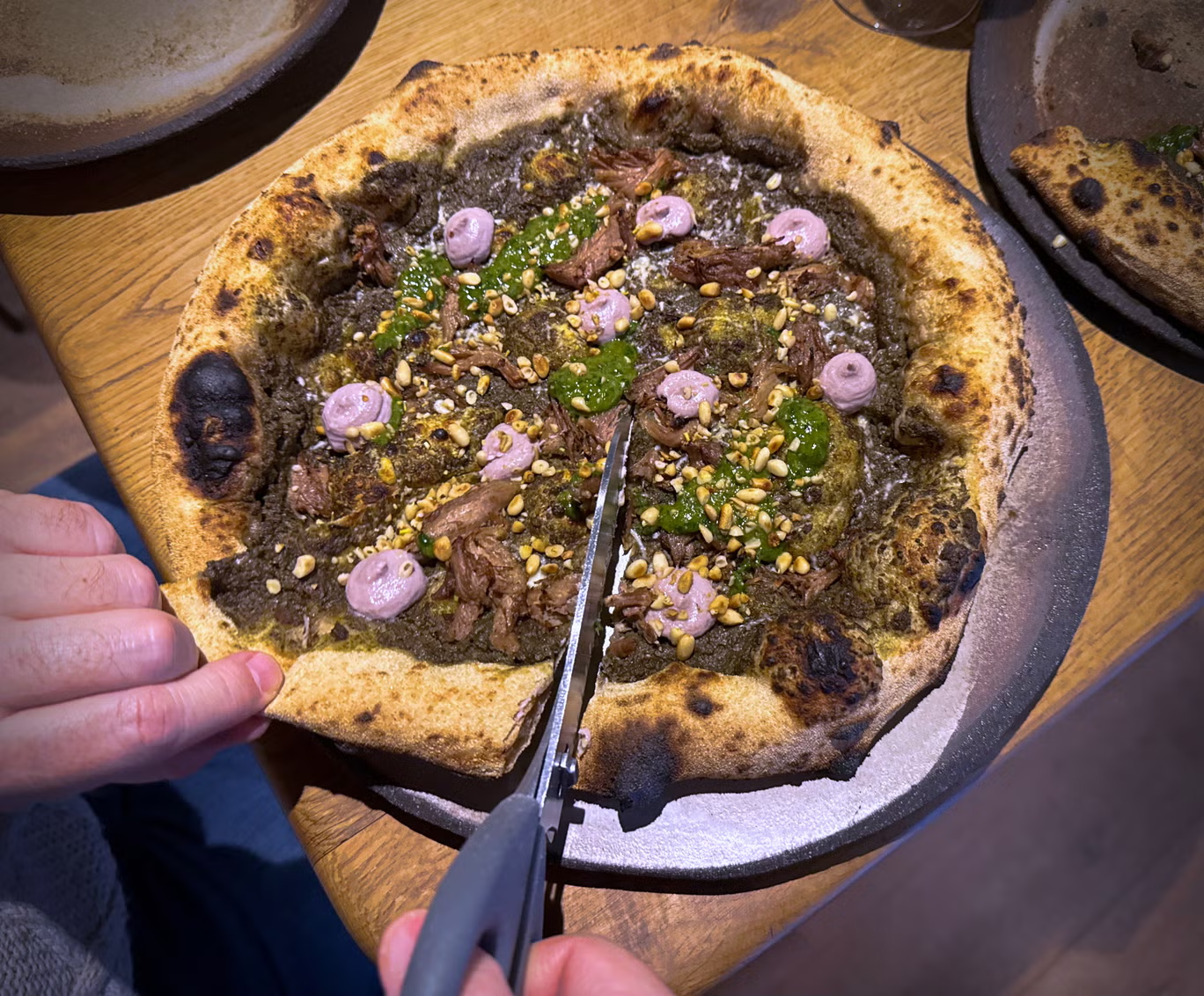
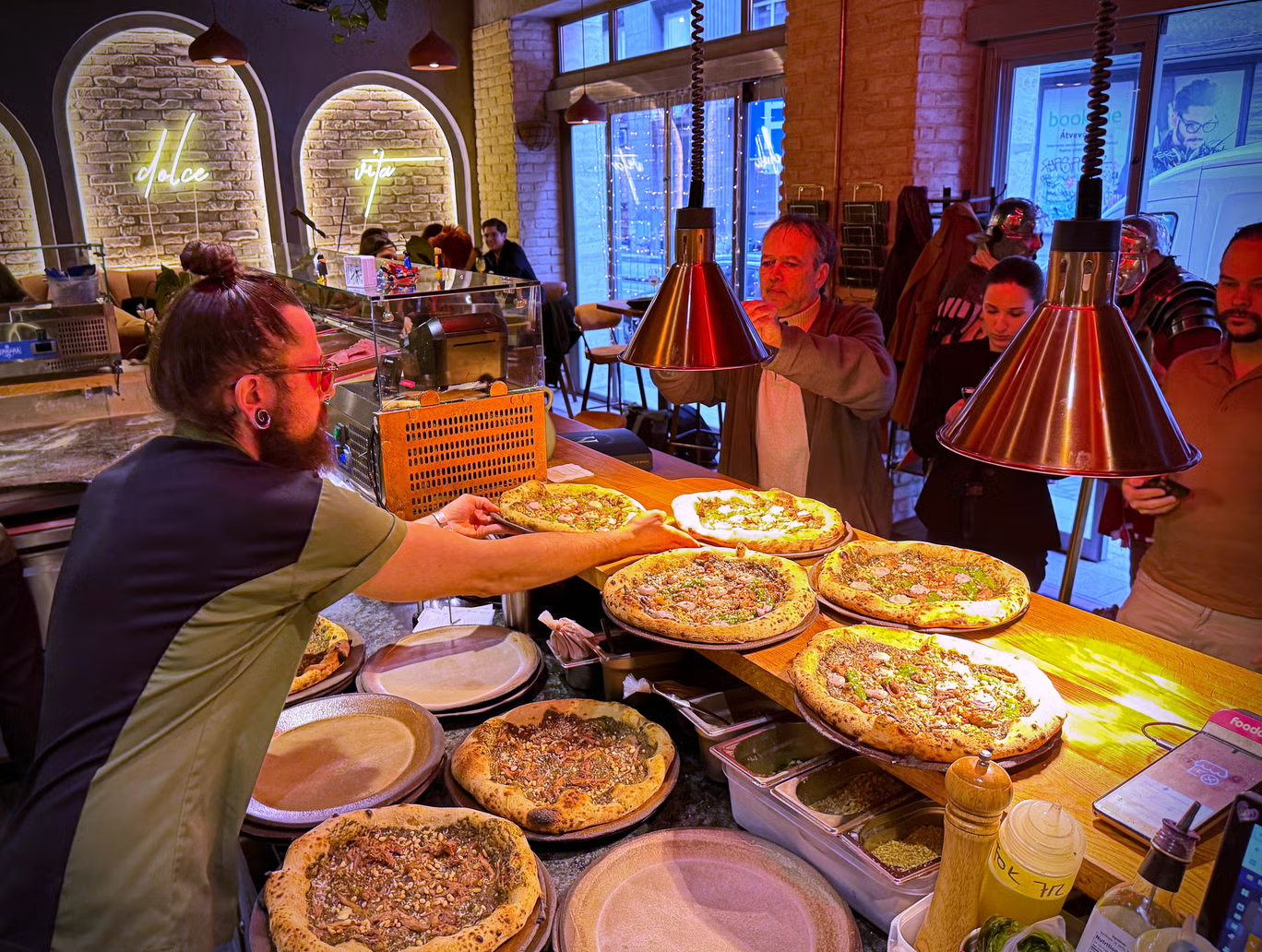
A pizzeria in Budapest is offering diners a taste of history by recreating what a Roman-era “pizza” might have looked like — long before tomatoes, mozzarella, or even the term itself existed in Europe.
At Neverland Pizzeria, founder Josep Zara and his team developed a limited-edition flatbread using only ingredients known in ancient Rome. The idea began with a simple question: what would something like pizza have tasted like two thousand years ago?
While Romans didn’t eat pizza in the modern sense — tomatoes arrived from the Americas centuries later, and mozzarella only appeared much later in Italy — they did consume baked flatbreads topped with herbs, cheeses, and sauces. These were commonly sold in Roman snack bars known as thermopolia and are considered early ancestors of pizza.
Zara’s inspiration grew after a 2023 discovery in Pompeii, where archaeologists uncovered a fresco showing a focaccia-like flatbread topped with what appeared to be pomegranate seeds, dates, spices, and a pesto-style spread. Curious about its flavor, Zara began researching Roman culinary traditions, consulting a historian and studying the ancient cookbook De re coquinaria, believed to date to around the 5th century.
After compiling a historically accurate ingredient list, he handed it to head chef László Bárdossy. The restrictions led to months of experimentation. Since modern pizza dough is mostly water — and Roman infrastructure lacked running water systems — the team had to rethink the process. Their solution was to use fermented spinach juice to help the dough rise. They also relied on ancient grains like einkorn and spelt, producing a denser base than typical modern pizza.
The finished creation includes toppings associated with Roman elite cuisine: epityrum (olive paste), garum (a fermented fish sauce common in Roman cooking), confit duck leg, toasted pine nuts, ricotta, and a grape reduction. Bárdossy described it as a modern interpretation designed to be approachable, though he acknowledged it appeals mainly to curious diners rather than everyday pizza lovers.
For Zara, the project reflects the restaurant’s balance between creativity and respect for tradition. They enjoy pushing boundaries — just not too far. One modern topping, he insists, will never appear on their menu: pineapple.