• MAIN PAGE
  • LATEST NEWS
    • Lost Cities
    • Archaeology's Greatest Finds
    • Underwater Discoveries
    • Greatest Inventions
    • Studies
    • Blog
  • PHILOSOPHY
  • HISTORY
  • RELIGIONS
    • Africa
    • Anatolia
    • Arabian Peninsula
    • Balkan Region
    • China - East Asia
    • Europe
    • Eurasian Steppe
    • Levant
    • Mesopotamia
    • Oceania - SE Asia
    • Pre-Columbian Civilizations of America
    • Iranian Plateau - Central Asia
    • Indus Valley - South Asia
    • Japan
    • The Archaeologist Editor Group
    • Scientific Studies
    • Aegean Prehistory
    • Historical Period
    • Byzantine Middle Ages
    • Predynastic Period
    • Dynastic Period
    • Greco-Roman Egypt
  • Rome
  • PALEONTOLOGY
  • About us
Menu

The Archaeologist

  • MAIN PAGE
  • LATEST NEWS
  • DISCOVERIES
    • Lost Cities
    • Archaeology's Greatest Finds
    • Underwater Discoveries
    • Greatest Inventions
    • Studies
    • Blog
  • PHILOSOPHY
  • HISTORY
  • RELIGIONS
  • World Civilizations
    • Africa
    • Anatolia
    • Arabian Peninsula
    • Balkan Region
    • China - East Asia
    • Europe
    • Eurasian Steppe
    • Levant
    • Mesopotamia
    • Oceania - SE Asia
    • Pre-Columbian Civilizations of America
    • Iranian Plateau - Central Asia
    • Indus Valley - South Asia
    • Japan
    • The Archaeologist Editor Group
    • Scientific Studies
  • GREECE
    • Aegean Prehistory
    • Historical Period
    • Byzantine Middle Ages
  • Egypt
    • Predynastic Period
    • Dynastic Period
    • Greco-Roman Egypt
  • Rome
  • PALEONTOLOGY
  • About us

The Princess of Bagicz: Tree Rings Resolve the Age of a Rare Roman Iron Age Wooden Coffin

February 21, 2026

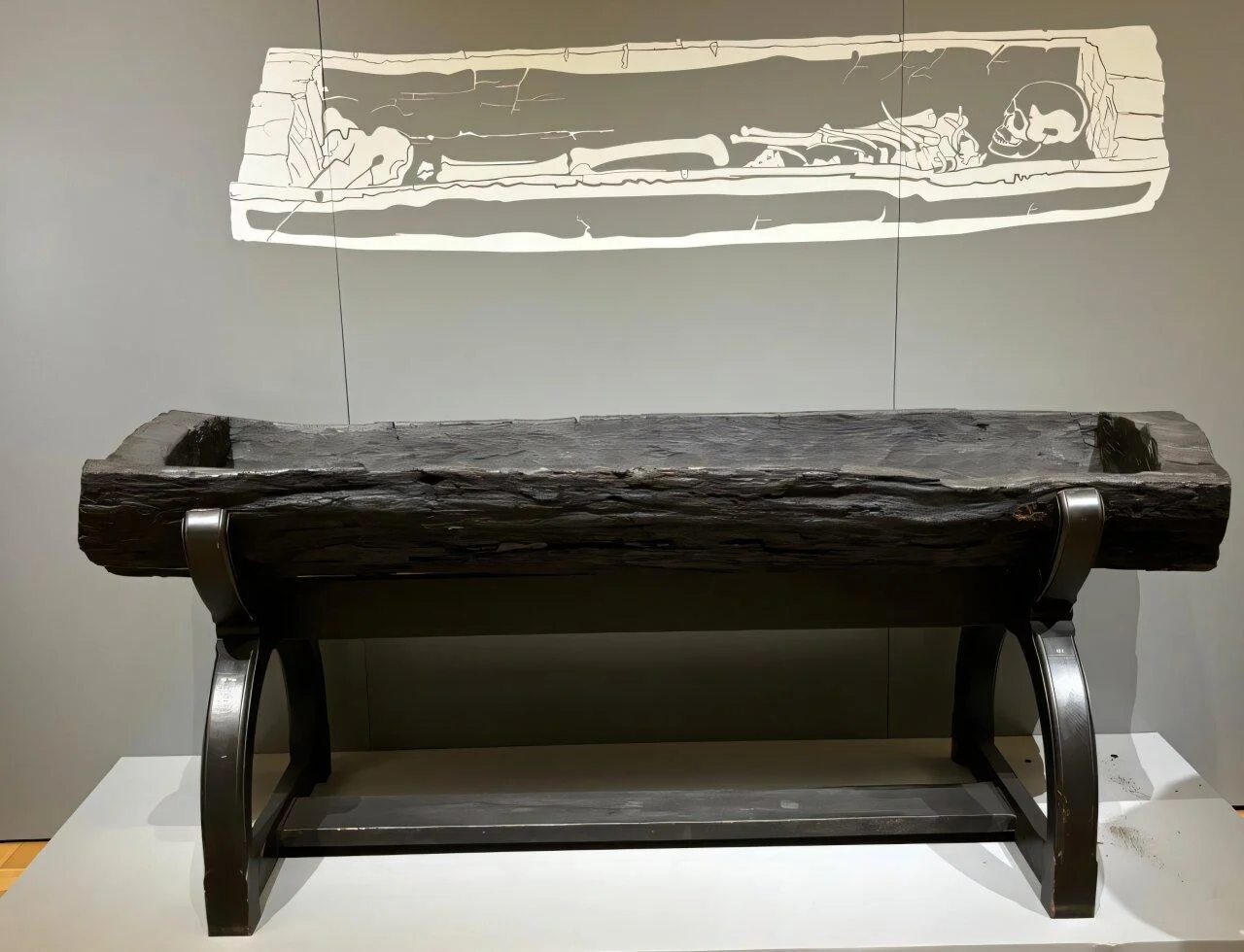
The “Princess of Bagicz” burial, one of Europe’s rarest Roman Iron Age discoveries, has finally been firmly dated thanks to a multidisciplinary study led by Dr. Marta Chmiel-Chrzanowska and published in Archaeometry. The coffin—the only well-preserved wooden log burial from the period found in Poland—was originally exposed in 1898 when coastal erosion along the Baltic cliff near Bagicz revealed the remains.

The coffin, made of oak and linked to the Wielbark culture, contained the remains of a young woman accompanied by bronze and glass ornaments, leading early researchers to nickname her the “Princess of Bagicz.” Subsequent excavations, however, revealed a nearby cemetery, suggesting she was part of a larger burial ground rather than an exceptional social elite.

Dating the burial had long been contentious. Typological analysis of grave goods in the 1980s indicated a mid-2nd century CE burial (c. 110–160 CE), whereas a 2018 radiocarbon test on one of her teeth suggested a much earlier date (113 BCE–65 CE).

Dendrochronology, applied in 2024, resolved the dispute. Analysis of the oak’s growth rings showed the tree was felled around 120 CE, confirming the typological assessment and revealing that the radiocarbon date was misleading. Researchers identified the reason: the woman’s diet included significant freshwater fish, which can incorporate “old” carbon from rivers and lakes, producing a reservoir effect that makes radiocarbon dates appear artificially old.

Strontium isotope analysis added another layer, showing signatures similar to parts of Scandinavia; however, local glacial geology mimicked these values, leaving her origin uncertain.

This case highlights the importance of integrating multiple methods—artifact typology, radiocarbon dating, stable isotopes, strontium analysis, and dendrochronology—to build reliable historical chronologies. While she may no longer be considered a princess, the Princess of Bagicz remains a key example of how scientific advances can resolve century-long archaeological puzzles and clarify the limitations of individual dating techniques.
Tomb more than 1000 years old found in Panama →
Featured
image_2026-02-21_225457188.png
Feb 21, 2026
The Princess of Bagicz: Tree Rings Resolve the Age of a Rare Roman Iron Age Wooden Coffin
Feb 21, 2026
Read More →
Feb 21, 2026
image_2026-02-21_225058691.png
Feb 21, 2026
Tomb more than 1000 years old found in Panama
Feb 21, 2026
Read More →
Feb 21, 2026
image_2026-02-21_225024526.png
Feb 21, 2026
Jesus Wasn’t a Messiah, He Was a Naughty Mushroom Trip. According to This Theory, Anyway.
Feb 21, 2026
Read More →
Feb 21, 2026
image_2026-02-21_223943764.png
Feb 21, 2026
Eatery recreates ancient Roman pizza – without tomatoes or mozzarella
Feb 21, 2026
Read More →
Feb 21, 2026
image_2026-02-21_223536117.png
Feb 21, 2026
Archaeologists discover remains of '10-foot-tall people' in cave
Feb 21, 2026
Read More →
Feb 21, 2026
image_2026-02-21_223410851.png
Feb 21, 2026
Archaeology Students Dug Up a Mass Viking Grave—With a Literal Giant Inside
Feb 21, 2026
Read More →
Feb 21, 2026
read more

Powered by The archaeologist