• MAIN PAGE
  • LATEST NEWS
    • Lost Cities
    • Archaeology's Greatest Finds
    • Underwater Discoveries
    • Greatest Inventions
    • Studies
    • Blog
  • PHILOSOPHY
  • HISTORY
  • RELIGIONS
    • Africa
    • Anatolia
    • Arabian Peninsula
    • Balkan Region
    • China - East Asia
    • Europe
    • Eurasian Steppe
    • Levant
    • Mesopotamia
    • Oceania - SE Asia
    • Pre-Columbian Civilizations of America
    • Iranian Plateau - Central Asia
    • Indus Valley - South Asia
    • Japan
    • The Archaeologist Editor Group
    • Scientific Studies
    • Aegean Prehistory
    • Historical Period
    • Byzantine Middle Ages
    • Predynastic Period
    • Dynastic Period
    • Greco-Roman Egypt
  • Rome
  • PALEONTOLOGY
  • About us
Menu

The Archaeologist

  • MAIN PAGE
  • LATEST NEWS
  • DISCOVERIES
    • Lost Cities
    • Archaeology's Greatest Finds
    • Underwater Discoveries
    • Greatest Inventions
    • Studies
    • Blog
  • PHILOSOPHY
  • HISTORY
  • RELIGIONS
  • World Civilizations
    • Africa
    • Anatolia
    • Arabian Peninsula
    • Balkan Region
    • China - East Asia
    • Europe
    • Eurasian Steppe
    • Levant
    • Mesopotamia
    • Oceania - SE Asia
    • Pre-Columbian Civilizations of America
    • Iranian Plateau - Central Asia
    • Indus Valley - South Asia
    • Japan
    • The Archaeologist Editor Group
    • Scientific Studies
  • GREECE
    • Aegean Prehistory
    • Historical Period
    • Byzantine Middle Ages
  • Egypt
    • Predynastic Period
    • Dynastic Period
    • Greco-Roman Egypt
  • Rome
  • PALEONTOLOGY
  • About us

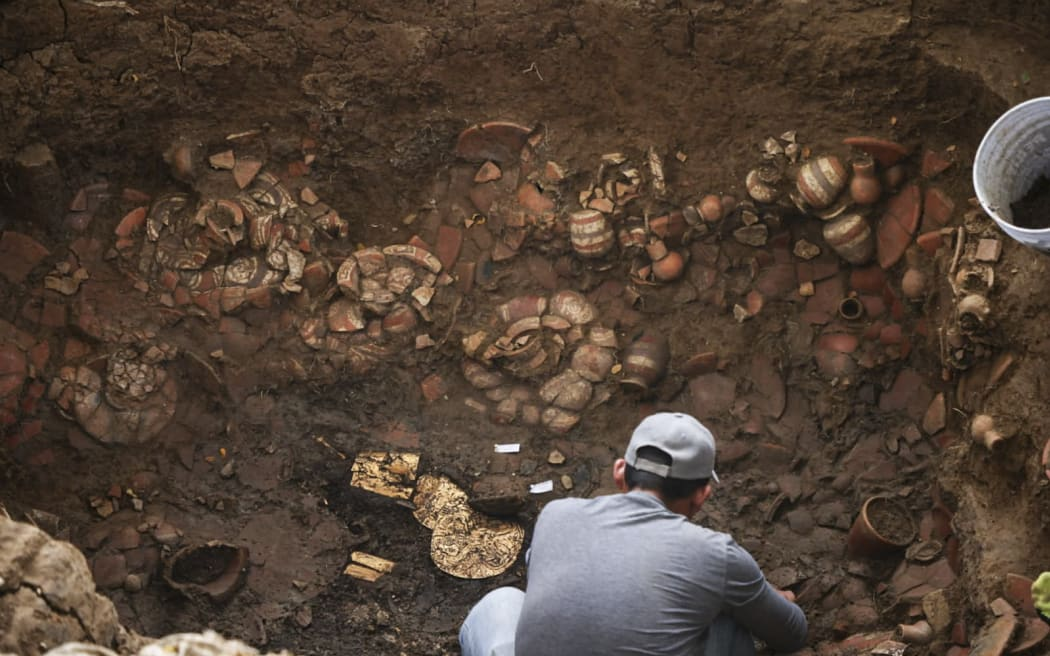
The tomb contained the remains of a high-ranking lord of the Cocle culture.

Tomb more than 1000 years old found in Panama

February 21, 2026

Archaeologists have uncovered a tomb in Panama dating back over a thousand years, containing human remains accompanied by gold and ceramic artifacts, according to lead researcher Julia Mayo. The find was made at the El Cano archaeological site, located about 200 kilometers southwest of Panama City.

The region has been the focus of archaeological excavations for two decades, revealing remains of pre-Hispanic cultures. In this particular tomb, the skeletal remains were surrounded by gold objects and pottery decorated with traditional motifs, suggesting the individuals were of high status. Mayo explained that the person interred with the most gold “was the one with the highest social status in the group,” and dated the burial to between 800 and 1000 AD.

This discovery adds to the understanding of social hierarchy and burial practices among Panama’s pre-Hispanic societies.
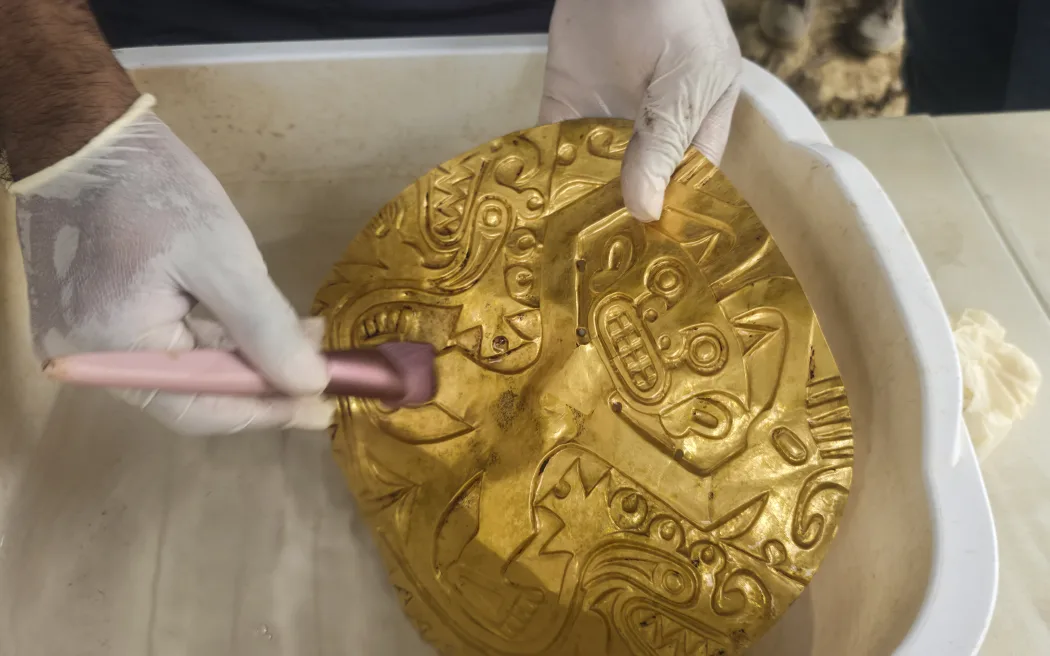
Panama's Ministry of Culture said the discovery was "of great importance for Panamanian archaeology

The individual of highest status at the El Cano archaeological site was buried with two bracelets, two earrings, and pectoral jewellery adorned with bats and crocodiles, highlighting the symbolic or cultural significance of these animals. The site is associated with the societies that inhabited Panama’s central provinces between the 8th and 11th centuries.

“This is where they buried their dead for 200 years,” Mayo noted, emphasizing the site’s long-term use as a burial ground. In addition to the tomb discovered most recently, archaeologists have previously uncovered nine similar tombs, indicating a pattern of high-status interments and a well-established funerary tradition at El Cano.
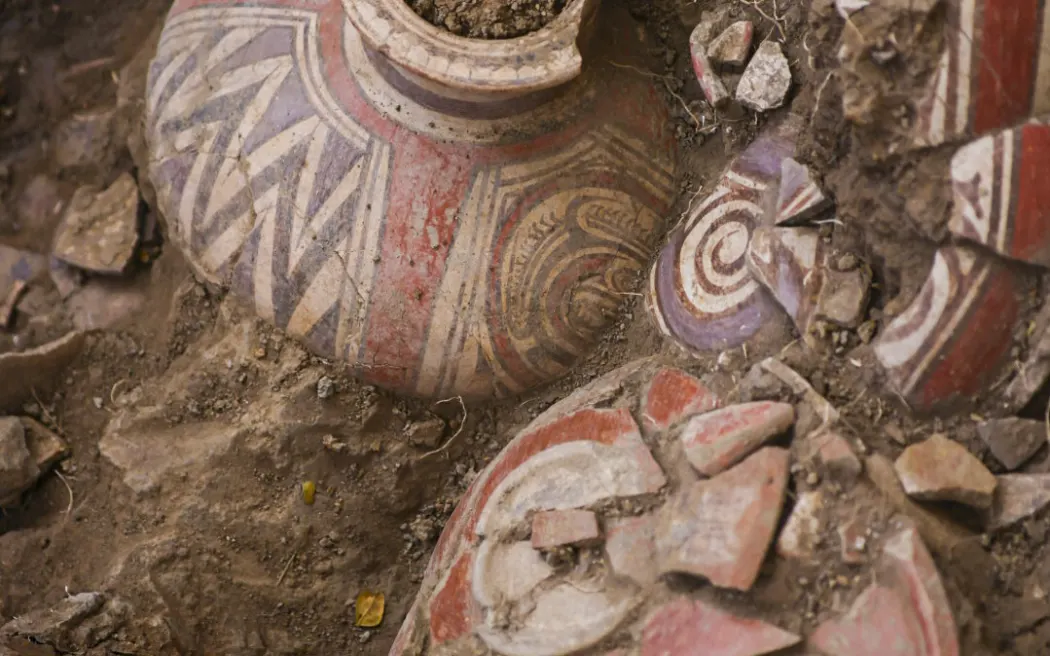
The skeletal remains were found surrounded by gold objects and pottery decorated with traditional motifs

Panama’s Ministry of Culture described the discovery at the El Cano archaeological site as “of great importance for Panamanian archaeology and the study of pre-Hispanic societies of the Central American isthmus,” highlighting its significance in understanding the region that connects North and South America.

Experts note that the excavations reveal how these societies viewed death—not as a final end, but as a transition to another phase of life in which social status continued to hold significance. The inclusion of elaborate gold and ceramic artifacts in the tombs underscores the continuing recognition of hierarchy and prestige in their funerary practices.
← The Princess of Bagicz: Tree Rings Resolve the Age of a Rare Roman Iron Age Wooden CoffinJesus Wasn’t a Messiah, He Was a Naughty Mushroom Trip. According to This Theory, Anyway. →
Featured
image_2026-02-21_225457188.png
Feb 21, 2026
The Princess of Bagicz: Tree Rings Resolve the Age of a Rare Roman Iron Age Wooden Coffin
Feb 21, 2026
Read More →
Feb 21, 2026
image_2026-02-21_225058691.png
Feb 21, 2026
Tomb more than 1000 years old found in Panama
Feb 21, 2026
Read More →
Feb 21, 2026
image_2026-02-21_225024526.png
Feb 21, 2026
Jesus Wasn’t a Messiah, He Was a Naughty Mushroom Trip. According to This Theory, Anyway.
Feb 21, 2026
Read More →
Feb 21, 2026
image_2026-02-21_223943764.png
Feb 21, 2026
Eatery recreates ancient Roman pizza – without tomatoes or mozzarella
Feb 21, 2026
Read More →
Feb 21, 2026
image_2026-02-21_223536117.png
Feb 21, 2026
Archaeologists discover remains of '10-foot-tall people' in cave
Feb 21, 2026
Read More →
Feb 21, 2026
image_2026-02-21_223410851.png
Feb 21, 2026
Archaeology Students Dug Up a Mass Viking Grave—With a Literal Giant Inside
Feb 21, 2026
Read More →
Feb 21, 2026
read more

Powered by The archaeologist