A remarkable series of history books covering every county in Ireland from many different perspectives has concluded with the final volume on Antrim, co-edited by a Fermanagh academic.
Paul Clements has been reflecting on highlights from the Fermanagh and Tyrone volumes, and of the scope and vision of a huge literary undertaking.
The comprehensive project to write about every county in Ireland through an ambitious venture entitled ‘History and Society’ covers interdisciplinary essays on a multitude of topics.
The series began in 1985 when the Co. Tipperary volume was published, and eventually embraced all 32 counties, culminating in Co. Antrim.
The books brought together the knowledge, skills and experience of folklorists, archaeologists, historians, medievalists, environmentalists, toponymists and numerous other scholars.
The content has produced a wide interest to everyone and is a reminder of the centuries of richness in each county’s past.
The Antrim book, co-edited by Dr. Eileen Murphy, originally from Derrygonnelly, and her husband Dr. Colm Donnelly, came out in the autumn.
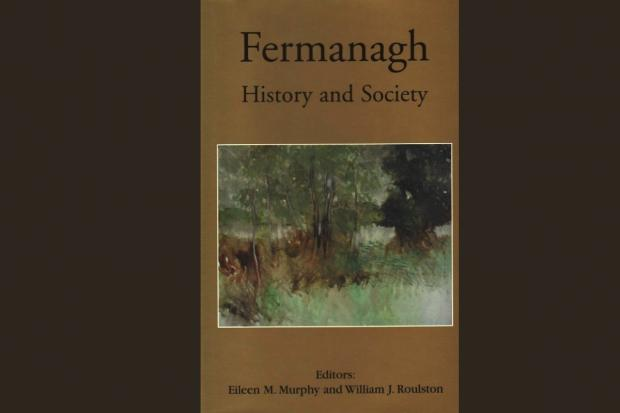
Cover of the Fermanagh volume, published in 2004.
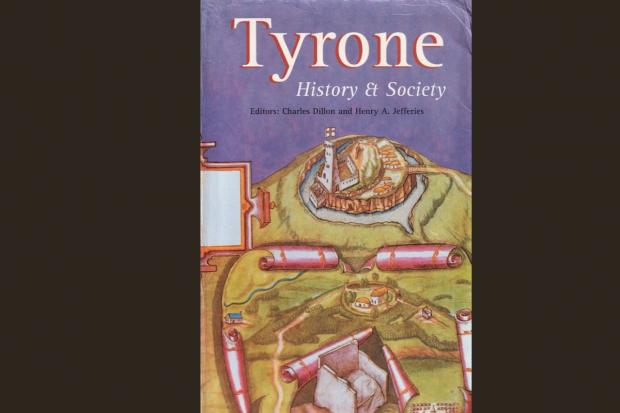
The Co. Tyrone book cover, published in 2000
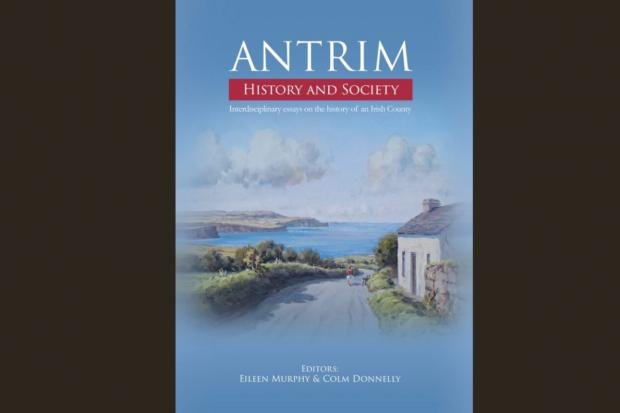
The cover of 'Antrim', the final book in the History And Society Irish County series.
A wide-ranging collection of history books examining every county in Ireland from multiple angles has reached its conclusion with the publication of the final volume on Antrim, co-edited by a Fermanagh-based academic.
Paul Clements has been looking back on key moments from the Fermanagh and Tyrone editions, as well as the ambition and scale of this major literary project.
The extensive initiative, titled History and Society, set out to document each Irish county through interdisciplinary essays covering a broad spectrum of subjects.
The series began in 1985 with the release of the County Tipperary volume and ultimately expanded to include all 32 counties, ending with County Antrim.
Contributors to the books included folklorists, archaeologists, historians, medieval scholars, environmental specialists, toponymists and many other experts, pooling their knowledge and experience.
The resulting volumes have attracted broad interest and highlight the deep historical richness present in every county.
The Antrim edition, co-edited by Dr. Eileen Murphy—originally from Derrygonnelly—and her husband Dr. Colm Donnelly, was published in the autumn.
Dr. Murphy, who attended Killyhommon Primary School in Boho and Mount Lourdes Grammar School in Enniskillen, has worked in Queen’s University Belfast’s Department of Archaeology and Palaeoecology since 2000.
She serves as Professor of Archaeology and co-director of the Centre for Community Archaeology, with research specialisms in osteoarchaeology, funerary archaeology and childhood archaeology, particularly children’s burial grounds.
She previously co-edited the Fermanagh volume with Dr. William Roulston, released in 2004.
Discussing the editorial process, Dr. Murphy noted that the Fermanagh book had a more rural character compared to Antrim, which includes Belfast and several large towns.
She explained that while each book captures a county’s distinct character, they follow a consistent structure encompassing geological, archaeological, historical, cultural, socio-political and religious themes.
Fermanagh’s rural nature was reflected in Margaret Gallagher’s afterword, Reflections from the Bog Bank, while Antrim required contextual introductions to its towns, especially Belfast.
Balancing the diversity of a large county with the identity of a major city posed a challenge for the Antrim volume.
The editors also made a point of addressing areas often overlooked in academic work, dedicating space to women’s history, including chapters on female criminality, women Unionists and, for the first time in the series, a study of camogie.
Each volume, she said, serves as a valuable resource for anyone interested in county heritage, regardless of cultural background or identity.
The Fermanagh book, like others in the series, features contributions from at least 30 authors across 26 chapters.
It was the sixteenth volume overall and the sixth focused on an Ulster county.
Topics explored include early settlement, the medieval era, the Erne estate and archive (1610–1950), the Land War, death rituals, customs and beliefs, emigration, and evolving agricultural practices.
One chapter by Dr. Roulston, titled Castle, Churches and Country House: The Lost Architecture of County Fermanagh in an Age of Improvement, c.1700–c.1750, examines gentry homes, domestic architecture, demesnes, estate management and the Church of Ireland, shedding light on the county’s early 18th-century landscape.
Beyond his work on the Fermanagh volume, Dr. Roulston also contributed to the Tyrone, Monaghan and Antrim books.
A research director with the Ulster Historical Foundation and author of several publications including Fermanagh: A Story in 100 Objects, Dr. Roulston grew up on a farm near Bready, close to Strabane.
He reflected that his family’s long connection to the land—dating back to 1830—sparked his enduring interest in the relationship between people and place.
He described the History and Society series as an extraordinary accomplishment that has reshaped understanding of Ireland’s past on many levels.
The Fermanagh volume includes a chapter on the Great Famine of the 1840s, referencing a feature from The Impartial Reporter titled Dietetic Maxims, which offered advice on food preparation and eating habits.
It suggested, among other things, that solid food was easier to digest than soups and rich sauces—advice that, as author Margaret Crawford notes, contrasted sharply with the basic diets most locals endured.
Another chapter, Fermanagh From the Air by Noel C. Mitchel (1924–2013), presents an aerial photographic essay blending geography, photography and aviation, reflecting his background as a former RAF pilot.
The essay includes 26 colour images of rivers, lakes, islands and historic structures.
Local historian Jack Johnston contributed chapters to four volumes—Fermanagh, Tyrone, Cavan and Sligo—and frequently consults the series.
His Fermanagh essay, The Towns of Magherastephana Barony, explores the development of post-Plantation towns such as Maguiresbridge, Brookeborough and Lisnaskea.
Writing about Lisnaskea, Johnston noted the town’s strong reputation for drapery businesses, intense competition among traders, and a commercial hierarchy where drapers ranked highest, followed by grocers and then publicans.
The Tyrone volume, published in 2000 as the fourteenth book in the series, was edited by Charles Dillon and Henry A. Jefferies and includes 26 chapters covering themes from prehistory to modern times.
Topics range from prehistoric settlement and the Ulster Plantation to migration, the Irish language and novelist William Carleton, who was born near Augher.
In the foreword, poet John Montague reflected on the complexity of county identity, describing an Irish county as a dense web of associations and histories, rugged yet beautiful.
Johnston’s contribution to the Tyrone volume, Society in the Clogher Valley c.1750–1900, charts population growth and rural life shaped by religion, education and strong ties to the land.
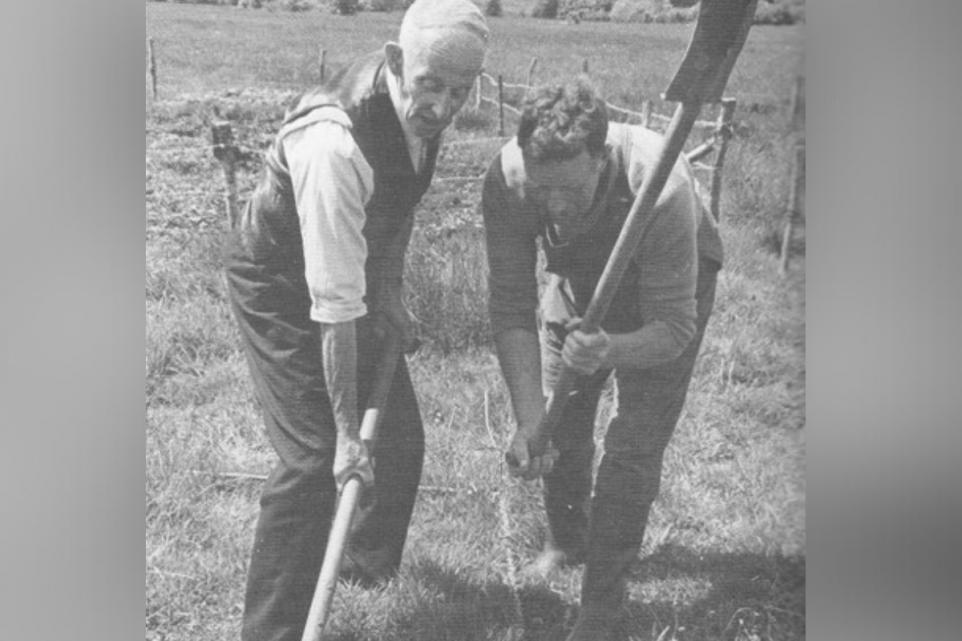
He details everyday life, from schools and sports to hunting, ploughing competitions and widespread drinking, both legal and illicit.
He recounts how poteen was so common in 1822 that it rivalled wildlife in the Ballygawley mountains.
The essay also describes how public curiosity was sparked by novelties such as early bicycles, penny-farthings and the first motor cars.
Reflecting on the overall achievement, Johnston praised general editor Willie Nolan for assembling a diverse mix of local experts and academics.
He described the series as a counterbalance to rigid historical revisionism, offering county-based studies with national significance.
Nolan’s background as a historical geographer influenced the inclusive approach, incorporating geographers, archaeologists and local historians.
Johnston also commended the editors for their flexibility, including allowing his preferred historical terminology and clerical titles.
Together, the series stands as a landmark contribution to Irish historical scholarship.
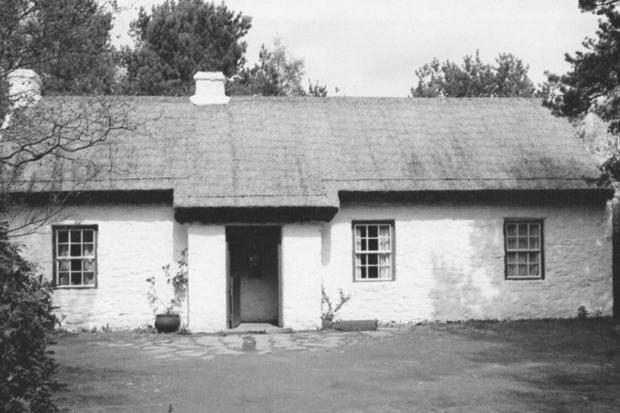
The birthplace near Augher of John Joseph Hughes, the first Roman Catholic Archbishop of New York; taken from the Tyrone book
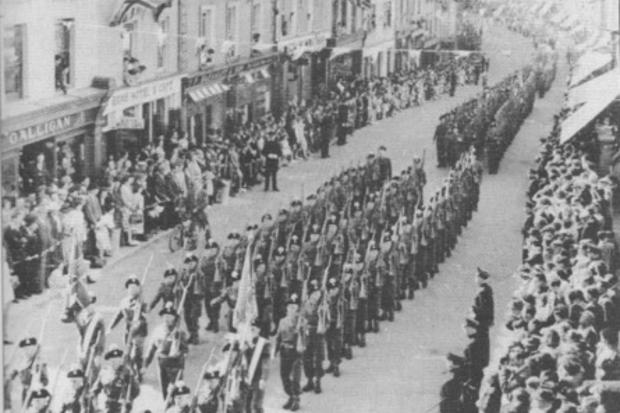
Procession of the Royal Inniskilling Fusiliers in May, 1952, when the Freedom of Enniskillen was given to the regiment.
The figures associated with the series highlight just how vast the project has been.
In a summary of the collection, Dr. Roulston outlined the combined scope of the works: 32 volumes containing 940 chapters and around 26,500 pages, amounting to an estimated 12 million words.
One of the key strengths of this long-running publishing venture is its exploratory approach, introducing perspectives and themes that had rarely been addressed in Irish local history before.
It is also worth recalling Seamus Heaney’s assessment of the series’ enduring significance: “The books will always be valued as a repository of established knowledge and original research, and they will never lose their relevance.”
Through the efforts of the editors and specialist contributors, the project has reached its conclusion, earning recognition as one of the most engaging and ambitious regional history initiatives ever completed in Ireland.
Whether reading straight through or dipping in to explore a particular subject, the books offer a sense of discovery — you never quite know what you will encounter, but it is invariably absorbing and rewarding.
The concluding volume, Antrim: History and Society: Interdisciplinary Essays on the History of an Irish County, is edited by Eileen Murphy and Colm Donnelly and published by Geography Publications.