A Roman settlement was uncovered on the banks of the River Severn during an archaeological dig
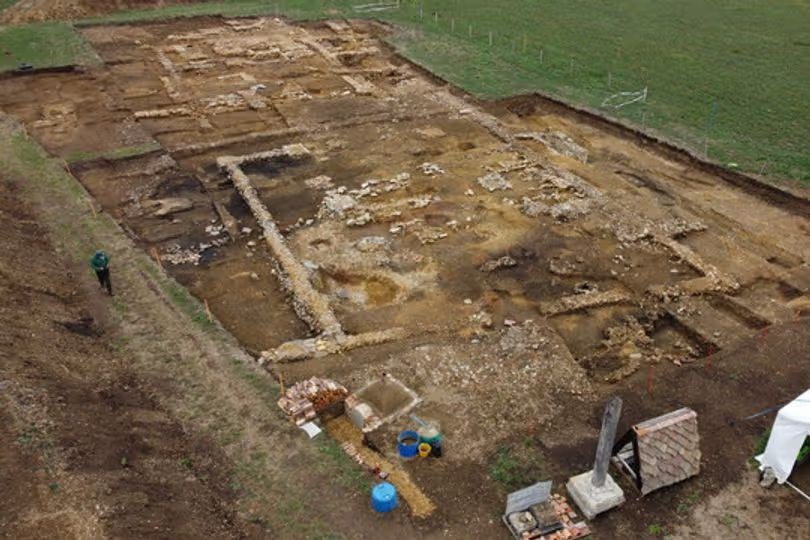
A village in Gloucestershire will feature on BBC Two’s Digging For Britain later this month after archaeologists uncovered a significant Roman settlement on the banks of the River Severn.
The excavation at Slimbridge revealed what may be a previously unknown Roman port. The dig was led by the Ernest Cook Trust, an educational charity and landowner, working alongside professional archaeologists and volunteers.
The TV episode will showcase the Trust’s Estate Forester, Lee James, who manages the project and has a long-standing interest in Iron Age and Roman history. He highlighted the site’s significance, suggesting it was first occupied by Iron Age Britons who traded with Romans before the conquest of Britain in AD 43. He noted that the Romans may have known their trading partners, possibly allowing for a peaceful takeover of the strategically placed site, which offered access south to the open sea and north to Gloucester.
James emphasized the community value of the project, alongside its contribution to understanding Britain’s history. He also plans to take Roman mosaic pieces from the site to Slimbridge Primary School so children can create their own mosaics using authentic Roman tiles.
In the episode, palaeontologist and lecturer Tori Herridge visits the 80m by 40m site with James and archaeologist Tony Roberts of Archeoscan to examine the discoveries. These include a Roman bathhouse, an unusual sign of wealth and luxury for the early Roman occupation of Britain. Coins date the site’s use to roughly AD 80–170.
Additional finds include finely crafted objects such as a bird-of-prey ornament from a box, a carved leaf from a statue, a bronze writing stylus for wax tablets, and a surgical bronze scalpel.
James expressed excitement at the filming, noting that the site revealed far more than a simple villa—it was a large complex of buildings. Excavations will continue through 2026, allowing time for recording and cataloguing finds. He described the thrill of uncovering objects, knowing they had not been touched for nearly 2,000 years.
The site appears to have started as an Iron Age trading centre before becoming a key Roman regional centre. A report on the project concluded that it was likely overseen by a Roman governor or commandant living in a luxurious compound on a spur of land into the Severn, marking the area as strategically important in early Roman Britain. Further work is required to confirm these initial interpretations.