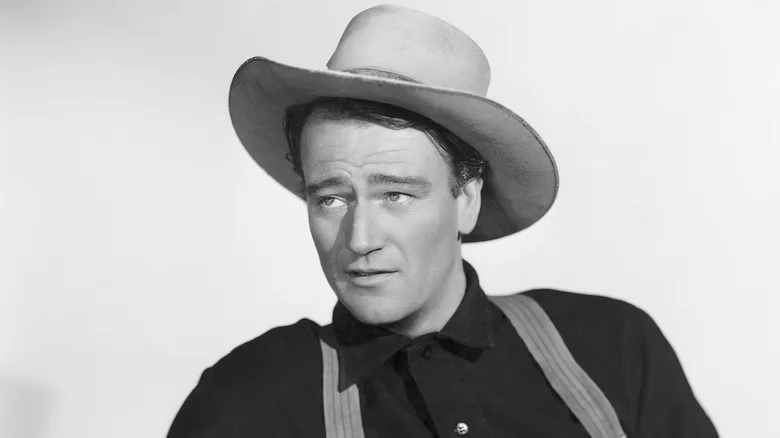
When people think of classic Western films, the legendary actor John Wayne is often one of the first names that comes to mind. Famous for portraying rugged but honorable cowboys, Wayne helped define the image of the American frontier in cinema. Many of the landscapes seen in those films were shot in the dramatic desert scenery of Utah, particularly around Kane County, an area that eventually earned the nickname “Little Hollywood” because of the large number of Western movies filmed there.
Western films often featured scenes set in saloons, where characters appeared to be drinking whiskey or beer. In reality, actors usually drank substitutes such as tea, colored water, or “near-beer” while filming. However, away from the cameras, cast and crew members frequently relaxed at real local establishments after long days on set.
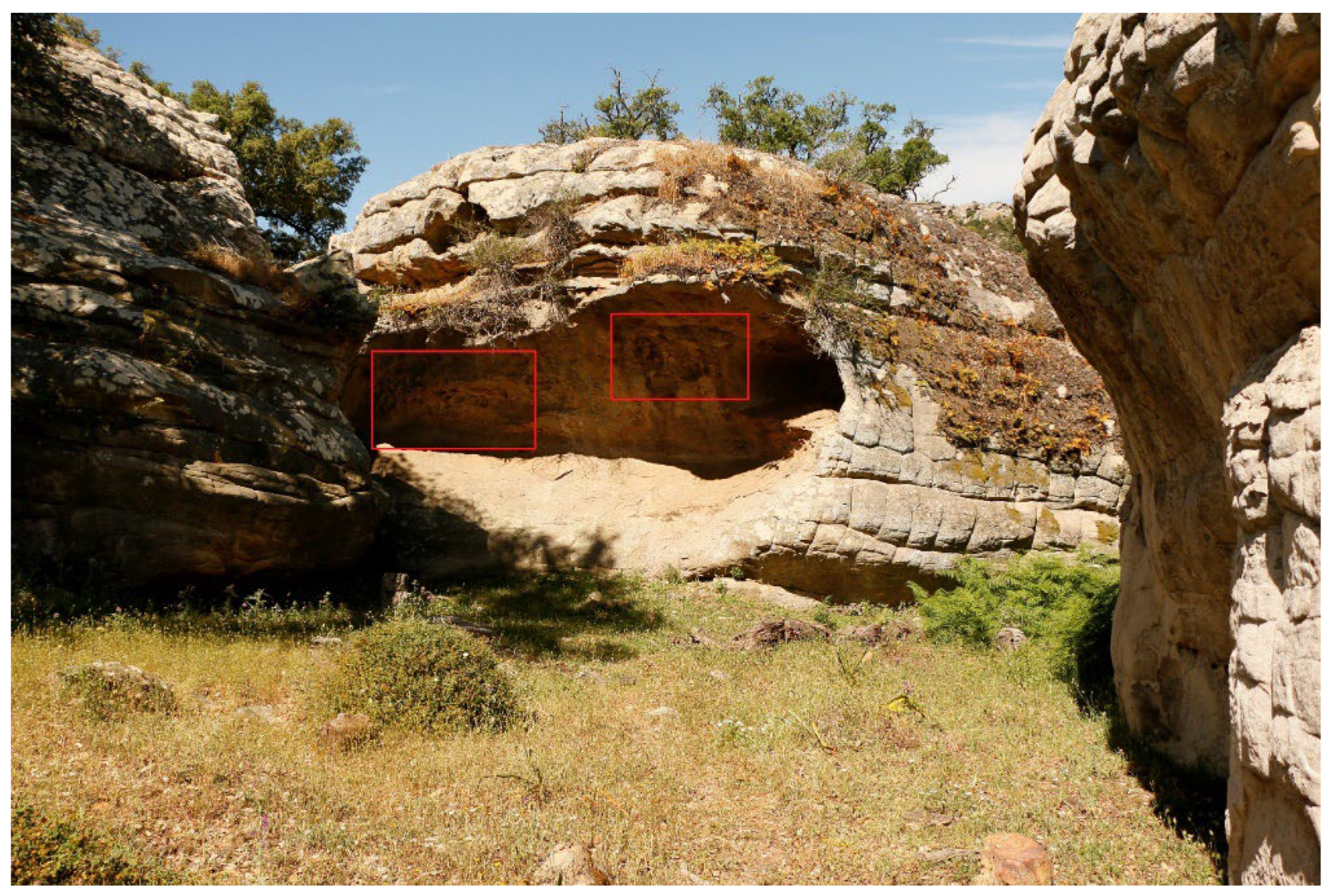
One place closely associated with that era of filmmaking was Moqui Cave, located just a few miles north of Kanab. In the early 1950s, the cave was purchased by Garth Chamberlain and his wife, who transformed the natural cavern into a lively tavern and dance hall. The venue included food, drinks, and a stage for performances, quickly becoming a popular gathering spot for both locals and visiting film crews.
Stories passed down through local tradition suggest that John Wayne and other Western stars may have visited the cave while working in the area. Among those rumored to have stopped by were Clayton Moore and Jay Silverheels, both well-known figures in mid-century Western entertainment.
Over time, Moqui Cave evolved from a vibrant nightlife spot into a museum showcasing geological formations, Native American artifacts, and the region’s cinematic history. Today, it stands as a reminder of the period when southern Utah’s dramatic landscapes served as the backdrop for some of Hollywood’s most iconic Western films.
Moqui Cave has transitioned from lively dance hall to a natural museum
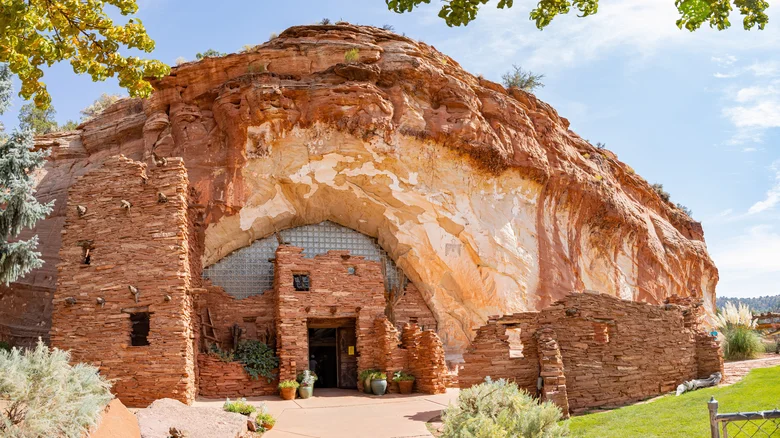
Beyond its reputation as a gathering place for movie stars, Moqui Cave also has a much deeper history. Long before it became a dance hall and tavern, the cave served as a shelter for Native American groups and later functioned as a hidden speakeasy during the era of Prohibition in the United States.
When Garth Chamberlain purchased the cave and transformed it into a nightclub, he also used it to showcase his personal interests in archaeology, geology, and woodcarving. Today, visitors can still see many of the handcrafted pieces he created, including detailed carvings of notable figures such as John Wayne and Ronald Reagan. Guests can even sit at the original wooden bar that Chamberlain built by hand.
Inside the cave, the collection extends far beyond its Hollywood connections. Displays include Native American artifacts, dinosaur fossils, and an impressive assortment of fluorescent minerals that glow under blacklight, creating a striking visual experience for visitors.
Although the cave once operated as a tavern where film crews relaxed after long days of shooting Western movies in Utah, alcohol is no longer served there. Visitors can still explore the historic interior and imagine the stories tied to the location—including the spot where John Wayne is said to have once sat.
Despite its transformation from bar to museum, Moqui Cave remains a popular stop for travelers exploring southern Utah. The cave’s constant temperature of around 65°F offers a refreshing break from the region’s intense summer heat, which often climbs well above 100°F, making the naturally cool interior feel like a welcome form of natural air-conditioning.