Introduction
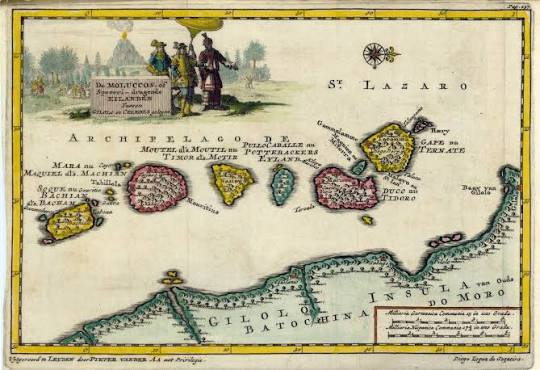
The volcanic islands of Maluku, situated in the northeastern sector of the Indonesian archipelago, played a critical role in the maritime networks of the Late Pleistocene and early Holocene. At the core of this early regional interaction was the island of Halmahera, a geologically active landmass rich in high-quality volcanic glass, or obsidian.
By tracing the distribution of Halmahera obsidian across neighboring island groups, archaeologists have uncovered an extensive, deep-time maritime trade network. This network confirms that early human populations possessed sophisticated seafaring technology and maintained long-distance socio-economic interactions across wide ocean gaps millennia before the expansion of Austronesian-speaking farmers.
Lithic Fingerprinting and Maritime Transport Routes
To reconstruct these ancient exchange networks, researchers employ Geochemical Fingerprinting via Energy-Dispersive X-Ray Fluorescence (ED-XRF) and Laser Ablation Inductively Coupled Plasma Mass Spectrometry (LA-ICP-MS).
Because every volcanic eruption possesses a unique chemical signature of trace elements (such as strontium, zirconium, and rubidium), analyzing these stone tools allows scientists to trace an excavated obsidian flake back to its exact geological origin. Applied to the northern Moluccas, this technique revealed that obsidian quarried from outcrops on Halmahera was systematically moved across vast ocean spaces.
Excavations at distant cave sites—such as the Talaud Islands to the north and the coast of Geelvink Bay (Cenderawasih) in western New Guinea—have yielded distinct Halmahera obsidian tools in layers dating between 12,000 and 8,000 years ago.
Transporting these volcanic cores required intentional open-ocean voyages crossing treacherous currents and distances exceeding 400 to 500 kilometers. The steady flow of these stone materials proves that early hunter-gatherers were not isolated bands, but rather active participants in a regional maritime network, trading razor-sharp obsidian blanks to maintain social alliances, share technical knowledge, and secure vital resources across Wallacea.
Conclusion
Halmahera's prehistoric obsidian trade challenges the notion that early hunter-gatherer societies were simple, isolated groups confined to their home islands. The wide distribution of this volcanic glass across the oceans of Maluku and Papua proves that the prehistoric western Pacific was connected by early mariners who mastered long-distance open-water navigation. These lithic exchange networks laid the economic and logistical foundations for the complex maritime trading systems that would later define the global spice routes of the historic era.