Introduction
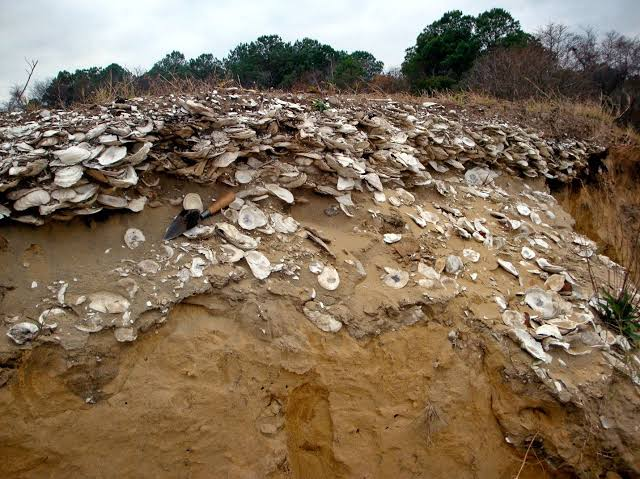
The transition from the Late Pleisctocene to the mid-Holocene along the southern margins of Wallacea witnessed major environmental shifts, marked by stabilizing sea levels and changing coastal landscapes. In the Tanimbar Islands, an isolated archipelago situated between the Banda Sea and the Arafura Sea, prehistoric human responses to these ecological changes are recorded in massive shell mounds (or kjökkenmöddinger).
Dating back over 4,000 years, these monumental accumulations of discarded marine shells and faunal remains serve as rich archaeological archives. They document how ancient coastal communities managed their marine resources, developed specialized toolkits, and adapted to changing shorelines over generations.
Midden Stratigraphy and Coastal Resource Intensive Harvesting
The shell mounds of Tanimbar are frequently situated along ancient paleoshorelines and inside sheltered limestone bays. Far from being random garbage heaps, these mounds are structured stratigraphic formations created by generations of targeted, intensive harvesting of the surrounding intertidal zones.
The primary structural components of the middens are the shells of large marine bivalves and gastropods—predominantly mangrove-dwelling Anadara clams, rocky-shore Chiton species, and massive Terebralia mud whelks.
Excavated tool assemblages found within the matrix of these mounds reveal a highly specialized maritime technology. Because high-quality tool stone like chert was rare on these coral limestone islands, Tanimbar populations adapted by using organic materials for their tools.
They modified the thick valves of the giant clam (Tridacna gigas) into heavy, razor-sharp adzes and axes capable of felling trees and carving dugout canoes. The presence of these heavy shell tools alongside fish hooks, turtle bones, and dugong remains proves that the midden creators possessed an intimate understanding of marine ecology, balancing intensive shore gathering with deep-water pelagic fishing.
Conclusion
The 4,000-year-old shell mounds of the Tanimbar Islands stand as a monument to the enduring success of maritime adaptation strategies in southern Wallacea. These large structural accumulations prove that coastal communities successfully managed rich intertidal zones for millennia, maintaining stable, long-term settlements without depleting their primary resource bases. As key archives of Holocene environmental change, the Tanimbar middens demonstrate how early humans combined resourcefulness and technical innovation to thrive on the edge of the sea.