Introduction
The limestone cliffs of the Maros-Pangkep region in South Sulawesi contain some of the oldest surviving records of human narrative art on Earth. At sites like Leang Tedongnge and Leang Bulu’ Sipong, prehistoric hunter-gatherers left behind breathtaking, mineral-stained tableaus that date back at least 44,000 to 45,500 years.
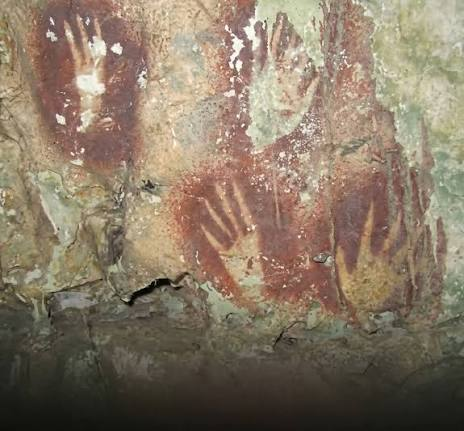
These masterfully composed panels combine human hand stencils with detailed figurative paintings of endemic Sulawesi warty pigs and dwarf buffaloes (anoa). They represent the earliest known evidence of figurative art and creative storytelling anywhere in the world, predating European cave paintings by several millennia and providing an unmatched look into the spiritual lives and hunting cultures of Wallacea's early human pioneers.
Pigment Chemistry, Therianthropes, and Behavioral Modernity
The artists of Maros manufactured their paint by grinding mineral-rich iron oxide (red ochre) into a fine powder, mixing it with water or organic binders to create a long-lasting, fluid pigment.
To create the iconic hand stencils, individuals placed their hands against the limestone surfaces and blew wet pigment over them through a hollow reed or bone tube, leaving a crisp negative silhouette. These stencils frequently frame large, detailed portraits of warty pigs, which are rendered with clear anatomical features such as facial crests, hair strands, and mating warts, showcasing an intimate ecological knowledge of the targeted prey.
The real conceptual breakthrough within the Maros art tradition is found in scenes depicting therianthropes—mythical figures possessing human bodies with animal heads or tails, actively hunting anoa with spears or ropes.
The deliberate depiction of therianthropes provides the world's oldest evidence of the human capacity to conceptualize supernatural beings and abstract religious mythologies. This creative ability proves that 45,000 years ago, Wallacean hunter-gatherers had achieved complete behavioral modernity, using complex visual art to pass down sacred hunt stories and ritual beliefs across generations.
Conclusion
The ancient hand stencils and hunting panels of Maros are an invaluable treasure of global cultural heritage. They prove that Indonesia was a major crucible for early human creative expression and symbolic thought during the Late Pleistocene. As modern research continues to uncover older, deeper painted panels within Sulawesi's disappearing karst towers, the Maros tableaus remind us that the human urge to leave an enduring mark of our existence is a deep-time tradition that transcends geography and connects us to our earliest ancestors.