• MAIN PAGE
  • LATEST NEWS
    • Lost Cities
    • Archaeology's Greatest Finds
    • Underwater Discoveries
    • Greatest Inventions
    • Studies
    • Blog
  • PHILOSOPHY
  • HISTORY
  • RELIGIONS
    • Africa
    • Anatolia
    • Arabian Peninsula
    • Balkan Region
    • China - East Asia
    • Europe
    • Eurasian Steppe
    • Levant
    • Mesopotamia
    • Oceania - SE Asia
    • Pre-Columbian Civilizations of America
    • Iranian Plateau - Central Asia
    • Indus Valley - South Asia
    • Japan
    • The Archaeologist Editor Group
    • Scientific Studies
    • Aegean Prehistory
    • Historical Period
    • Byzantine Middle Ages
    • Predynastic Period
    • Dynastic Period
    • Greco-Roman Egypt
  • Rome
  • PALEONTOLOGY
  • About us
Menu

The Archaeologist

  • MAIN PAGE
  • LATEST NEWS
  • DISCOVERIES
    • Lost Cities
    • Archaeology's Greatest Finds
    • Underwater Discoveries
    • Greatest Inventions
    • Studies
    • Blog
  • PHILOSOPHY
  • HISTORY
  • RELIGIONS
  • World Civilizations
    • Africa
    • Anatolia
    • Arabian Peninsula
    • Balkan Region
    • China - East Asia
    • Europe
    • Eurasian Steppe
    • Levant
    • Mesopotamia
    • Oceania - SE Asia
    • Pre-Columbian Civilizations of America
    • Iranian Plateau - Central Asia
    • Indus Valley - South Asia
    • Japan
    • The Archaeologist Editor Group
    • Scientific Studies
  • GREECE
    • Aegean Prehistory
    • Historical Period
    • Byzantine Middle Ages
  • Egypt
    • Predynastic Period
    • Dynastic Period
    • Greco-Roman Egypt
  • Rome
  • PALEONTOLOGY
  • About us

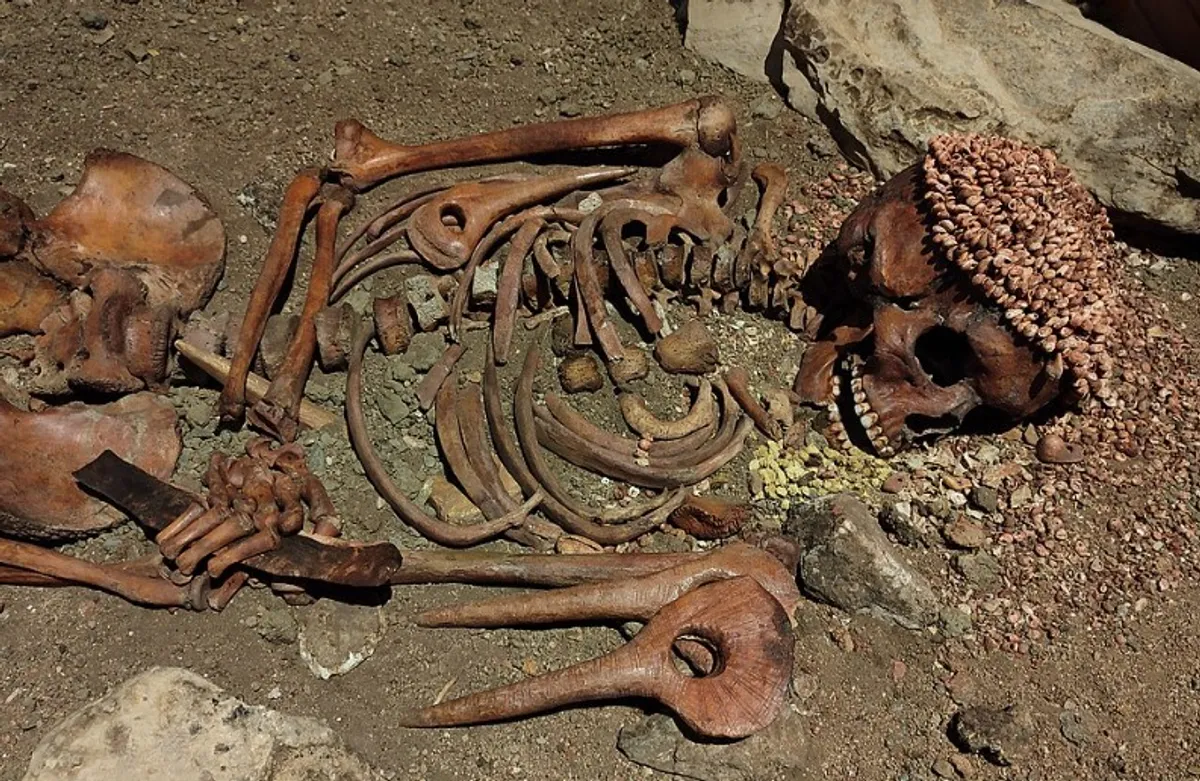
Il Principe is missing part of his jaw and collarbone.

Horrifically Disfigured Skeleton Known As “The Prince” Was Likely Mauled To Death By A Bear 27,000 Years Ago

December 30, 2025

The occupant of one of the most elaborate Paleolithic burials may have died in one of the most excruciating ways known to humans. Nicknamed “Il Principe” (“The Prince”), the teenage boy interred in the grave likely succumbed a few days after a large predator—probably a bear—maimed his face and chest.

Discovered in 1942 in the Arene Candide Cave in northern Italy, the burial dates to 27,900–27,300 years ago, during the Gravettian period of the Upper Paleolithic. Alongside the badly damaged skeleton, archaeologists found numerous luxurious grave goods, including hundreds of pierced shells, carved antlers, mammoth ivory pendants, and a flint blade, which may have symbolized prestige.

Once considered a sign of high social status, the grave earned the adolescent his royal nickname. However, his injuries—smashed collarbone, a large hole in his jaw, fractures to the skull, teeth, neck, and a punctured fibula—reveal a far more harrowing story. Researchers note that the trauma resembles patterns seen in modern car accidents but, in this prehistoric context, is more consistent with a large animal attack.

Alternative explanations, such as a fall or interpersonal violence, are unlikely, as the pattern of damage does not match those scenarios. The team suggests the injuries were probably inflicted by a brown bear, cave bear, leopard, or cave lion, with bears fitting the evidence most closely. Remarkably, the bones show early healing, indicating the boy survived two to three days after the attack, suggesting that major arteries were not severed. He likely died from organ failure, internal bleeding, or severe brain trauma.

The researchers propose that the extravagant grave goods may reflect a “ritual sanctioning” of the traumatic event rather than social rank. In other words, Il Principe may not have been of high status but was given an elaborate burial as part of a ritual response to his suffering. This theory aligns with patterns seen in other lavish Gravettian burials, which frequently involve individuals with unusual injuries or disfigurements.

“This pattern supports the hypothesis that formal burial was granted to ritually contain and acknowledge ‘exceptional events and exceptional people,’” the authors write.
← Ancient Buddhist Site Unearthed in Kashmir’s Baramulla District Highlights Region’s Kushan-Era PastAn Ancient Portal to the Underworld Was Found in Denver →
Featured
image_2025-12-31_002257277.png
Dec 30, 2025
Silver necklace depicting Assyrian goddess Ishtar unearthed in southwestern Türkiye
Dec 30, 2025
Read More →
Dec 30, 2025
image_2025-12-31_001924708.png
Dec 30, 2025
Humans cared for wolves long before dogs emerged, study finds
Dec 30, 2025
Read More →
Dec 30, 2025
image_2025-12-31_000800442.png
Dec 30, 2025
Ancient Buddhist Site Unearthed in Kashmir’s Baramulla District Highlights Region’s Kushan-Era Past
Dec 30, 2025
Read More →
Dec 30, 2025
image_2025-12-31_000438961.png
Dec 30, 2025
Horrifically Disfigured Skeleton Known As “The Prince” Was Likely Mauled To Death By A Bear 27,000 Years Ago
Dec 30, 2025
Read More →
Dec 30, 2025
image_2025-12-30_235800075.png
Dec 30, 2025
An Ancient Portal to the Underworld Was Found in Denver
Dec 30, 2025
Read More →
Dec 30, 2025
image_2025-12-30_235042591.png
Dec 30, 2025
Rare Roman-Era enamelled fibula found near Grudziądz
Dec 30, 2025
Read More →
Dec 30, 2025
read more

Powered by The archaeologist