Pieces believed to be from HMS Saldanha, which lost 273 crew in 1811 storm, recently washed up in Donegal
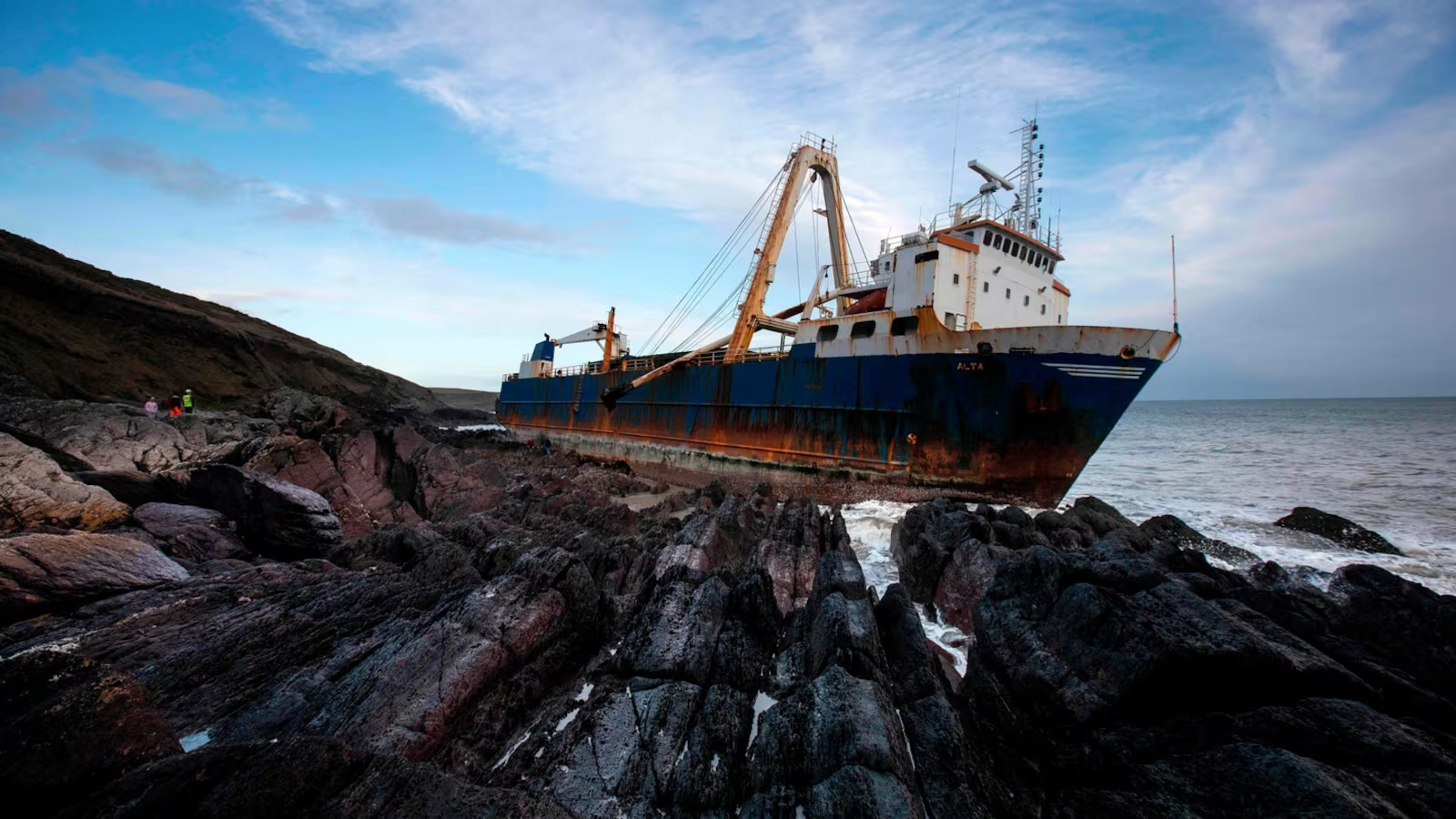
The MV Alta ghost ship ran aground near Ballycotton, Co Cork, in 2020.
A cannonball, a so-called “ghost ship,” and remnants of a vessel once transporting 43 tonnes (43,000 kg) of gold are among the objects that have washed up along Ireland’s coastline in recent years.
Under Irish law, anyone who discovers shipwreck material must report it to the Office of the Revenue Commissioners. To manage this process, the Department of Transport designates Revenue officials nationwide to serve as “receivers of wreck.”
These officials are responsible for securing wrecked items, determining their value, and attempting to identify their owners. Notices are posted at the nearest Garda station and Revenue office. If a salvager recovers the wreck, the receiver oversees its sale and ensures the salvager receives a share of the proceeds.
If no claim is made within a year, the wreck must be referred to the director of the National Museum for evaluation of its historical, archaeological, or artistic significance. Any unclaimed wreck after this period may be taken into State ownership.
Receivers of wreck also handle abandoned vessels located near the shore but underwater. In such cases, they are instructed to sail over the site, lower a lead line, and formally declare possession under statutory authority, as outlined in their operational manual.
Information on items taken into custody since 2015 was released to The Irish Times following a Freedom of Information request. Revenue recorded 20 such reports during this time, eight of which occurred last year.
Many entries reflect Ireland’s often grim maritime past, including vessels lost to torpedoes, mines, and severe weather, frequently with heavy loss of life.
In October, wooden remains believed to belong to HMS Saldanha appeared on Ballymastocker Beach in County Donegal. Built in 1807, the British frigate patrolled Irish waters during the Napoleonic Wars before being wrecked in a storm near Fanad Head in 1811, killing all 273 crew members. The ship’s captain’s parrot survived the wreck but was shot by a farmer the following year.
In October 2016, debris from the British steamship Boniface, including four portholes, washed ashore. The vessel had been sunk by a German U-boat near Tory Island in 1917.
That same month, a porthole from the SS Laurentic was recovered. The transatlantic liner struck mines near Lough Swilly in January 1917 while secretly transporting 3,211 gold bars to fund British wartime purchases. The sinking claimed 354 lives, and all but 22 of the gold bars were later salvaged.
In August 2022, the bell from HMS Hurst Castle was discovered on the coast and transferred to the National Museum. The Royal Navy corvette was torpedoed off Northern Ireland in August 1944, just one month after being commissioned, killing 17 sailors.
Some discoveries remain unexplained, including a possible cannonball found within a “solidified mass” off Rosslare, County Wexford, in 2015, and several unidentified maritime objects recovered near Fanad in 2022.
Not all recovered items are historic. Records also list abandoned yachts, fishing boats, and rowboats.
In February 2020, a receiver of wreck assumed control of the MV Alta after it ran aground near Ballycotton, County Cork. The vessel had been abandoned in 2018 when its engines failed en route from Greece to Haiti.
The Alta drifted unmanned for two years before landing on the Cork coast. The National Museum later determined it held no historical value.
The ship’s remains are still stranded at the site, despite environmental and safety issues, and there are no plans for removal. No ownership claim has been made, and it is unclear whether the owners were aware of the official notices.