Introduction
Situated in the Dordogne region of southwestern France, La Ferrassie is one of the world's most important Neanderthal archaeological sites. Dating primarily between 70,000 and 50,000 years ago, the rock shelter has yielded one of the largest collections of Neanderthal human remains ever discovered, including the skeletons of adults, children, and infants. The remarkable preservation of these individuals has led many archaeologists to interpret the site as evidence for intentional burial practices, offering valuable insight into Neanderthal social relationships, family life, and attitudes toward death.
Discovery and Excavation
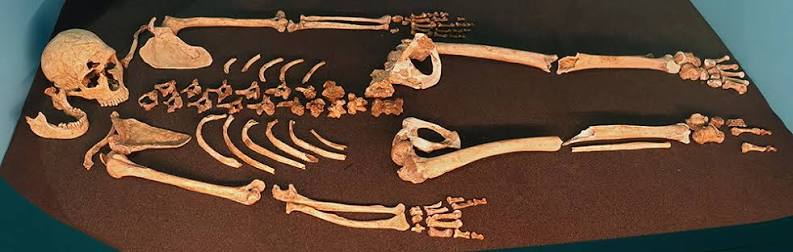
Excavations beginning in the early twentieth century uncovered the remains of at least eight Neanderthal individuals, including men, women, adolescents, young children, and infants. The skeletons were found within carefully prepared sediment layers rather than randomly scattered, suggesting deliberate placement after death.
The exceptional preservation of the burials has made La Ferrassie one of the primary reference sites for studying Neanderthal anatomy, growth, and variation across different age groups.
Evidence of Burial Practices
Several of the skeletons appear to have been placed in shallow pits excavated into the cave floor before being carefully covered with sediment. Some burials show distinct body positioning and separation from ordinary occupation debris, leading many researchers to argue that Neanderthals intentionally buried their dead.
Although debate continues regarding the symbolic meaning of these burials, the evidence strongly suggests that Neanderthals demonstrated concern for deceased members of their community and may have practiced simple funerary rituals.
The presence of infants and young children among the burials also indicates that family groups occupied the shelter together rather than consisting solely of adult hunting parties.
Stone Tools and Daily Life
The archaeological layers contain abundant Mousterian flint tools, including scrapers, knives, spear points, and Levallois flakes. Hearths, butchered animal bones, and charcoal deposits demonstrate that La Ferrassie functioned as a long-term residential camp where families prepared food, manufactured tools, and shared daily activities.
Animal remains include horse, bison, red deer, and reindeer, reflecting skilled hunting strategies adapted to Ice Age environments.
Scientific Importance
La Ferrassie has become one of the world's most influential sites for understanding Neanderthal biology and behavior. The exceptional preservation of individuals from multiple age groups enables researchers to study childhood development, aging, disease, skeletal anatomy, and population diversity.
The site continues to contribute to debates concerning Neanderthal cognition, social organization, and symbolic behavior.
Conclusion
La Ferrassie remains one of the finest examples of Neanderthal family life ever discovered. Through its remarkable burials, extensive Mousterian artifacts, and well-preserved human fossils, the site provides extraordinary insight into the social complexity and humanity of our closest extinct relatives.