Introduction
Discovered in the limestone karsts of Thanh Hóa Province, northern Vietnam, Lạch-Bầu Cave (alongside sites like Làng Vạc and Đông Sơn) holds crucial evidence tracking the deep transition from late Neolithic stone toolmaking to the explosive Bronze Age metallurgy of the Đông Sơn culture.
The cave deposits preserved early bronze casting molds, slag, and ritual artifacts—most notably the precursor forms of the famous Đông Sơn bronze drums (trống đồng).
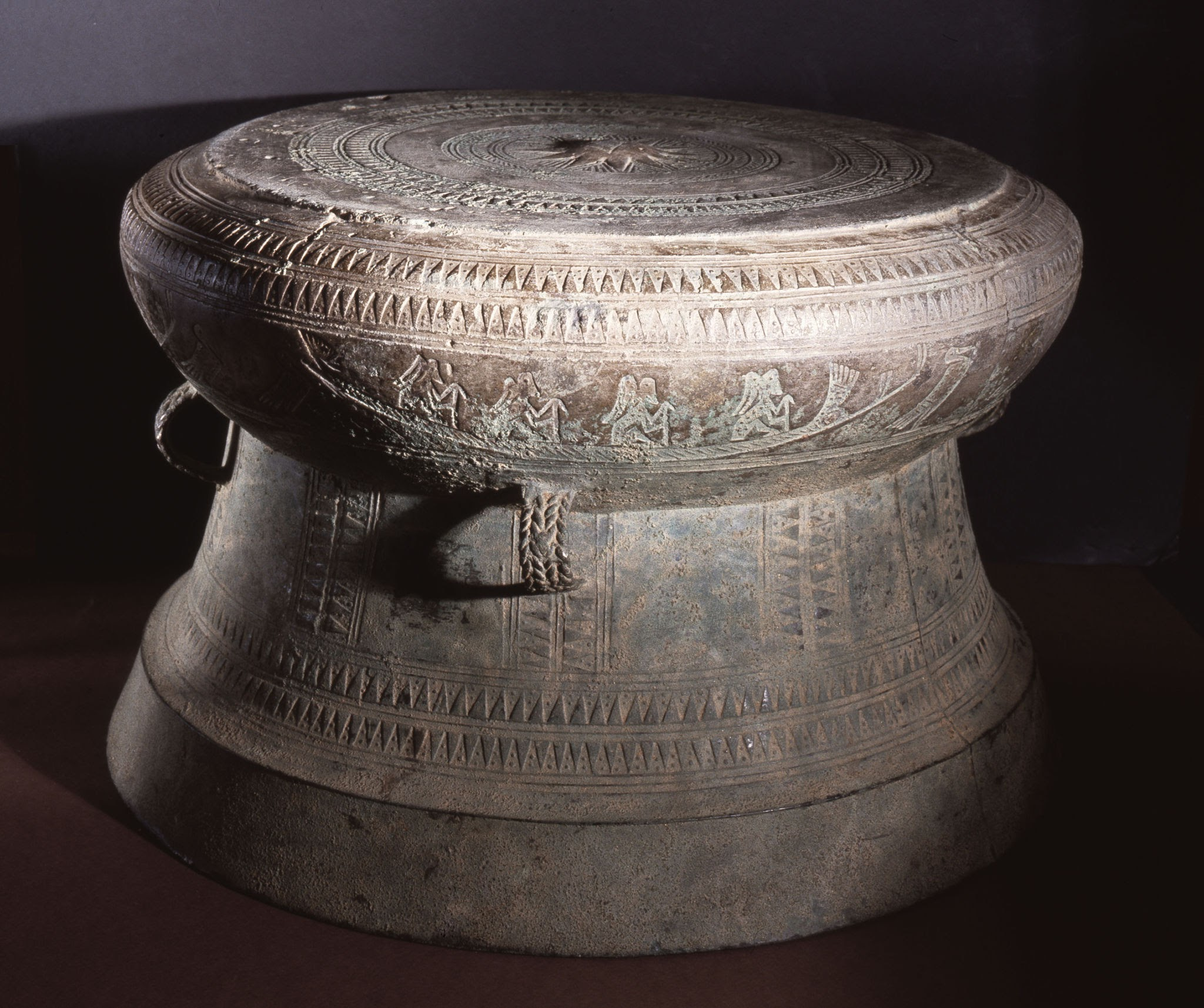
Metallurgical Engineering & Iconography
The production of Đông Sơn bronze drums required sophisticated multi-piece clay mold technology and precise alloy formulation (typically 75–80% copper, 10–15% lead, and 5–10% tin). Lead was intentionally added to lower the melting temperature and increase the fluidity of the molten metal, allowing it to fill delicate mold engravings:
Cosmological Central Sunburst: The center of the drum's tympanum always features a 12- or 14-pointed star, representing the sun and seasonal agricultural cycles.
Maritime Life & Rituals: Outer concentric bands depict longboats filled with warriors wearing bird-feather headdresses, flying egrets, leaping deer, and rice-pounding scenes.
Acoustic & Political Function: Played during rainmaking ceremonies, seasonal festivals, and military mobilizations, these drums served as paramount symbols of political authority for local chiefdoms (Lạc Tướng).
Lạch Bầu Cave is an important archaeological site in Vietnam that has yielded evidence of prehistoric communities living thousands of years before the rise of the Dong Son civilization. Excavations uncovered stone tools, pottery, animal remains, and traces of early metallurgy, revealing a gradual transition from Neolithic farming societies to Bronze Age cultures. Although the famous Dong Son bronze drums date to a later period (around 600 BCE–200 CE), discoveries at sites such as Lạch Bầu help archaeologists understand the technological and cultural developments that eventually made their production possible.
The Dong Son drums became some of Southeast Asia's finest bronze masterpieces. Cast using sophisticated lost-wax and sectional mold techniques, they were decorated with geometric patterns, birds, warriors, boats, dancers, and radiant sun motifs. These drums served multiple purposes, including ceremonial rituals, military signaling, religious festivals, and symbols of political authority. Their widespread distribution throughout Southeast Asia demonstrates the extensive trade networks and cultural influence of the Dong Son civilization.
Conclusion
Lạch-Bầu Cave provides essential stratigraphy for understanding how pre-historical Vietnamese societies mastered advanced bronze casting. The Đông Sơn drums crafted here stand as enduring icons of early Southeast Asian state formation and indigenous artistic identity.