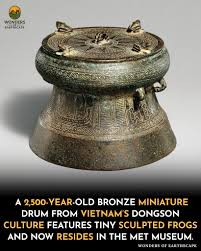
Gò Mun represents one of Vietnam's most important Late Bronze Age archaeological cultures, flourishing around 1100–700 BCE. Considered an intermediate stage between the Phùng Nguyên culture and the Dong Son civilization, Gò Mun communities demonstrated remarkable advances in bronze metallurgy and agricultural development. Excavations have uncovered bronze axes, spearheads, knives, sickles, fishhooks, ornaments, pottery, and evidence of specialized workshops where skilled craftsmen produced metal tools and weapons.
The Gò Mun culture laid the technological foundation for the later achievements of the Dong Son civilization. Bronze casting techniques became increasingly sophisticated, allowing artisans to manufacture stronger agricultural implements and more elaborate ceremonial objects. These developments contributed to improved farming productivity, population growth, and the emergence of more complex social and political organization throughout northern Vietnam.
Conclusion
Gò Mun represents the crucial turning point when metal technology transformed from a luxury item into the primary foundation of agricultural productivity and territorial expansion in pre-historic Vietnam.