The Sea Peoples: Uncovering an Ancient Maritime Mystery
For thousands of years, one of the greatest mysteries of the ancient world has remained unresolved.
Around 1200 BCE, powerful civilizations across the eastern Mediterranean collapsed almost simultaneously. Cities burned, trade networks failed, and writing systems disappeared. Amid this chaos, Egyptian records describe unfamiliar groups arriving by ship — the Sherden, the Peleset, the Denyen, and the Tjeker — peoples who seemed to emerge from the sea itself.
History remembers them as the Sea Peoples.
But who were they? Where did they come from? And why did they appear so suddenly, leaving destruction in their wake?
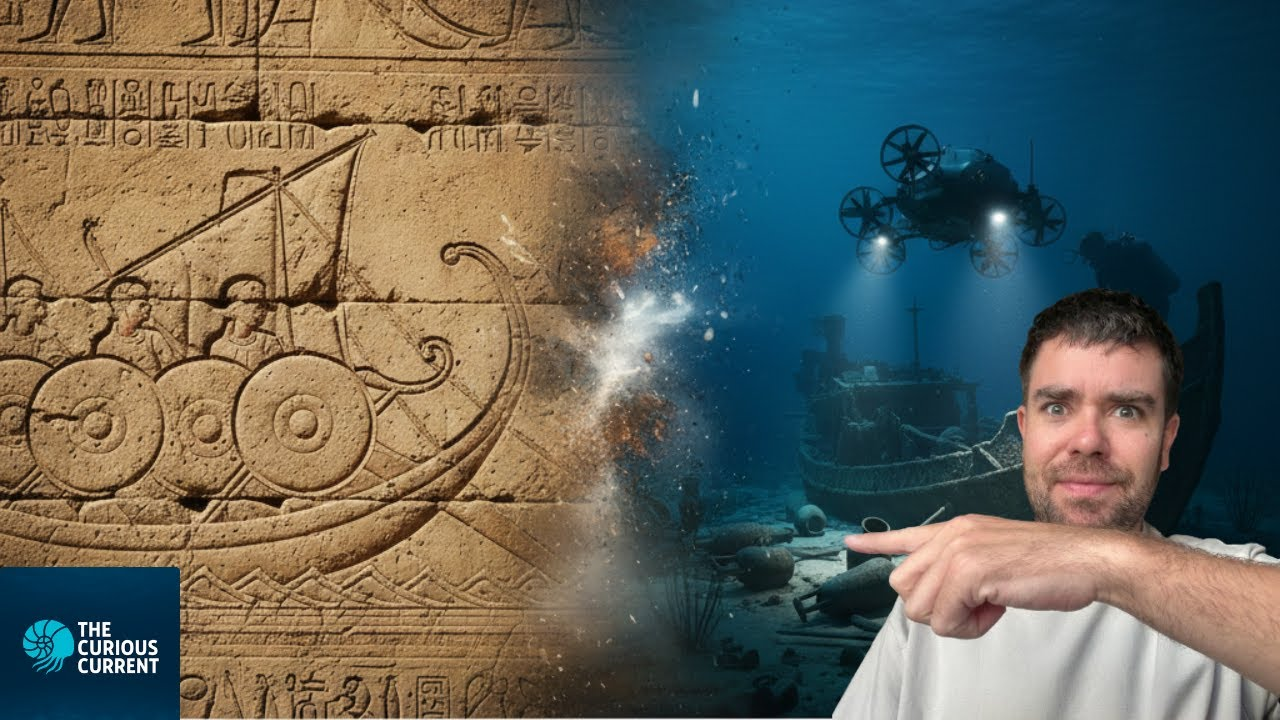
Recent advances in marine archaeology are beginning to answer these questions. From Bronze Age shipwrecks like Uluburun and Cape Gelidonya, to submerged coastlines and modern technologies such as ROVs, photogrammetry, and sonar mapping, researchers are exploring underwater worlds that ancient historians could only imagine.
The deeper archaeologists look, the more complex the story becomes. These investigations reveal trade networks, migration patterns, and even hints of battles fought at sea — suggesting that the movements of the Sea Peoples may have unfolded between coastlines rather than within cities.
This isn’t myth or legend. It’s tangible evidence, showing us that the past is not fixed on land alone — it stretches beneath the waves, waiting to be discovered.
For anyone fascinated by ancient history, maritime exploration, or the mysteries of human migration, the story of the Sea Peoples is a reminder that the oceans have always been highways, battlegrounds, and archives of human activity.
Watch the video below to dive into the maritime archaeology of the Sea Peoples and discover the underwater clues that are reshaping our understanding of the Late Bronze Age collapse: