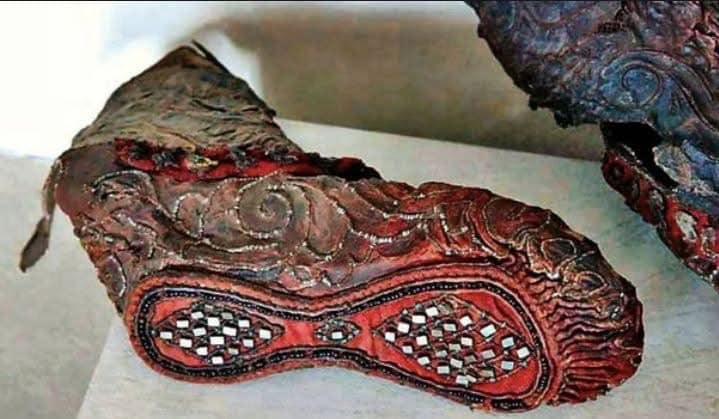
A 2,300-Year-Old Boot Frozen in Time
An extraordinary discovery from the Altai Mountains has captivated archaeologists for decades: a beautifully preserved leather boot dating back 2,300 years, believed to have belonged to a woman of the ancient Saka culture. This rare artifact offers a vivid glimpse into the craftsmanship, fashion, and social life of nomadic peoples of the Eurasian steppe.
Discovery in the Pazyryk Burial Mounds
The boot was uncovered in one of the famous Pazyryk kurgans—large burial mounds used by ancient nomadic tribes. These elaborate tombs contained wooden chambers filled with grave goods such as:
Jewelry and weapons
Clothing and textiles
Horse equipment
Even preserved food
After burial, the chambers were sealed under layers of stone and soil. Over time, water entered and froze, creating a natural preservation system that protected organic materials for millennia.
Permafrost: Nature’s Perfect Preserver
The survival of the boot is due to the region’s permafrost, which acted like a natural freezer. In most environments, leather and textiles decay quickly—but here, the freezing conditions preserved:
The boot’s shape and structure
Its vivid red color
Fine decorative details
This makes the artifact exceptionally valuable, as organic materials from ancient periods rarely survive in such pristine condition.
Remarkable Craftsmanship
The boot showcases the advanced artistry of the Saka people. Made from soft red leather, it is adorned with:
Black beads
Pyrite crystals
Metallic foil
Glass beads arranged in intricate patterns
One of its most unusual features is its decorated sole, covered in geometric designs—a rare detail that has intrigued researchers.
A Hidden Status Symbol?
Historians believe the decorated sole may not have been random. In nomadic cultures, people often sat or knelt on the ground, making the bottom of footwear visible.
Because of this, the ornate sole may have functioned as a status symbol, suggesting the wearer held a high position within her community.
Everyday Wear or Burial Artifact?
Scholars are still debating whether the boot was:
Used in daily life, belonging to a high-status woman
Or created specifically for burial, explaining its near-perfect condition
Both theories highlight the cultural importance of clothing and symbolism in Saka society.
Preserved for the World
Today, this remarkable artifact is housed in the State Hermitage Museum, one of the world’s most renowned museums. It remains one of the most iconic discoveries linked to the Pazyryk culture.
Why This Discovery Matters
This frozen boot is more than just ancient footwear—it is a powerful reminder that even nomadic societies possessed:
Sophisticated craftsmanship
Rich cultural symbolism
Complex social structures
Preserved by ice for over two millennia, it continues to tell the story of a woman—and a civilization—long lost to time.