• MAIN PAGE
  • LATEST NEWS
    • Lost Cities
    • Archaeology's Greatest Finds
    • Underwater Discoveries
    • Greatest Inventions
    • Studies
    • Blog
  • PHILOSOPHY
  • HISTORY
  • RELIGIONS
    • Africa
    • Anatolia
    • Arabian Peninsula
    • Balkan Region
    • China - East Asia
    • Europe
    • Eurasian Steppe
    • Levant
    • Mesopotamia
    • Oceania - SE Asia
    • Pre-Columbian Civilizations of America
    • Iranian Plateau - Central Asia
    • Indus Valley - South Asia
    • Japan
    • The Archaeologist Editor Group
    • Scientific Studies
    • Aegean Prehistory
    • Historical Period
    • Byzantine Middle Ages
    • Predynastic Period
    • Dynastic Period
    • Greco-Roman Egypt
  • Rome
  • PALEONTOLOGY
  • About us
Menu

The Archaeologist

  • MAIN PAGE
  • LATEST NEWS
  • DISCOVERIES
    • Lost Cities
    • Archaeology's Greatest Finds
    • Underwater Discoveries
    • Greatest Inventions
    • Studies
    • Blog
  • PHILOSOPHY
  • HISTORY
  • RELIGIONS
  • World Civilizations
    • Africa
    • Anatolia
    • Arabian Peninsula
    • Balkan Region
    • China - East Asia
    • Europe
    • Eurasian Steppe
    • Levant
    • Mesopotamia
    • Oceania - SE Asia
    • Pre-Columbian Civilizations of America
    • Iranian Plateau - Central Asia
    • Indus Valley - South Asia
    • Japan
    • The Archaeologist Editor Group
    • Scientific Studies
  • GREECE
    • Aegean Prehistory
    • Historical Period
    • Byzantine Middle Ages
  • Egypt
    • Predynastic Period
    • Dynastic Period
    • Greco-Roman Egypt
  • Rome
  • PALEONTOLOGY
  • About us

Thousands of Ostracons Unearthed in Egypt

March 18, 2026

Thousands of Ancient Texts Unearthed in Egypt

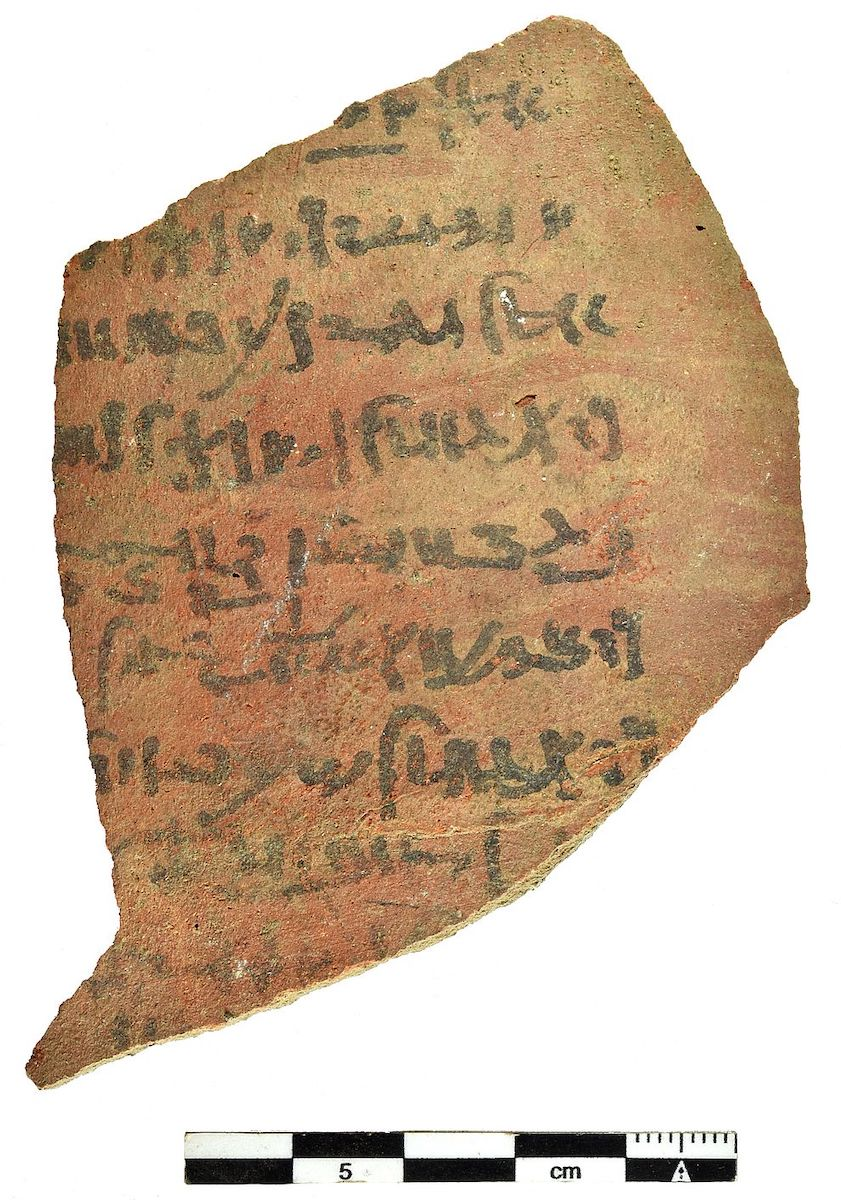
A remarkable discovery in Sohag is offering an unprecedented glimpse into everyday life across more than a millennium of ancient history. Archaeologists working at the site of Athribis have uncovered around 13,000 ostraca—inscribed fragments of pottery used for writing.

What Are Ostraca?

Ostraca were commonly used in ancient societies as a practical and inexpensive writing surface. Instead of papyrus, people often wrote on broken pottery pieces to record receipts, notes, lists, and even school exercises.

A Timeline Spanning 1,000 Years

According to Christian Leitz of the University of Tübingen, the texts from Athribis span over 1,000 years of history:

  • 3rd century B.C.: The oldest texts are tax receipts written in Demotic script

  • Later periods: Records of temple life, administration, trade, and education

  • 9th–11th centuries A.D.: The most recent texts are Arabic jar labels

A Multilingual Treasure

The inscriptions appear in a wide range of writing systems, reflecting Egypt’s changing cultures over centuries:

  • Demotic (most common)

  • Greek

  • Hieratic

  • Hieroglyphic

  • Coptic

  • Arabic

This diversity highlights how Athribis remained active through pharaonic, Greek, Roman, and early Islamic periods.

A Window Into Daily Life

Unlike monumental inscriptions carved on temples, these ostraca reveal ordinary human activity, including:

  • Tax payments and economic transactions

  • Religious practices and temple operations

  • Delivery orders and administrative lists

  • Student writing exercises (offering insight into ancient education)

A Massive Archive

The newly reported 13,000 pieces are part of an even larger collection—over 43,000 ostraca discovered at Athribis so far. Together, they form one of the most extensive written archives from ancient Egypt.

Why This Discovery Matters

This find is extraordinary not just for its size, but for its depth. It allows historians to trace:

  • The evolution of language and writing in Egypt

  • The continuity of daily life across empires

  • The voices of ordinary people, often missing from grand historical records

In essence, these broken pieces of pottery are helping reconstruct a continuous story of life in Egypt spanning more than a thousand years—from ancient pharaohs to the early Islamic world.


← Neanderthal prey: elephant teeth preserve 125,000-year-old record of movement and dietRare 3,000-Year-Old Bronze Bull Head Found in Mallorca’s Tramuntana Mountains →
Featured
image_2026-03-16_222009550.png
Mar 18, 2026
Ancient Metal Artifacts With Unknown Origins
Mar 18, 2026
Read More →
Mar 18, 2026
image_2026-03-18_002518866.png
Mar 18, 2026
2,400-Year-Old Submerged Structures Captured Beneath Turkey’s Dicle Dam Waters
Mar 18, 2026
Read More →
Mar 18, 2026
image_2026-03-18_002243247.png
Mar 18, 2026
Northern Arabia Archaeological Site Reveals 13,500-Year-Old Human Settlement
Mar 18, 2026
Read More →
Mar 18, 2026
image_2026-03-18_002037500.png
Mar 18, 2026
Ancient star opens window to early days of the universe
Mar 18, 2026
Read More →
Mar 18, 2026
image_2026-03-18_001657389.png
Mar 18, 2026
Neanderthal prey: elephant teeth preserve 125,000-year-old record of movement and diet
Mar 18, 2026
Read More →
Mar 18, 2026
image_2026-03-18_001431220.png
Mar 18, 2026
Thousands of Ostracons Unearthed in Egypt
Mar 18, 2026
Read More →
Mar 18, 2026
read more

Powered by The archaeologist