Ancient Elephant “Diaries” Hidden in Fossil Teeth
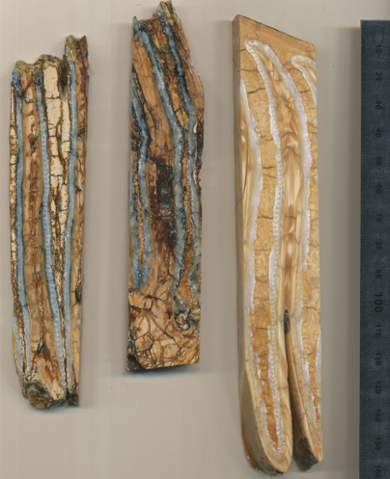
A fascinating study published in Science Advances reveals how fossilized teeth can act like biological identity cards, preserving detailed records of life from tens of thousands of years ago. By analyzing these natural archives, scientists have reconstructed the lives of four Palaeoloxodon antiquus—the largest land mammals of prehistoric Europe.
These massive elephants lived during the last interglacial period around 125,000 years ago and were among the animals hunted by Neanderthals.
Teeth as Time Capsules
Tooth enamel forms slowly, layer by layer, and each layer captures chemical signals from the environment. This process allows scientists to read teeth almost like a timeline of an animal’s life.
The key technique used is isotopic analysis, which examines variations in elements such as oxygen and strontium. These variations reflect:
The water sources an animal drank from
The plants it consumed
The regions it moved through
Tracking Ancient Journeys
According to Elena Armaroli of the University of Modena and Reggio Emilia, this method allows researchers to reconstruct movement patterns with remarkable precision:
Tooth enamel records environmental data “layer by layer,” making it possible to trace movements almost like reading a diary preserved for over 100,000 years.
From these analyses, scientists discovered that the elephants:
Traveled across large territories
Likely followed seasonal migration routes
Adapted to changing environments during the interglacial period
Why This Matters
This research goes beyond understanding elephants—it helps scientists reconstruct entire ancient ecosystems. By tracking where these animals moved, researchers can better understand:
Climate conditions in prehistoric Europe
Migration patterns of large mammals
Hunting behaviors of Neanderthals
A Glimpse Into Prehistoric Life
Fossil teeth are proving to be one of the most powerful tools in archaeology and paleontology. What looks like a simple tooth is actually a detailed record of movement, diet, and environment, preserved for over 100,000 years.
Through discoveries like this, scientists are not just studying fossils—they are uncovering the daily lives of creatures that once roamed ancient Europe, step by step, layer by layer.
Tracking Ice Age Giants: Movement, Diet, and Climate
New research on fossil teeth from Palaeoloxodon antiquus is revealing not just where these massive animals lived—but how they moved, what they ate, and even the environments they came from.
Diverse Movement Patterns
By combining isotopic analysis with paleoproteomics, researchers reconstructed the life histories of several elephants in remarkable detail.
Analysis of strontium isotopes in their teeth showed two very different lifestyles:
Local individuals:
Lived for years around Neumark-Nord
Stayed within a relatively small area near lakes
Long-distance travelers (adult males):
Originated from geologically distinct, likely mountainous regions
Traveled up to 300 kilometers
Crossed forests and open woodlands before reaching Neumark-Nord
These findings suggest that some elephants migrated over vast distances—possibly for resources, mating, or seasonal changes—before being hunted by Neanderthals.
Diet and Environment
All the elephants fed on C3 plants, typical of temperate European environments. However, their diets reveal important ecological differences:
Migrating elephants:
Lived in dense, forested regions
Local elephants:
Fed in more open landscapes near lakes
Oxygen isotope data also points to differences in:
Water sources
Climate conditions
Possibly elevation
Together, this shows that these animals occupied diverse habitats across prehistoric Europe.
Seasonal Climate Insights
The study also contributes to understanding climate during the time of Neanderthals. Research led by Wil Roebroeks at Leiden University builds on ongoing work at Neumark-Nord.
Meanwhile, researcher Marissa Vink analyzed tooth enamel from ancient horses to reconstruct seasonal climate variation over about 500 years of Neanderthal occupation.
Her findings, published in Quaternary Sciences Reviews, used:
Oxygen isotopes (climate and water signals)
Carbon isotopes (dietary patterns)
Nitrogen isotopes (environmental conditions)
This allowed scientists to track seasonal shifts in climate and food availability on a sub-annual scale—a highly detailed picture of Ice Age environments.
Why This Matters
This research transforms fossil teeth into powerful records of movement, diet, and climate, helping scientists understand:
How large animals adapted to changing environments
The ecosystems Neanderthals depended on
Seasonal patterns that shaped prehistoric life
Ultimately, these findings reveal a dynamic Ice Age world—where giant elephants migrated across vast landscapes, climates shifted with the seasons, and early humans interacted with both in complex ways.