Archaeologists have uncovered an extensive system of submerged stone constructions off the coast of Sein Island in Brittany, France.
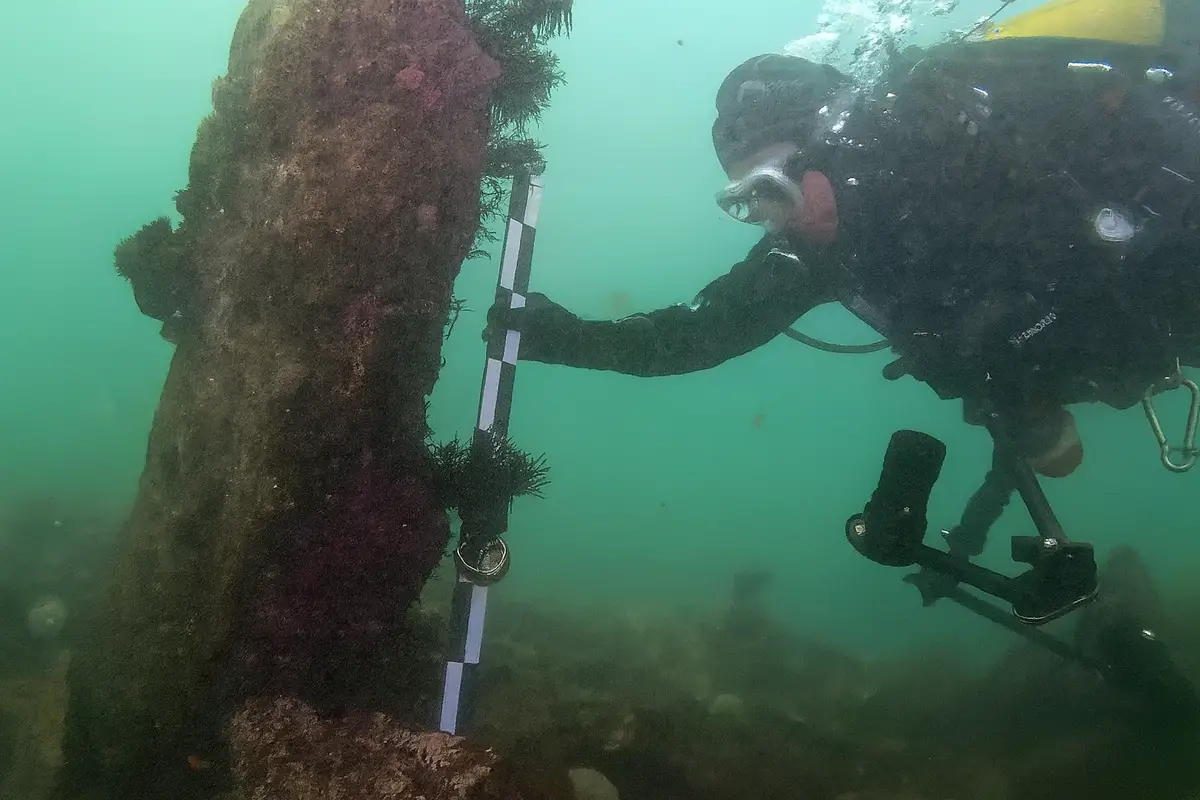
A newly published study in the International Journal of Nautical Archaeology details a series of granite-built formations lying between seven and nine meters below the current sea level. Between 2022 and 2024, researchers used LIDAR mapping along with multiple diving missions to confirm that the stones form a deliberate linear arrangement. Their age has been traced to roughly 5800–5300 BC, placing them at the tail end of the Mesolithic era and the transition into the Neolithic period.
According to the research team, four distinct structures designated TAF1, TAF2A, TAF2B, and TAF3 were identified through the analysis of high-resolution Digital Elevation Models within the Toul ar Fot (TAF) sector. These features lie about 1.9 kilometers west of Sein Island, positioned midway between the northern and southern limits of the undersea plateau.
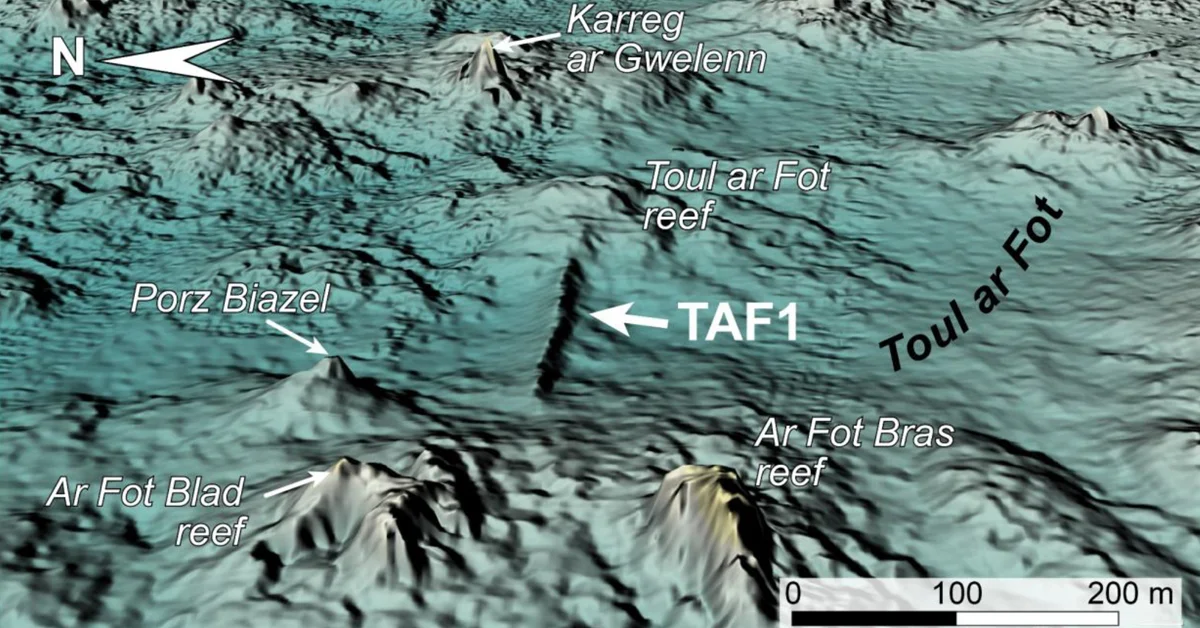
Archaeologists have documented a series of submerged stone constructions off the coast of Sein Island in Brittany, France. A recent study in the International Journal of Nautical Archaeology describes granite structures resting 7–9 metres below the current sea level. Through LIDAR mapping conducted from 2022 to 2024, along with multiple diving missions, researchers confirmed that the formations follow a linear pattern. They date to roughly 5800–5300 BC, during the late Mesolithic and the transition into the Neolithic.
According to the study’s authors, the research identified four main structures—TAF1, TAF2A, TAF2B, and TAF3 based on Digital Elevation Model data collected in the Toul ar Fot sector. These features lie about 1.9 kilometres west of Sein Island, positioned midway between the northern and southern edges of the submerged plateau.
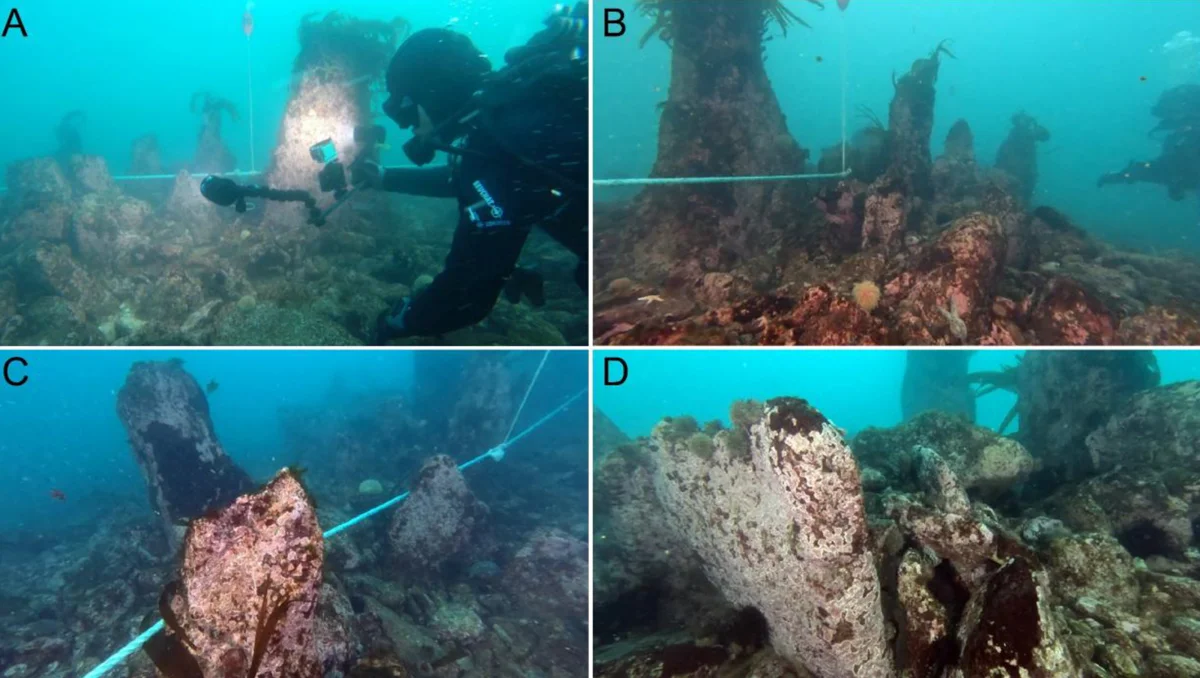
The largest structure, TAF1, stretches for 120 metres across an underwater valley. It is composed of stacked granite blocks and includes more than 60 upright monoliths and slabs rising up to 1.7 metres high. TAF2A displays a similar construction style: a mass of stones reinforced by standing monoliths that protrude up to 1 metre above the top surface.
During 2024 dives, researchers documented four additional features—YAG1, YAG2, YAG3B, and YAG3C. Each consists of linear stone walls built from small, block-sized stones set in place to block natural depressions or small valleys. Among these later finds, YAG3C stands out: a 50-metre-long wall composed of small monoliths spaced roughly a metre apart, sometimes arranged in two or three parallel rows.
Local folklore in Brittany has long told of a drowned city hidden beneath the western end of the Bay of Douarnenez, only about 10 kilometers east of Sein Island.
The researchers behind the new study suggest that the discovery of these clearly human-made stone formations now invites fresh questions about whether the ancient legend might have roots in real prehistoric events. As they explain, “it is likely that the abandonment of a once-developed territory belonging to a highly organized society became embedded in collective memory over time.”
Although all of the submerged features near Sein Island appear to be connected, specialists believe the smaller stone alignments may have functioned as fish traps. The purpose of the larger constructions, however, is less straightforward. These massive installations exceed the size of any known fish weirs from the same era, leading the team to propose that they may also have served a protective function.
According to the authors, the scale and engineering sophistication of the biggest structures have no known parallel in France for this period.